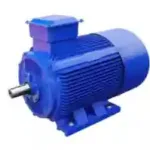
What is Inductor?
An inductor is a passive electronic component that stores
energy in a magnetic field when an electric current flows through it. It is
also called a coil or reactor. The inductor is made up of a coil of wire that
is wound around a core made of a magnetic material such as iron.
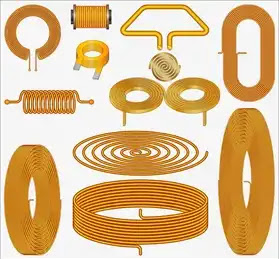
When an electric current flows through the coil, a magnetic
field is generated in the core. The strength of the magnetic field depends on
the amount of current flowing through the coil and the number of turns in the
coil. The magnetic field generated by the inductor opposes changes in the
current flowing through it, according to Faraday’s law of electromagnetic
induction.
Inductors are commonly used in electronic circuits to filter
and smooth out AC signals, as well as to store energy in DC power supplies.
They are also used in transformers, which are devices that transfer energy from
one circuit to another. The inductor is a fundamental component in many
electronic applications and is an important tool for engineers and scientists.
Different Types of Inductor
There are several types of inductors that are used in
various electronic circuits. Here are some of the most common types of
inductors:
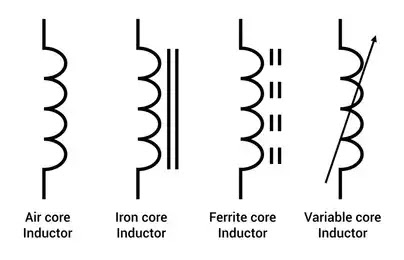
- Air
Core Inductor: This type of inductor has a core made of air, which means
it has no magnetic material. It is used in applications where
high-frequency signals need to be filtered or tuned, as it has low losses
and high Q-factor. - Iron
Core Inductor: This type of inductor has a core made of magnetic material,
such as iron or ferrite. It is used in applications where a high
inductance value is required, such as in power supplies and transformers. -
Ferrite-Core Inductor: A ferrite-core
inductor is an inductor that uses a ferrite core to increase its inductance.
Ferrite is a ceramic material that has high permeability, which means it can
easily be magnetized and demagnetized. This property makes it an ideal material
for inductor cores.The ferrite core in a ferrite-core inductor
increases the magnetic flux density within the inductor, which increases its
inductance. The core also helps to confine the magnetic field within the
inductor, which reduces losses due to leakage. The ferrite core in a
ferrite-core inductor can be made in different shapes and sizes to optimize its
performance for a particular application.Ferrite-core inductors are commonly used in
high-frequency applications due to their ability to handle high currents and
high magnetic flux densities. They are often used in switch-mode power
supplies, RF circuits, and inductors for noise suppression in electronic circuits.One advantage of ferrite-core inductors is that
they are highly efficient at high frequencies, which makes them ideal for use
in switch-mode power supplies where high efficiency is required. Another
advantage is that they can be made very small, which makes them ideal for use
in portable electronic devices. However, ferrite-core inductors can be more
expensive than other types of inductors, which can be a consideration in some
applications. - Toroidal
Inductor: This type of inductor has a core that is in the shape of a torus
or doughnut. It is commonly used in power supplies and audio circuits, as
it has low losses and high inductance values. - Multilayer
Chip Inductor: This type of inductor is made by winding several layers of
metal around a ceramic or plastic core. It is commonly used in surface
mount technology (SMT) applications due to its small size and low cost. - Coupled
Inductor: This type of inductor consists of two or more separate inductors
that are coupled together by magnetic fields. It is used in applications
such as transformers and filters. - RF
Choke: This type of inductor is designed to block high-frequency AC
signals while allowing DC signals to pass through. It is commonly used in
RF circuits to prevent interference.
These are just a few of the many types of inductors
available. The choice of inductor type depends on the specific application and
the performance requirements of the circuit
Parts of Inductor
An inductor is a passive electronic component that stores
energy in a magnetic field when current flows through it. The main parts of an
inductor include:
- Core:
The core of an inductor is typically made of a magnetic material, such as
iron or ferrite, that concentrates the magnetic field and increases the
inductance of the coil. The shape and material of the core can greatly
affect the performance and behavior of the inductor. - Coil:
The coil is the most visible part of an inductor and is made up of a wire
wound around the core. The number of turns in the coil, the diameter of
the wire, and the spacing between the turns all affect the inductance of
the inductor. - Leads:
The leads of an inductor are the wires that extend from the coil and are
used to connect the inductor to other components in the circuit. The
length and thickness of the leads can affect the inductance of the
inductor and should be considered when designing and selecting components
for a circuit. - Enclosure:
Some inductors are housed in an enclosure, which provides protection from
external influences, such as moisture or mechanical stress. The enclosure
can also help to reduce electromagnetic interference and noise.
Overall, the core, coil, leads, and enclosure are the main
parts of an inductor. Each part plays an important role in the performance and
behavior of the inductor and should be carefully considered when designing and
selecting components for a circuit.
Inductor Symbol
Applications of Inductor
Inductors have a wide range of applications in electronics,
including:
- Power
Supplies: Inductors are used in power supplies to smooth out the output
voltage and reduce ripple. They are also used in DC-DC converters to
step-up or step-down voltage. - Filters:
Inductors are used in filters to block or pass certain frequencies. They
are commonly used in high-pass, low-pass, and band-pass filters. - Oscillators:
Inductors are used in LC (inductor-capacitor) circuits to create
oscillations at a specific frequency. - Transformers:
Inductors are used in transformers to transfer energy between circuits
with different voltages. They are commonly used in power supplies to
step-up or step-down voltage. - Sensors:
Inductors can be used as sensors in applications such as metal detectors
and proximity sensors. - Audio
Circuits: Inductors are used in audio circuits as part of tone controls
and filters. - Motor
Control: Inductors are used in motor control circuits to smooth out the
current and reduce noise.
These are just a few examples of the many applications of
inductors in electronics. Inductors are an essential component in many circuits
and are used in a wide range of electronic devices, from cell phones and
computers to power plants and electric vehicles.
Working principle of Inductor
An inductor is a passive electrical component that stores
energy in a magnetic field when electric current flows through it. The working
principle of an inductor is based on Faraday’s law of electromagnetic
induction, which states that when the magnetic field through a coil of wire
changes, a voltage is induced in the wire.
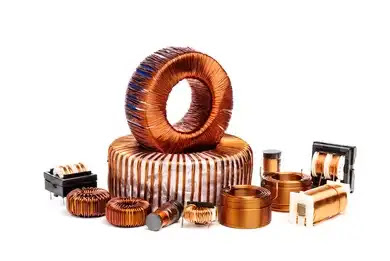
When an electric current flows through the coil of wire, it
creates a magnetic field around the wire. The strength of the magnetic field is
proportional to the amount of current flowing through the coil. As the current
changes, the magnetic field changes as well, and this change induces a voltage
in the coil according to Faraday’s law. The induced voltage is proportional to
the rate of change of the magnetic field and the number of turns in the coil.
This induced voltage has a polarity that opposes the change
in current that caused it, according to Lenz’s law. This means that when the
current through the inductor is increasing, the induced voltage will oppose
this increase and when the current is decreasing, the induced voltage will
oppose this decrease. This opposition to changes in current flow is the basis
for the inductor’s ability to store energy in the magnetic field.
The inductor is commonly used in a variety of electronic
circuits, such as filters, oscillators, transformers, and power supplies, to
smooth out changes in voltage or current, filter out unwanted frequencies, and
store energy. The inductor’s ability to store energy in a magnetic field makes
it a useful component in many electrical applications.
Difference between Inductor and Capacitor
Inductors and capacitors are both passive electronic
components used in circuits to store energy. However, they store energy in
different ways and have different effects on the circuit.
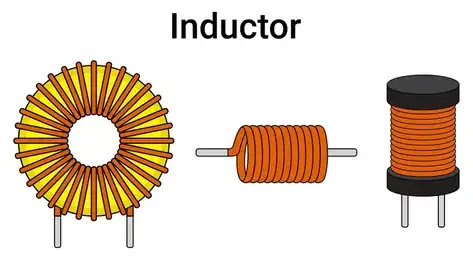
An inductor stores energy in a magnetic field created by the
flow of current through a coil of wire. It resists changes in the current and
tends to maintain a steady current flow. Inductors are typically used in
circuits to smooth out changes in voltage, to filter out unwanted frequencies,
and to store energy in DC power supplies.
A capacitor, on the other hand, stores energy in an electric
field created between two conductive plates separated by a dielectric material.
It resists changes in voltage and tends to maintain a steady voltage level.
Capacitors are typically used in circuits to store energy, filter out unwanted
frequencies, and block DC voltage while allowing AC voltage to pass through.
In summary, the main difference between inductors and
capacitors is that inductors store energy in a magnetic field and resist changes
in current flow, while capacitors store energy in an electric field and resist
changes in voltage. Both components have their unique characteristics and are
used in a wide range of circuits to achieve different goals.
Here’s a table summarizing the main differences between
inductors and capacitors:
|
Parameter |
Inductor |
Capacitor |
|
Symbol |
L |
C |
|
Function |
Stores |
Stores |
|
Unit |
Henry |
Farad |
|
Impedance |
Increases |
Decreases |
|
Reactance |
Increases |
Decreases |
|
Resistance |
Resists |
Resists |
|
Application |
Filter, |
Filter, |
Keep in mind that these are generalizations and that there
are exceptions to some of these differences depending on the specific circuit
and application.
Advantages and Disadvantages of Inductor
Inductors are passive electronic components that store
energy in a magnetic field when current flows through them. They are widely
used in electronic circuits for a variety of applications, but they also have
some advantages and disadvantages to consider.
Advantages of Inductors:
- Smooth
out voltage changes: Inductors are commonly used in electronic circuits to
smooth out voltage changes and filter out unwanted frequencies, which can
help to improve the performance and stability of the circuit. - Energy
storage: Inductors can store energy in a magnetic field and release it
back into the circuit when needed. This makes them useful in a variety of
applications, including DC power supplies, motors, and transformers. - Easy
to design: Inductors are relatively easy to design and manufacture, which
makes them a popular choice for many electronic applications. - Low
cost: Inductors are generally low cost compared to other electronic
components, which makes them an attractive choice for many applications.
Disadvantages of Inductors:
- Size
and weight: Inductors can be relatively large and heavy, especially for
applications that require high inductance values. - Limited
frequency range: Inductors are not ideal for use at high frequencies due
to their parasitic capacitance, which can lead to losses and reduced
performance. - Magnetic
interference: Inductors can generate magnetic interference that can affect
nearby components in a circuit. - Non-ideal
behavior: Inductors exhibit non-ideal behavior at high currents, which can
lead to saturation and reduced performance.
Overall, the advantages of inductors make them a popular
choice for many electronic applications, while the disadvantages need to be
considered when selecting an appropriate component for a particular
application.
Functions of an Inductor
An inductor is a passive electronic component that stores
energy in a magnetic field when current flows through it. Inductors have a
variety of functions in electronic circuits, including:
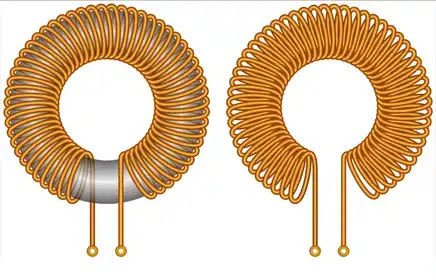
- Energy
storage: Inductors can store energy in a magnetic field and release it
back into the circuit when needed. This makes them useful in a variety of
applications, including DC power supplies, motors, and transformers. - Filtering:
Inductors can be used in electronic circuits to filter out unwanted
frequencies and smooth out voltage changes. This helps to improve the
performance and stability of the circuit. - Signal
processing: Inductors can be used in signal processing applications, such
as in audio filters and equalizers, to adjust the frequency response of a
circuit. - Noise
suppression: Inductors can be used in electronic circuits to suppress
unwanted noise and interference, which can help to improve the quality of
the signal. - Power
regulation: Inductors can be used in voltage regulators to help maintain a
stable output voltage, even when the input voltage changes. - Timing:
Inductors can be used in oscillator circuits to help set the frequency and
timing of the circuit.
Overall, the functions of an inductor make it an important
component in many electronic circuits. Its ability to store energy in a
magnetic field and its filtering capabilities make it useful for a variety of
applications, from power supplies to signal processing.
Inductor Formula
The inductor is a passive electronic component that stores
energy in a magnetic field when current flows through it. The inductance of an
inductor is determined by its physical properties, such as the number of turns,
the shape of the coil, and the magnetic permeability of the core material. The
inductance of an inductor can be calculated using the following formula:
L = (μ * N^2 * A) / l
where: L = inductance in henries (H)
μ = magnetic
permeability of the core material
N = number of turns
A = cross-sectional
area of the core material in square meters (m^2)
l = length of the core material in meters (m)
This formula assumes that the core material is uniform and
that all of the magnetic flux is contained within the core. In reality, there
is some amount of magnetic flux leakage, which can lead to losses and reduced
performance.
The inductance of an inductor can also be affected by
factors such as the frequency of the current, the temperature of the core
material, and the presence of other nearby magnetic fields. It’s important to
consider these factors when designing and selecting inductors for electronic
circuits.