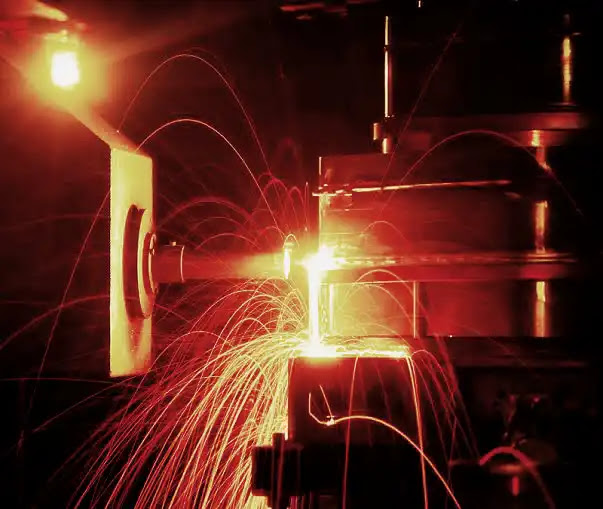
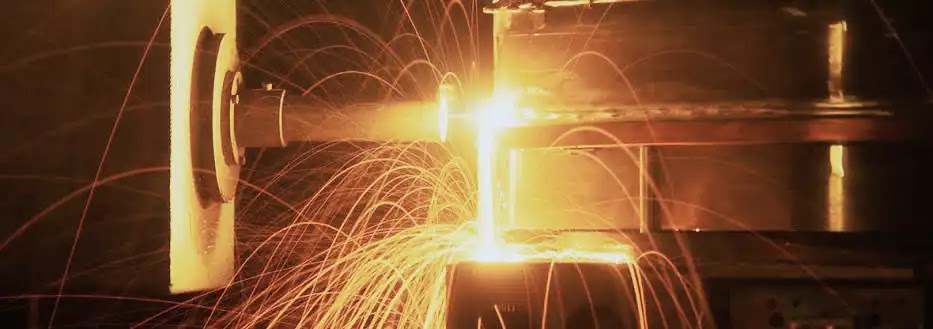
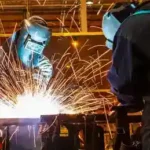
Electron Beam Welding (EBW) is a high-precision welding
process that uses a focused beam of high-velocity electrons to join two metal
parts together. The process is carried out in a vacuum environment to prevent
the electrons from interacting with air molecules and losing energy.
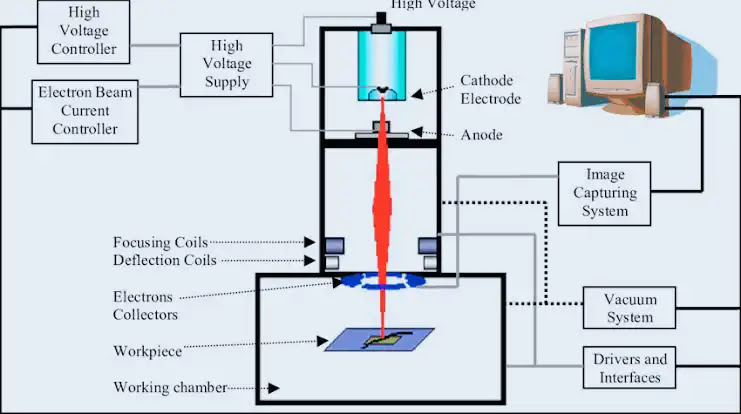
In EBW, an electron beam is generated by heating a tungsten
filament in an electron gun. The electrons are then accelerated to high speeds
using an electric field and focused into a narrow beam using magnetic lenses.
The beam is then directed onto the joint between the two parts to be welded, where
it melts the metal and creates a fusion weld.
EBW is commonly used in aerospace, automotive, and medical
industries for joining high-strength metals such as titanium, stainless steel,
and nickel alloys. The process produces a very high-quality weld with minimal
distortion, as the focused beam allows for precise control over the amount of
heat input into the material.
Some of the advantages of EBW include high precision, deep
weld penetration, and a narrow heat-affected zone. However, the process requires
expensive equipment and a vacuum environment, which can limit its use in some
applications.
Working Principle of Electron Beam Welding:
The working principle of Electron Beam Welding (EBW) is
based on the generation and manipulation of a focused beam of high-velocity
electrons to melt and join two metal parts together. The process takes place in
a vacuum environment to prevent the electrons from interacting with air
molecules and losing energy.
The electron beam is generated by heating a tungsten
filament in an electron gun, which is then accelerated using an electric field
and focused into a narrow beam using magnetic lenses. The focused beam is then
directed onto the joint between the two metal parts to be welded.
As the beam strikes the metal surface, the kinetic energy of
the high-velocity electrons is converted into thermal energy, causing the metal
to melt and form a weld pool. The beam can be precisely controlled using
computerized systems to ensure that the correct amount of energy is delivered
to the weld pool, resulting in a high-quality weld with minimal distortion.
During the welding process, the electron beam melts the
metal in the joint and creates a fusion weld. The molten metal then solidifies
to form a strong, permanent bond between the two parts.
The process can be used to weld high-strength metals such as
titanium, stainless steel, and nickel alloys. It is commonly used in aerospace,
automotive, and medical industries for high-precision welding applications
where high quality, deep penetration, and minimal distortion are essential.
Construction
of an Electron Beam Welding Machine:
An Electron Beam Welding (EBW) machine consists of several
main components that work together to generate and control the electron beam
used for welding. These components include:
Electron
Gun: The electron gun is the primary component that generates the electron
beam. It contains a tungsten filament that is heated to produce electrons.
The electrons are then accelerated using an electric field and focused
into a narrow beam using magnetic lenses.
Vacuum
Chamber: The entire welding process takes place in a vacuum chamber to
prevent the electrons from interacting with air molecules and losing
energy. The vacuum chamber is typically made of stainless steel and is
sealed to maintain the vacuum environment.
Workpiece
Holding Fixture: The workpiece holding fixture holds the parts to be
welded in place during the welding process. It must be designed to
withstand the high temperatures and vacuum environment of the welding
process.
Power
Supply: The power supply provides the electrical energy needed to generate
the electron beam. It also controls the current and voltage delivered to
the electron gun.
Control
System: The control system is used to monitor and control various aspects
of the welding process, including the electron beam current, voltage, and
focus. It also controls the movement of the workpiece holding fixture and
the electron beam across the joint to be welded.
Beam
Steering System: The beam steering system uses magnetic fields to control
the direction and position of the electron beam. It allows for precise
control over the location of the weld and the amount of energy delivered
to the joint.
Cooling
System: The cooling system is used to dissipate the heat generated during
the welding process. It typically uses water or a similar coolant to
prevent the machine components from overheating.
These components work together to generate and control the
electron beam used for welding, allowing for precise and high-quality welds on
a variety of materials.
Advantages
and Disadvantages of Electron Beam Welding:
Advantages of Electron Beam Welding (EBW):
High
Precision: EBW is a high-precision welding process that allows for
accurate control of the weld location and the amount of energy delivered
to the joint, resulting in precise and high-quality welds.
Deep
Weld Penetration: The high-velocity electrons used in EBW have a high
energy density, allowing for deep weld penetration and a narrow
heat-affected zone.
Minimal
Distortion: EBW produces minimal distortion in the welded parts due to the
narrow heat-affected zone and precise control over the amount of heat
input.
Welds
High-Strength Metals: EBW can weld high-strength metals such as titanium,
stainless steel, and nickel alloys, making it useful in industries such as
aerospace, automotive, and medical.
No
Filler Material Required: EBW does not require filler material, reducing
the risk of contamination and producing a clean and high-quality weld.
Disadvantages of Electron Beam Welding (EBW):
Expensive
Equipment: EBW requires expensive equipment, including a vacuum chamber,
electron gun, and magnetic lenses, making it costly to set up and
maintain.
Vacuum
Environment: EBW must be carried out in a vacuum environment to prevent
the electron beam from interacting with air molecules and losing energy,
which can limit its use in some applications.
Limited
Joint Access: The size and shape of the parts to be welded must be
carefully considered as the electron beam can only access a limited area
of the joint.
Skilled
Operators Required: EBW requires skilled operators who are familiar with
the complex equipment and the welding process, making it more challenging
to train and find qualified personnel.
Safety
Concerns: EBW involves high voltages and high-energy electrons, which can
pose safety risks to operators if proper safety measures are not taken.
Electron Beam Welding (EBW) is a high-precision welding
process that has a wide range of applications in various industries. Some of
the common applications of EBW include:
Aerospace
Industry: EBW is commonly used in the aerospace industry to weld
high-strength materials such as titanium and nickel alloys. It is used to
manufacture aircraft engine components, fuel tanks, and other critical
parts.
Automotive
Industry: EBW is used in the automotive industry to weld engine
components, transmission parts, and exhaust systems. It is also used to
join dissimilar materials, such as aluminum and steel, which are commonly
used in modern automobiles.
Medical
Industry: EBW is used in the medical industry to manufacture implantable
medical devices, such as pacemakers, orthopedic implants, and artificial
joints. It is also used to weld medical instrument components and other
critical parts.
Nuclear
Industry: EBW is used in the nuclear industry to manufacture reactor
components and fuel rods. It is also used in the repair and maintenance of
nuclear power plants.
Electronics
Industry: EBW is used in the electronics industry to weld small
components, such as wire bonding and chip connections. It is also used to
manufacture vacuum tubes and other high-performance electronic components.
Research
and Development: EBW is used in research and development to weld and join
materials for testing and evaluation purposes. It is also used to
prototype new designs and to explore the properties of new materials.
EBW is a versatile welding process that is used in a variety
of industries and applications where precision, strength, and reliability are
critical.
Difference
between Electron Beam Welding and Laser Beam Welding
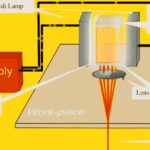
Electron beam welding (EBW) and laser beam welding (LBW) are
both high-precision welding processes that use high-energy beams to join
metals. Here are some of the key differences between EBW and LBW:
Energy
Source: The primary difference between EBW and LBW is the energy source
used to generate the beam. EBW uses a high-energy electron beam generated
by an electron gun, while LBW uses a high-energy laser beam generated by a
laser.
Beam
Characteristics: The electron beam used in EBW is a stream of electrons
that is focused by magnetic lenses to create a high-energy beam. The laser
beam used in LBW is a coherent light beam that is focused by mirrors or
lenses to create a high-energy beam.
Welding
Speed: LBW is typically faster than EBW because the laser beam can be
moved more quickly than the electron beam. However, EBW can produce deeper
weld penetration than LBW, making it more suitable for certain
applications.
Joint
Access: EBW requires a vacuum chamber to prevent the electron beam from
interacting with air molecules, which can limit the size and shape of the
parts that can be welded. LBW does not require a vacuum chamber and can be
used to weld parts of various sizes and shapes.
Weld
Quality: Both EBW and LBW produce high-quality welds with minimal distortion
and a narrow heat-affected zone. However, EBW can produce deeper weld
penetration and stronger welds in high-strength materials such as titanium
and nickel alloys.
Equipment
Cost: EBW requires expensive equipment, including a vacuum chamber,
electron gun, and magnetic lenses, making it more costly to set up and
maintain than LBW.
In summary, EBW and LBW are both high-precision welding
processes that use high-energy beams to join metals. The choice of process
depends on the specific requirements of the application, including the
materials to be welded, the size and shape of the parts, and the desired weld
quality and speed.
আমি Md Shamim Hossain, TonBangla-এর প্রতিষ্ঠাতা। প্রযুক্তি, কম্পিউটার, প্রোগ্রামিং, প্রকৌশল ও শিক্ষামূলক বিষয় নিয়ে সহজ, তথ্যবহুল বাংলা কনটেন্ট তৈরি করি।