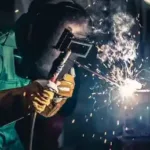
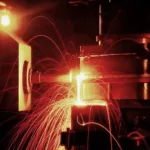
Resistance
welding is a welding process that uses electric resistance to generate heat and
join two or more metal parts together. In this process, an electric current is
passed through the metal parts to be welded, and the resistance of the metal
generates heat at the welding point. This heat causes the metal to melt and
fuse together, forming a strong and permanent bond.
There are
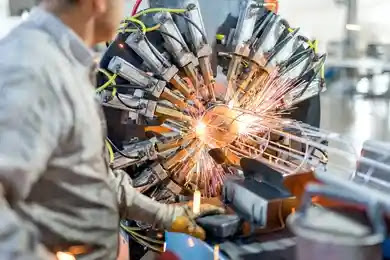
several types of resistance welding techniques, including spot welding, seam
welding, projection welding, and flash welding. The most commonly used
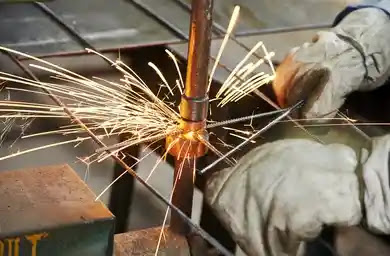
resistance welding technique is spot welding, where a small circular electrode
is used to apply pressure and an electric current to the metal parts being
welded. Seam welding is similar to spot welding but is used to create a
continuous weld along a seam or joint.
Resistance
welding is widely used in the automotive, aerospace, and electronics industries
because of its efficiency and speed. It is a reliable and cost-effective
welding technique, especially for mass production applications. Resistance
welding can also be used to join dissimilar metals, including copper, aluminum,
and steel.
Resistance
Welding Procedure Step by Step
Here are
the basic steps involved in the resistance welding process:
Preparation of the metal
parts: The metal parts to be welded are first cleaned and checked for any
defects, such as rust or dirt. The parts are then positioned and aligned
correctly for welding.
Clamping the parts: The metal
parts are then clamped together in the correct position. The clamping
pressure is critical to ensure proper contact between the parts.
Application of the electrode:
An electrode is then positioned on top of the metal parts to be welded.
The electrode is typically made of copper and is designed to conduct
electricity and apply pressure to the parts.
Application of current: An
electric current is then passed through the electrode, which creates a
resistance heating effect in the metal parts being welded. The heat
generated by the resistance melts the metal, which then cools and
solidifies to form a strong bond.
Holding time: After the
current is turned off, the electrode is held in place for a set period to
allow the metal to cool and solidify completely. This holding time is
critical to ensure a strong and reliable weld.
Removal of the electrode: Once
the holding time is complete, the electrode is removed, and the welded
parts are inspected for any defects or imperfections.
Post-weld treatment: Depending
on the type of metal and application, the welded parts may undergo further
treatment, such as cleaning, grinding, or coating.
These are
the basic steps involved in the resistance welding process. The specific
parameters and settings used for each step will depend on the type of material,
thickness, and the welding technique used. Proper control of these parameters
is critical to ensure high-quality welds and to prevent defects such as cracks,
porosity, or incomplete fusion.
Types
of Resistance Welding
There are
several types of resistance welding, each with its own advantages and
limitations. The most common types are:
Spot welding: This is the most
common type of resistance welding, where a small circular electrode is
used to apply pressure and an electric current to the metal parts to be
welded. Spot welding is often used in the automotive industry to join
sheet metal panels.
Seam welding: This process is
similar to spot welding but is used to create a continuous weld along a
seam or joint between two metal parts, such as in the manufacture of metal
tubing or tanks.
Projection welding: This
process is used to weld metal parts with raised or protruding features,
such as studs or nuts, by concentrating the electric current at the point
of contact between the parts.
Flash welding: This process
involves the use of high current and pressure to create a rapid heating
and cooling cycle that fuses the metal parts together. This process is
often used to weld non-ferrous metals such as aluminum.
Resistance butt welding: This
process is used to join two metal parts of similar cross-sectional areas
by applying pressure and current to the ends of the parts.
High-frequency resistance
welding: This process uses high-frequency current to create heat and weld
metal parts together. It is often used for thin sheets or wires.
Percussion welding: This
process uses high-pressure impact to weld two metal parts together. It is
often used for small parts or for joining dissimilar metals.
Each type
of resistance welding has its own advantages and limitations, and the choice of
technique will depend on the type of metal, thickness, and application. Proper
control of welding parameters such as current, pressure, and timing is critical
to ensure high-quality welds and to prevent defects such as cracks or
incomplete fusion.
Resistance
welding is a widely used welding technique in various industries, including
automotive, aerospace, electronics, and manufacturing. Some of the common uses
of resistance welding are:
Automotive industry:
Resistance welding is commonly used in the automotive industry to join
sheet metal parts together. It is used to weld body panels, chassis, and
engine parts.
Aerospace industry: Resistance
welding is used in the aerospace industry to join various metal parts
together. It is used to weld structural parts of aircraft such as landing
gear, wings, and fuselage.
Electronics industry:
Resistance welding is used in the electronics industry to join small metal
parts together. It is used to weld wires, terminals, and connectors.
Manufacturing industry: Resistance
welding is used in various manufacturing processes to join metal parts
together. It is used to weld pipes, tubes, tanks, and other metal
structures.
Medical industry: Resistance
welding is used in the medical industry to join metal parts together. It
is used to weld various medical instruments and devices.
Resistance
welding is a reliable and cost-effective welding technique, especially for mass
production applications. It is a clean and efficient process that requires
minimal preparation and post-weld cleaning. It can also be used to join
dissimilar metals, including copper, aluminum, and steel.
Advantages
and Disadvantages of Resistance Welding
Advantages
of Resistance Welding:
High productivity: Resistance
welding is a fast and efficient welding technique that can be automated
and integrated into high-speed production lines, leading to high
productivity.
Cost-effective: Resistance
welding is a relatively inexpensive welding technique that requires
minimal preparation, equipment, and maintenance. It also uses less energy
compared to other welding techniques.
Clean process: Resistance
welding does not require any filler material or flux, which makes it a
clean process. It produces minimal smoke, fumes, or spatter, leading to a
safer and cleaner working environment.
High quality: Resistance
welding produces high-quality welds that have good strength, durability,
and consistency. It also has low distortion and minimal thermal
distortion.
Versatile: Resistance welding
can be used to weld a wide range of materials, including aluminum, copper,
and stainless steel.
Disadvantages
of Resistance Welding:
Limited thickness: Resistance
welding is best suited for thin to medium thickness materials, as it is
difficult to achieve proper heating and cooling for thick materials.
High initial investment: While
resistance welding is relatively inexpensive compared to other welding
techniques, the initial investment in equipment can be high.
Limited joint configuration:
Resistance welding is limited to simple joint configurations such as lap,
butt, and spot welds. It is not suitable for more complex joint
configurations.
Electrical conductivity of
materials: Resistance welding requires the materials being welded to have
high electrical conductivity. Materials with low electrical conductivity,
such as cast iron, cannot be welded using resistance welding.
Dependence on welding
parameters: Resistance welding requires precise control of welding parameters
such as current, voltage, and welding time. Any deviation from the optimal
parameters can result in poor quality welds.
Resistance
welding uses electrical resistance to generate heat that melts and fuses the
metal parts together. The amount of heat generated in the process can be
calculated using the following formula:
Q = I^2 *
R * t
Where:
Q = Heat
energy (Joules)
I = Welding
current (Amperes)
R = Electrical resistance of the metal parts
being welded (Ohms)
t =
Welding time (Seconds)
The
formula shows that the amount of heat generated in resistance welding is
directly proportional to the welding current, the electrical resistance of the
metal parts, and the welding time. Therefore, to achieve a high-quality weld,
it is important to maintain precise control over these parameters.
Resistance
welding also requires careful selection of the welding electrode materials,
geometry, and cooling method. The electrode material should have high
electrical and thermal conductivity, as well as good wear resistance. The
electrode geometry should be matched to the joint geometry to ensure proper
heat distribution and contact with the metal parts. The cooling method should
be designed to prevent overheating and electrode damage, while maintaining
proper electrode temperature and contact pressure.
আমি Md Shamim Hossain, TonBangla-এর প্রতিষ্ঠাতা। প্রযুক্তি, কম্পিউটার, প্রোগ্রামিং, প্রকৌশল ও শিক্ষামূলক বিষয় নিয়ে সহজ, তথ্যবহুল বাংলা কনটেন্ট তৈরি করি।