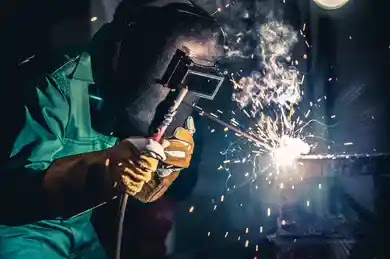
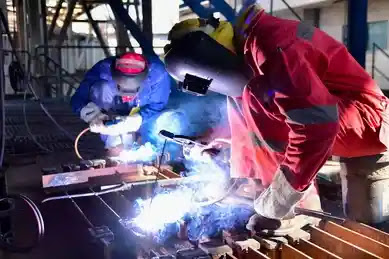
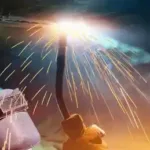
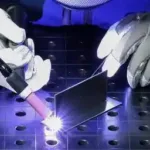
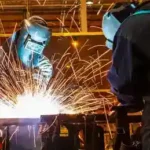
Arc
welding is a welding process that involves using an electric arc to melt and
join metals together. In this process, an electrical current is passed through
an electrode, creating an arc that melts the metals being welded and forms a
bond between them.
The heat
generated by the arc is intense enough to melt the base metal and the
electrode, creating a pool of molten metal that cools and solidifies to form
the weld joint. The electrode is usually made of a metal or alloy that matches
the composition of the base metal, and it also provides filler metal to the
weld joint.
There are
several types of arc welding, including Shielded Metal Arc Welding (SMAW), Gas
Tungsten Arc Welding (GTAW), and Gas Metal Arc Welding (GMAW). Arc welding is
commonly used in the fabrication and repair of metal structures, machinery, and
equipment.
Arc Welding Procedure Step by Step
Arc
welding is a welding process that uses an electric arc to melt and join metals
together. Here is a general step-by-step procedure for arc welding:
Prepare the workpiece: Clean
the metal surfaces to be joined by removing any rust, oil, or other
contaminants that may affect the quality of the weld. Clamp or otherwise
secure the pieces to be welded together.
Set up the equipment: Assemble
the arc welding equipment according to the manufacturer’s instructions.
This will typically include a power source, an electrode holder, welding
cables, and a welding helmet or face shield.
Choose the right electrode:
Select the appropriate electrode for the job based on the type of metal
being welded, the thickness of the metal, and the welding position.
Set the amperage: Set the
amperage on the power source based on the size of the electrode and the
thickness of the metal being welded. Consult the manufacturer’s
recommendations for guidance.
Strike the arc: Hold the
electrode at a 15-20 degree angle to the metal surface and strike the arc
by tapping it against the metal. The arc will melt the metal and form a
weld pool.
Control the arc: Use a steady,
smooth motion to move the electrode along the joint, maintaining a
consistent arc length and angle. The arc should be kept within the weld
pool to avoid spatter and overheating.
Add filler metal: If needed,
add filler metal to the joint by dipping it into the weld pool or using a
separate filler rod. The filler metal should be of a similar composition
to the base metal to ensure a strong bond.
Finish the weld: Once the
joint has been welded, allow it to cool slowly to avoid thermal shock.
Once the metal has cooled, remove any slag or other impurities using a
wire brush or grinder.
Inspect the weld: Inspect the
weld joint for defects such as porosity, cracks, or incomplete fusion. If
any defects are found, repair the weld before proceeding.
Clean up the equipment: Turn
off the power source and properly store the equipment. Clean the electrode
holder, welding cables, and welding helmet to prevent contamination or
damage.
Types
of Arc Welding
There are
several types of arc welding, each with its own unique characteristics and
applications. Here are some of the most common types of arc welding:
Shielded Metal Arc Welding
(SMAW): Also known as stick welding, SMAW uses a consumable electrode
coated in flux to shield the weld pool from atmospheric contamination.
This is the most common type of arc welding and can be used for welding
most metals.
Gas Tungsten Arc Welding
(GTAW): Also known as Tungsten Inert Gas (TIG) welding, GTAW uses a
non-consumable tungsten electrode to produce the arc, while a separate
filler rod is used to add metal to the weld pool. GTAW produces precise,
high-quality welds and is often used for welding thin materials or
non-ferrous metals.
Gas Metal Arc Welding (GMAW):
Also known as Metal Inert Gas (MIG) welding, GMAW uses a continuously-fed
wire electrode that is melted by the arc to join the metal pieces
together. GMAW is fast and easy to learn, making it a popular choice for
beginners and production welding.
Flux-Cored Arc Welding (FCAW):
Similar to GMAW, FCAW uses a continuously-fed wire electrode, but the
electrode is filled with flux to shield the weld pool from contamination.
FCAW can be used for welding thick materials and is often used in
construction and heavy fabrication.
Submerged Arc Welding (SAW):
SAW uses a granular flux that covers the weld pool and the arc, producing
a submerged arc that melts the metal and fuses it together. SAW is
commonly used for welding thick materials in large-scale production
applications.
Plasma Arc Welding (PAW): PAW
uses a highly-concentrated arc that is created by ionizing a gas and
passing it through a small nozzle. PAW produces high-quality welds with
minimal distortion and is often used in aerospace and precision welding
applications.
Uses of
Arc Welding
Arc
welding is a versatile welding process that is used in a wide range of
applications. Here are some common uses of arc welding:
1. Construction:
Arc welding is commonly used in construction to join structural steel beams and
columns, as well as to create large metal structures like bridges and
buildings.
2. Automotive
and Transportation: Arc welding is used in the manufacturing and repair of
vehicles and transportation equipment such as cars, trucks, buses, ships, and
aircraft.
3. Industrial
Fabrication: Arc welding is used in industrial fabrication to join and repair
metal components and machinery, such as pipelines, pressure vessels, and heavy
equipment.
4. Maintenance
and Repair: Arc welding is used in maintenance and repair applications to fix
damaged metal parts and components, as well as to make modifications and upgrades
to existing structures and equipment.
5. Art
and Sculpture: Arc welding is used by artists and sculptors to create metal
sculptures and other artistic pieces, using various welding techniques and
metalworking methods.
6. DIY
and Home Improvement: Arc welding is used by DIY enthusiasts and home
improvement projects to create metal structures, furniture, and other household
items. It can also be used to repair metal objects and equipment around the
home.
Overall,
arc welding is a widely-used welding process that provides a flexible and
effective solution for joining and repairing metals in a variety of
applications.
Advantages
and Disadvantages of Arc Welding
Advantages
of Arc Welding:
Versatility: Arc welding can
be used on a wide range of metals and thicknesses, making it a versatile
welding process.
Cost-Effective: Arc welding is
generally more affordable than other welding processes, such as laser or
electron beam welding.
Easy to Learn: Arc welding is
relatively easy to learn, making it accessible for beginners and DIY
enthusiasts.
High Production Rates: Arc
welding can be used in high-volume production applications, making it an
efficient choice for industrial manufacturing.
Portable: Arc welding
equipment can be easily transported to different job sites, making it a
good option for on-site welding.
Disadvantages
of Arc Welding:
Requires Power Source: Arc
welding requires a power source, which can be limiting in some
environments where electrical power may not be available.
Safety Hazards: Arc welding
produces intense heat, bright light, and harmful fumes, making it
important to wear protective gear and follow safety protocols.
Limited Weld Quality: Arc
welding can produce lower-quality welds compared to other processes, such
as laser welding or electron beam welding.
High Heat Input: Arc welding
produces a lot of heat, which can lead to warping, distortion, and changes
in material properties, especially with thinner materials.
Surface Preparation: Arc
welding requires proper surface preparation, including cleaning, grinding,
and removing rust or other contaminants, to achieve a high-quality weld.
Arc
welding and gas welding are two distinct welding processes that use different
sources of heat to join metal parts. Here are some key differences between arc
welding and gas welding:
Heat Source: Arc welding uses
an electric arc between an electrode and the metal workpiece to generate
heat, while gas welding uses a flame generated by burning a fuel gas, such
as acetylene, with oxygen to produce heat.
Weld Quality: Arc welding
generally produces higher quality welds than gas welding, especially in
terms of strength and durability. Arc welding also allows for deeper
penetration and better control of the weld bead.
Equipment: Arc welding
requires an electric power source and welding equipment, such as an
electrode holder and ground clamp, while gas welding requires a fuel gas
and oxygen supply, a torch, and welding rods.
Materials: Arc welding can be
used on a wider range of metals, including steel, stainless steel,
aluminum, and other non-ferrous metals, while gas welding is best suited
for low carbon steels, copper, and brass.
Safety: Both arc welding and
gas welding pose safety hazards, but gas welding produces more fumes and
requires careful ventilation to avoid inhalation of harmful gases. Arc
welding, on the other hand, produces intense light that can damage
eyesight if proper eye protection is not used.
In
summary, while both arc welding and gas welding are useful welding processes,
they differ in terms of heat source, weld quality, equipment, materials, and
safety considerations.
Here are
some common defects that can occur in an arc welding joint:
Porosity: This is a defect
caused by the presence of gas pockets or voids within the weld. It is
usually caused by insufficient shielding gas or an improperly prepared
surface.
Undercutting: This is a groove
or depression formed at the base of the weld that is caused by excessive
current or an improper angle of the electrode.
Cracking: Cracks can occur in
the weld or the heat-affected zone and can be caused by factors such as
excessive heat input, improper cooling, or a lack of ductility in the base
material.
Incomplete fusion: This occurs
when the weld metal fails to fuse completely with the base material, and
can be caused by factors such as insufficient heat input, improper welding
technique, or a contaminated joint.
Overlapping: This occurs when
the weld bead overlaps with the previous weld, creating a weak and
potentially unstable joint.
Spatter: This refers to the
small droplets of molten metal that are expelled from the weld area during
welding, and can be caused by excessive current, improper electrode angle,
or a contaminated electrode.
These
defects can compromise the strength and integrity of the weld, so it is
important to identify and correct them to ensure a high-quality weld.
The
temperature of an arc welding process can vary depending on the type of
electrode, the type of metal being welded, the welding position, and the
welding parameters such as voltage, amperage, and travel speed. However,
typically the temperature of the arc can reach up to 6,500°C (11,800°F). This
intense heat melts the base metal and the filler metal, which then solidifies
to create a strong, permanent bond between the two pieces being welded. It’s
important to note that while the arc temperature is extremely high, the heat
affected zone (HAZ) – the area surrounding the weld that has been exposed to
high temperatures – can reach temperatures lower than the melting point of the
metal being welded. Proper control of the welding parameters and technique is
necessary to ensure that the HAZ remains within acceptable limits to prevent
deformation or other defects in the welded joint.
আমি Md Shamim Hossain, TonBangla-এর প্রতিষ্ঠাতা। প্রযুক্তি, কম্পিউটার, প্রোগ্রামিং, প্রকৌশল ও শিক্ষামূলক বিষয় নিয়ে সহজ, তথ্যবহুল বাংলা কনটেন্ট তৈরি করি।