What is Laser Beam Machining?
Laser beam machining (LBM) is a non-conventional machining
process that uses a highly focused beam of laser light to remove material from
a workpiece. The laser beam is generated by a device called a laser, which
produces an intense, highly directional beam of light.
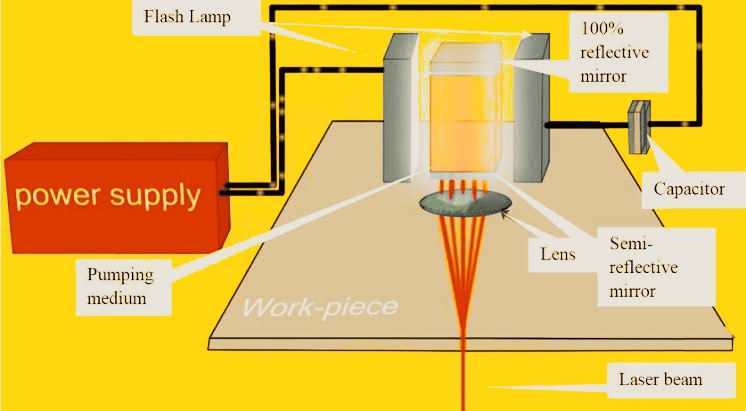
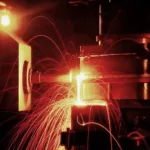
In LBM, the laser beam is directed onto the workpiece, where
it heats and vaporizes the material, causing it to be removed from the surface
of the workpiece. The high-energy density of the laser beam allows it to cut
through a variety of materials, including metals, plastics, ceramics, and
composites.
LBM can be used for a variety of applications, including
cutting, drilling, welding, engraving, and surface treatment. It is commonly
used in the aerospace, automotive, electronics, and medical industries, among
others.
One advantage of LBM is that it can achieve high levels of
precision and accuracy, as the laser beam can be controlled very precisely.
Additionally, it is a non-contact process, which means that there is no
physical contact between the workpiece and the tool, reducing the risk of
damage to the workpiece.
However, LBM also has some limitations, including high
equipment and maintenance costs, and limited material thickness that can be
processed.
Laser Beam Machining Parts
The basic components of a laser beam machining system
include:
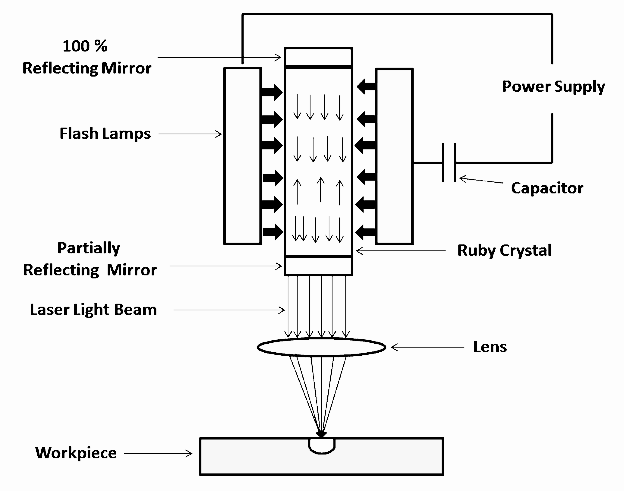
- Laser:
The laser is the primary component of the system that generates a
high-energy beam of coherent light. - Optics:
Optics are used to focus and direct the laser beam onto the workpiece. The
system typically includes lenses, mirrors, and other optical components to
manipulate the beam. - Workpiece:
The workpiece is the material being processed or cut by the laser beam. It
can be made of various materials, including metals, plastics, ceramics,
and composites. - CNC
Controller: The computer numerical control (CNC) controller is used to
control the movement of the laser beam and the workpiece. It is programmed
with specific instructions to guide the laser beam in a precise path and
control the power of the beam. - Cooling
system: Laser beam machining generates a significant amount of heat, which
can cause damage to the system and the workpiece. A cooling system is
required to dissipate the heat and maintain the temperature of the system. - Exhaust
system: The exhaust system is used to remove the material removed from the
workpiece during the machining process, as it can be hazardous to the
operator’s health. - Safety
devices: Laser beam machining can be dangerous if not handled properly.
Safety devices such as enclosures, interlocks, and warning lights are used
to protect the operator and prevent accidents.
Types of Laser Beam Machining
There are several types of laser beam machining (LBM), each
with its own unique characteristics and applications. The main types of LBM
are:
- Laser
cutting: Laser cutting is used to cut through various materials, such as
metals, plastics, and wood. The laser beam melts or vaporizes the
material, creating a kerf or slit in the workpiece. - Laser
drilling: Laser drilling is used to create small, precise holes in
materials such as metals, ceramics, and polymers. The laser beam melts or
vaporizes the material, creating a hole that is smaller than the diameter
of the laser beam. - Laser
engraving: Laser engraving is used to create fine, detailed patterns or
designs on materials such as wood, metal, and plastic. The laser beam
removes a small amount of material from the surface of the workpiece,
creating a permanent mark or design. - Laser
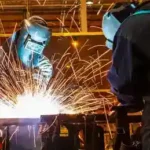
welding: Laser welding is used to join two pieces of material together,
such as metals or plastics. The laser beam heats and melts the material,
creating a strong bond between the two pieces. - Laser
ablation: Laser ablation is used to remove a thin layer of material from
the surface of a workpiece. The laser beam heats and vaporizes the
material, removing a small amount of the surface layer. - Laser
cladding: Laser cladding is used to add a layer of material to a
workpiece, such as adding a wear-resistant layer to a metal part. The
laser beam melts the material, which is then deposited onto the surface of
the workpiece.
Overall, the type of LBM used depends on the specific
application and the properties of the material being machined. Each type of LBM
offers its own advantages and limitations, making it important to carefully
consider the appropriate type of LBM for a given manufacturing process.
Laser Beam Machining Working Principle:
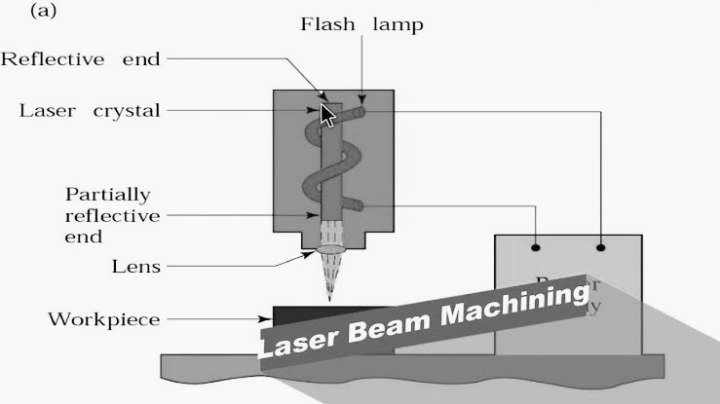
The working principle of laser beam machining involves the
use of a highly focused beam of laser light to remove material from a
workpiece. The process typically involves the following steps:
- Generation
of the laser beam: A laser beam is generated by a laser source, which
emits a highly focused beam of light. - Focusing
the laser beam: The laser beam is focused using a set of lenses, mirrors,
or other optical components to direct the beam onto the workpiece. The
focused beam is typically only a few microns in diameter. - Interaction
with the workpiece: The focused laser beam interacts with the workpiece,
causing the material to be heated and vaporized. The high energy density
of the laser beam melts, vaporizes, or ablates the material, causing it to
be removed from the surface of the workpiece. - Controlling
the process: The laser beam machining process is controlled using a
computer numerical control (CNC) system, which directs the movement of the
laser beam and the workpiece. The CNC system is programmed with specific
instructions that dictate the path and speed of the laser beam. - Cooling
and removal of debris: The material removed from the workpiece during the
machining process is typically removed using a vacuum or compressed air.
Additionally, a cooling system is used to dissipate the heat generated by
the laser beam and prevent damage to the workpiece and the system.
Overall, laser beam machining is a non-contact,
high-precision machining process that can be used to cut, drill, weld, and
engrave a variety of materials. The process can be controlled with a high
degree of accuracy, allowing for the creation of intricate designs and shapes.
Laser Beam Machining Application:
Laser beam machining (LBM) has a wide range of applications
in various industries. Some of the common applications of LBM include:
- Aerospace
industry: LBM is used in the aerospace industry for cutting and drilling
various components, such as turbine blades, aircraft engine parts, and
wing structures. - Medical
industry: LBM is used in the medical industry for cutting and shaping
surgical instruments, stents, and implants made from a variety of
materials such as titanium, stainless steel, and polymers. - Electronics
industry: LBM is used in the electronics industry for cutting and drilling
printed circuit boards, microelectronics, and semiconductor materials. - Automotive
industry: LBM is used in the automotive industry for cutting and welding
components such as gears, valves, and engine parts. - Jewelry
industry: LBM is used in the jewelry industry for engraving, cutting, and
drilling intricate designs on various materials such as gold, silver, and
precious stones. - Textile
industry: LBM is used in the textile industry for cutting and marking
fabrics, leather, and other materials. - Packaging
industry: LBM is used in the packaging industry for cutting and marking
cardboard, plastic, and other packaging materials. - Defense
industry: LBM is used in the defense industry for cutting and shaping
components for various weapons and equipment.
Overall, LBM is a versatile machining process that can be
used in various industries for a wide range of applications, providing
high-precision and high-quality results.
Read More: Slotter Machine: Definition, Types, Parts, Operation, Advantages, Application & More
Advantages and Disadvantages of Laser Beam Machining
Advantages of Laser Beam Machining:
- High
precision: LBM is a non-contact machining process that can produce
high-precision results with a tolerance of a few microns. - Versatility:
LBM can be used to process a wide range of materials, including metals,
plastics, ceramics, and composites. - Speed:
LBM can perform operations quickly, allowing for higher productivity and
faster turnaround times. - Minimal
material waste: LBM is a low-waste process that produces minimal material
waste, as it does not generate chips or debris. - No
tool wear: LBM is a non-contact process, so there is no tool wear,
reducing the need for tool replacement and maintenance. - Flexibility:
LBM can be used to create complex shapes and designs, providing a high
degree of flexibility in the machining process. - Low
thermal distortion: LBM generates minimal heat, resulting in low thermal
distortion of the workpiece.
Disadvantages of Laser Beam Machining:
- Cost:
LBM machines can be expensive to purchase and operate, making them less
accessible for small-scale production or low-budget manufacturing. - Limited
depth of cut: LBM is not suitable for deep cuts or thick materials, as the
focused laser beam can only penetrate a limited depth. - Hazardous
fumes: The machining process generates hazardous fumes and debris,
requiring proper ventilation and safety measures. - Limited
efficiency: LBM can be less efficient for high-volume production runs, as
the process can be time-consuming and may require frequent maintenance. - Limited
surface finish: LBM can produce a rough surface finish, which may require
additional processing to achieve the desired surface quality.
Overall, LBM offers high precision and flexibility in the
machining process, but it may not be suitable for all materials and
applications. The cost and safety considerations should also be carefully evaluated
when considering LBM for manufacturing operations.
Read More: Milling Machine: Definition, Parts, Operation, Working Principle, Application, Advantages
History of Laser Beam Machining
The history of Laser Beam Machining (LBM) dates back to the
invention of the laser itself in 1960 by Theodore Maiman. The first patent for
laser beam cutting was filed by Bell Labs in 1965. In the early 1970s, the
first commercial LBM machine was developed by the Western Electric Company,
which was later acquired by Unitek Corporation.
During the 1970s and 1980s, LBM gained popularity in various
industries, including aerospace, electronics, and medical manufacturing. In
1975, the first LBM system for machining ceramics was developed by the
Fraunhofer Institute in Germany.
In the 1990s, advancements in laser technology, including
the development of pulsed lasers, made LBM more precise and efficient.
Additionally, the development of computer-aided design (CAD) and computer-aided
manufacturing (CAM) systems allowed for more complex designs to be machined
with LBM.
Since then, LBM has continued to evolve with advancements in
laser technology and the development of new applications. Today, LBM is widely
used in various industries for high-precision machining of a wide range of
materials.
Read More: Planer Machine: Definition, Parts, Working Principle, Types, Operation, Advantages, Application
Difference between Laser Beam Welding and Electron Beam
Welding
Laser Beam Welding (LBW) and Electron Beam Welding (EBW) are
two common techniques used in modern manufacturing for joining metals. While
both methods use a focused beam of energy to melt and join metal parts, there
are several differences between them.
- Energy
Source: The primary difference between LBW and EBW is the energy source
used. LBW uses a high-intensity laser beam to melt and join metal parts,
while EBW uses a high-velocity electron beam to do the same. - Power
density: The power density of EBW is generally higher than that of LBW.
EBW can produce a power density of up to 1 megawatt per square millimeter,
whereas LBW can only produce a power density of up to 100 kilowatts per
square millimeter. - Depth
of penetration: EBW can produce a much deeper penetration depth than LBW,
making it suitable for welding thicker metals. The depth of penetration in
EBW can reach up to several centimeters, whereas in LBW it is usually
limited to a few millimeters. - Welding
speed: LBW is generally faster than EBW, especially for thinner materials.
This is because the laser beam has a higher travel speed than the electron
beam. However, EBW is faster for thicker materials because of its deeper
penetration depth. - Cost:
EBW equipment is generally more expensive than LBW equipment because it
requires a vacuum chamber to operate. LBW equipment can be operated in the
open air, which makes it more cost-effective.
In summary, both LBW and EBW have their unique advantages
and disadvantages. LBW is faster and more cost-effective for thin materials,
while EBW is better for thicker materials and can produce deeper penetration
depth.
Read More: Shaper Machine: Definition, Parts, Working Principle, Types, Operation, Advantages, Application