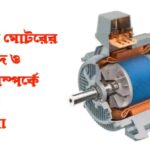
What is Induction Motor?
An induction motor is an AC (alternating current) electric
motor that works by using electromagnetic induction to generate a rotating
magnetic field. It is the most commonly used type of electric motor and is used
in a wide range of industrial, commercial, and residential applications.
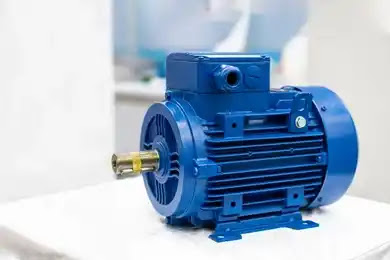
Induction motors consist of two main parts: the stator and
the rotor. The stator is the stationary part of the motor and contains the
winding that produces the magnetic field. The rotor is the rotating part of the
motor and is made up of conductive bars or coils that are connected to form a
closed loop.
When an AC voltage is applied to the stator winding, it
creates a magnetic field that rotates around the stator. This rotating magnetic
field induces an electric current in the rotor, which in turn generates a magnetic
field that interacts with the stator’s magnetic field. This interaction causes
the rotor to rotate, and the motor converts electrical energy into mechanical
energy.
Induction motors are simple in construction, reliable, and
cost-effective. They are also energy-efficient and require minimal maintenance.
However, their speed cannot be easily controlled, and they may not be suitable
for applications that require precise speed control.
Induction Motor working principle
An induction motor works based on the principle of
electromagnetic induction. It is an AC (alternating current) electric motor
that converts electrical energy into mechanical energy by using the interaction
between the magnetic fields of the stator and rotor.
The induction motor has two main parts: the stator and the
rotor. The stator is the stationary part of the motor and is made up of a
laminated core with evenly spaced slots that hold the stator winding. The
stator winding is a set of three-phase windings that are electrically separated
from each other but connected in a delta or wye configuration.
The rotor is the rotating part of the motor and is made up
of a laminated core with evenly spaced slots that hold the rotor winding. The
rotor winding is made up of conductive bars or copper rods that are connected
at both ends to form a complete loop.
When an AC voltage is applied to the stator winding, it
creates a rotating magnetic field. The rotating magnetic field induces a
voltage in the rotor winding, which in turn creates a magnetic field in the
rotor. The rotor magnetic field tries to align itself with the rotating magnetic
field of the stator, causing the rotor to rotate.
As the rotor starts to rotate, it generates an electromotive
force (EMF) that opposes the original current flow in the rotor winding. This
opposition to current flow is called “reactance.” The reactance in
the rotor winding creates a difference in the rotor and stator magnetic fields,
which causes the rotor to accelerate until it reaches a speed close to the
speed of the rotating magnetic field of the stator.
The speed of the rotor is slightly less than the speed of
the rotating magnetic field of the stator, which is known as the
“slip.” The amount of slip depends on the load torque and the design
of the motor. The slip determines the amount of current flow in the rotor,
which in turn determines the amount of torque produced by the motor.
In summary, an induction motor works based on the
interaction between the magnetic fields of the stator and rotor, creating a
rotating magnetic field that induces a voltage and current flow in the rotor
winding, causing the rotor to rotate and convert electrical energy into
mechanical energy.
Classification of Induction Motor
Induction motors can be classified based on various factors.
Some of the common classifications are:
- Based
on the type of rotor:
- Squirrel
cage induction motor: This type of motor has a rotor consisting of a
cylindrical core made of laminations with conductive bars or rods placed
parallel to the axis of the rotor and short-circuited at both ends. This
design resembles a squirrel cage and hence the name. - Wound
rotor induction motor: In this type of motor, the rotor windings are not
short-circuited but instead connected to slip rings. External resistance
can be added to these windings to control the speed of the motor.
- Based
on the number of phases:
- Single-phase
induction motor: This type of motor operates on a single-phase AC supply
and is mainly used for small loads. - Three-phase
induction motor: This type of motor operates on a three-phase AC supply
and is commonly used in industrial applications.
- Based
on the speed-torque characteristics:
- Constant
speed motor: This type of motor maintains a constant speed irrespective of
the load. Examples include synchronous motors. - Variable
speed motor: This type of motor can operate at different speeds depending
on the load. Examples include induction motors and DC motors.
- Based
on the application:
- General-purpose
motor: This type of motor is suitable for a wide range of applications and
is commonly used in household appliances and small industrial equipment. - Special-purpose
motor: This type of motor is designed for specific applications such as
high torque, high-speed, or hazardous environments. Examples include crane
motors and explosion-proof motors.
Types of Induction Motor
There are mainly two types of induction motors:
- Single-phase
induction motor: This type of induction motor is used in low-power
applications and in situations where a three-phase power supply is not
available. It has a single stator winding and a squirrel-cage rotor. - Three-phase
induction motor: This type of induction motor is widely used in high-power
applications and requires a three-phase power supply. It has three stator
windings that are placed 120 degrees apart and a squirrel-cage rotor.
There are also different types of three-phase induction
motors based on the rotor construction:
- Squirrel
cage induction motor: The most common type of induction motor, with a
simple and rugged construction, and widely used in industrial
applications. - Wound
rotor induction motor: It has a wound rotor with external terminals
connected to slip rings, allowing the rotor resistance and reactance to be
varied. It is used in applications requiring high starting torque, such as
cranes and hoists. - Double
cage induction motor: It has two concentric cages in the rotor, one outer
and one inner, which provide high starting torque and good running
performance. - Slip
ring induction motor: It has a wound rotor with external terminals
connected to slip rings, and brushes that allow external resistance to be
added to the rotor circuit. It is used in applications requiring variable
speed control, such as elevators and paper mills.
Overall, the choice of induction motor type depends on the
specific application requirements, such as power output, starting torque, and
speed control.
Induction Motor Advantages and Disadvantages
Advantages of induction motor:
- Simple
and robust construction: Induction motors have a simple and robust design,
with fewer moving parts than other types of motors, making them reliable
and durable. - High
efficiency: Induction motors are highly efficient, with typical efficiency
levels of 85-90%. - Low
maintenance: Induction motors require minimal maintenance, with no brushes
or commutators to wear out. - Low
cost: Induction motors are relatively inexpensive compared to other types
of motors. - Self-starting:
Induction motors are self-starting, meaning they do not require any
additional devices to start them.
Disadvantages of induction motor:
- Limited
speed control: Induction motors have limited speed control, with the speed
being determined by the frequency of the power supply and the number of
poles in the motor. - Lower
power factor: Induction motors have a lower power factor than other types
of motors, which can result in higher energy consumption. - Noisy
operation: Induction motors can produce a lot of noise during operation,
which can be a problem in some applications. - Torque
ripple: Induction motors can produce torque ripple, which can affect the
performance of some applications. - Reduced
efficiency at low loads: Induction motors can have reduced efficiency at
low loads, which can lead to wasted energy.
Application of Induction Motor
Induction motors are used in a wide range of applications
due to their simple and robust construction, high efficiency, and low
maintenance requirements. Some of the common applications of induction motors
are:
- Industrial
machinery: Induction motors are widely used in industrial machinery such
as pumps, compressors, fans, and conveyor systems. - HVAC
systems: Induction motors are used in heating, ventilation, and air
conditioning (HVAC) systems to power fans and blowers. - Agriculture:
Induction motors are used in agriculture to power irrigation pumps, grain
elevators, and other agricultural machinery. - Automotive
industry: Induction motors are used in electric vehicles as the main
propulsion motor. - Household
appliances: Induction motors are used in household appliances such as
washing machines, refrigerators, and air conditioners. - Robotics:
Induction motors are used in robotics for motion control and positioning
applications. - Renewable
energy systems: Induction motors are used in wind turbines and
hydroelectric power plants to convert kinetic energy into electrical
energy. - Marine
industry: Induction motors are used in ship propulsion systems, water
pumps, and other marine applications. - Mining
industry: Induction motors are used in mining applications such as
conveyor systems, crushers, and hoists.
Overall, induction motors are widely used in various
industries and applications due to their reliability, efficiency, and low
maintenance requirements.
Application of Induction Motor in Industry
Induction motors are widely used in the industrial sector
due to their rugged construction, high efficiency, and low maintenance
requirements. Here are some specific applications of induction motors in
various industries:
- Pumps:
Induction motors are used to power various types of pumps such as
centrifugal pumps, submersible pumps, and water pumps. These pumps are
used in industries such as water supply, agriculture, and chemical
processing. - Compressors:
Induction motors are used in air compressors to generate compressed air
for various industrial applications. - Fans
and blowers: Induction motors are used in fans and blowers for
ventilation, cooling, and air circulation in industries such as HVAC,
manufacturing, and mining. - Conveyor
systems: Induction motors are used to power conveyor systems used in
material handling and transportation in industries such as food
processing, automotive, and packaging. - Machine
tools: Induction motors are used in machine tools such as lathes, milling
machines, and drilling machines, providing power for the cutting tools. - Cranes
and hoists: Induction motors are used in cranes and hoists for lifting and
moving heavy loads in industries such as construction, mining, and
manufacturing. - Electric
vehicles: Induction motors are used as the main propulsion motor in
electric vehicles, such as cars, buses, and trains. - Generators:
Induction motors are used as generators in wind turbines and hydroelectric
power plants to convert kinetic energy into electrical energy.
Overall, induction motors find numerous applications in the
industrial sector due to their reliability, efficiency, and versatility.
Construction of Induction Motor
An induction motor has two main components: a stationary
part called the stator and a rotating part called the rotor.
The stator consists of a core made of stacked laminations,
on which a three-phase winding is wound. The winding is placed in slots on the
stator and is connected to three-phase AC power supply. The stator winding
produces a rotating magnetic field that induces a current in the rotor.
The rotor can be of two types: squirrel cage or wound. A
squirrel cage rotor consists of a cylindrical iron core with slots on its
surface, which are filled with conductive bars made of copper or aluminum. The
bars are short-circuited at both ends by two end rings. When the stator winding
produces a rotating magnetic field, the magnetic field cuts across the
conductive bars of the rotor and induces a current in them, which in turn
produces a magnetic field. The interaction between the stator magnetic field
and the rotor magnetic field generates torque, causing the rotor to rotate.
A wound rotor induction motor has a rotor with a three-phase
winding, similar to the stator winding. The winding is connected to slip rings,
which are mounted on the rotor shaft. External resistors can be connected to
the slip rings to vary the rotor resistance and reactance, which affects the
motor’s starting torque and speed control.
The stator and rotor are separated by an air gap, which is
small but critical for the motor’s performance. The air gap’s width and
uniformity affect the motor’s efficiency, power output, and noise level.
Overall, the construction of an induction motor is simple
and robust, with no brushes or commutators, and is widely used in various
industrial and domestic applications.
Application of 3-phase Induction Motor
Three-phase induction motors are widely used in industrial
and commercial applications due to their robust construction, reliability, and
low maintenance. Some common applications of three-phase induction motors are:
- Compressors:
Induction motors are used in various types of compressors, such as
reciprocating, rotary screw, and centrifugal compressors, for air and gas
compression in industrial and commercial settings. - Pumps:
Induction motors drive various types of pumps, including centrifugal,
submersible, and booster pumps, for water supply, irrigation, sewage
treatment, and chemical processing. - Fans:
Induction motors power various types of fans, such as axial, centrifugal,
and blower fans, for ventilation, air conditioning, and process cooling. - Conveyors:
Induction motors are used in conveyor systems for material handling and
transportation in various industries, such as mining, food processing, and
manufacturing. - Machine
tools: Induction motors drive various types of machine tools, such as
lathes, mills, grinders, and drills, for metalworking, woodworking, and
other precision machining operations. - Cranes
and hoists: Induction motors provide high starting torque and precise
speed control for various types of cranes and hoists used in construction,
shipping, and other heavy industries. - Paper
and textile industry: Induction motors are used in various machines used
in paper and textile industries, such as paper machines, textile looms,
and spinning machines.
Overall, three-phase induction motors are used in various
applications where a reliable and efficient motor is required to power
machines, equipment, and systems in industrial and commercial settings.
Induction Motor vs Synchronous Motor
Induction motors and synchronous motors are both types of AC
motors, but they have some significant differences.
- Operation:
An induction motor operates on the principle of induction, where a
rotating magnetic field in the stator induces a current in the rotor. In
contrast, a synchronous motor operates on the principle of
electromagnetism, where the stator produces a rotating magnetic field, and
the rotor rotates at the same speed as the magnetic field. - Starting:
Induction motors have a self-starting mechanism and do not require any
external means to start. In contrast, synchronous motors require external
means to start, such as a DC motor or an induction motor. - Speed:
The speed of an induction motor is slightly lower than the synchronous
speed, depending on the load and the slip of the rotor. In contrast, a
synchronous motor runs at synchronous speed, which is determined by the
frequency of the AC supply and the number of poles. - Power
factor: Induction motors have a lagging power factor, which means they
draw reactive power from the grid, while synchronous motors have a leading
power factor, which means they provide reactive power to the grid. - Applications:
Induction motors are widely used in various industrial and commercial
applications, such as pumps, fans, compressors, conveyors, and machine
tools, due to their simplicity, reliability, and low cost. In contrast,
synchronous motors are used in applications where precise speed control is
required, such as in electric clocks, record players, and synchronous
generators.
Overall, induction motors and synchronous motors have
different operating principles, starting mechanisms, speed characteristics,
power factors, and applications, and the choice of motor depends on the specific
requirements of the application.
Single phase Induction Motor
A single-phase induction motor is an AC motor that operates
on a single-phase power supply. It is commonly used in small appliances, such
as fans, pumps, and washing machines.
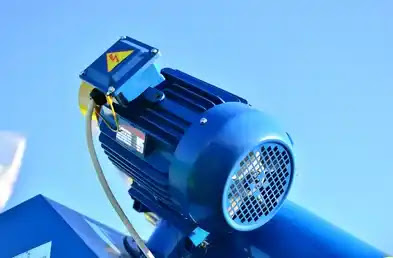
Unlike a three-phase induction motor, a single-phase
induction motor does not have a rotating magnetic field. Instead, it relies on
a special design known as a split-phase motor, which creates two magnetic
fields that are out of phase with each other.
The split-phase motor has two windings, a main winding and
an auxiliary winding. The main winding is connected to the power supply, while
the auxiliary winding is connected to a capacitor. The capacitor helps to
create a phase shift between the two windings, which creates the two magnetic
fields.
When the motor is started, the auxiliary winding and
capacitor create a magnetic field that is out of phase with the magnetic field
created by the main winding. This difference in phase creates a rotating
magnetic field that causes the rotor to start rotating.
Single-phase induction motors are generally used for low
power applications, up to a few horsepower. They are simple, reliable, and easy
to maintain. However, they have lower efficiency compared to three-phase
induction motors and are not suitable for high power applications.
Read More: Why Induction Motor cannot run at Synchronous Speed?