A hydraulic braking system is a type of braking system that
uses fluid pressure to transfer force from the brake pedal to the brake pads or
shoes, which press against the wheels to slow down or stop a vehicle. The
system typically consists of a master cylinder, brake lines, brake calipers,
and brake pads or shoes.
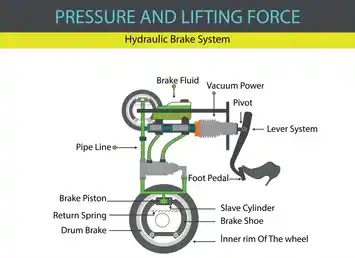
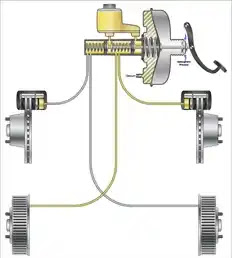
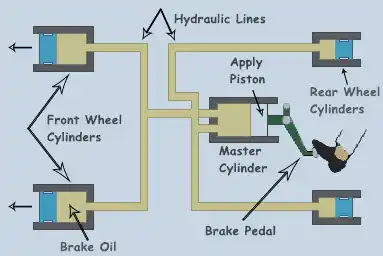
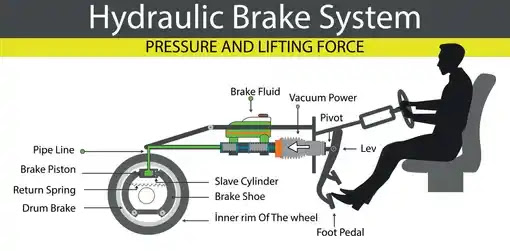
When the brake pedal is pressed, it activates the master
cylinder, which creates hydraulic pressure in the brake lines. This pressure is
then transmitted to the brake calipers or wheel cylinders, which apply force to
the brake pads or shoes. The resulting friction between the brake pads or shoes
and the rotating wheels slows down the vehicle.
One advantage of a hydraulic braking system is that it
allows for a high degree of control over the amount of braking force applied to
each wheel. This is important for ensuring that the vehicle stops smoothly and
evenly, even in emergency situations. Additionally, hydraulic braking systems
are more reliable and require less maintenance than mechanical braking systems.
Construction of Hydraulic Braking System:
A hydraulic braking system is comprised of several
components that work together to slow down or stop a vehicle. Here is an
overview of the construction of a hydraulic braking system:
Master
Cylinder: The master cylinder is located on the firewall of the vehicle
and is responsible for creating hydraulic pressure in the brake lines. It
consists of a reservoir containing brake fluid and a piston that moves in
response to the force applied by the brake pedal.
Brake
Lines: Brake lines are metal tubes that carry hydraulic fluid from the
master cylinder to the brake calipers or wheel cylinders. They are
typically made of steel or copper and are designed to withstand high
pressure.
Brake
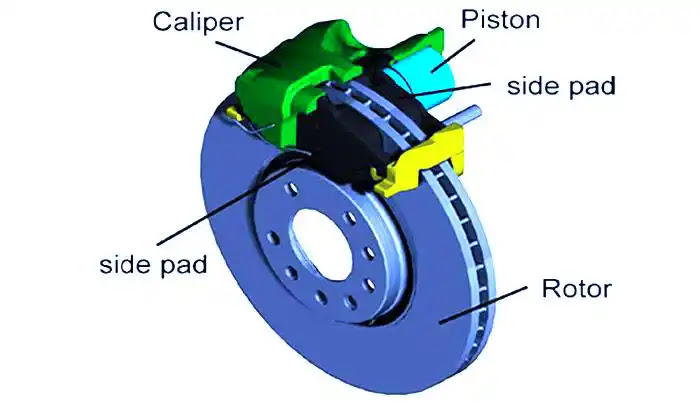
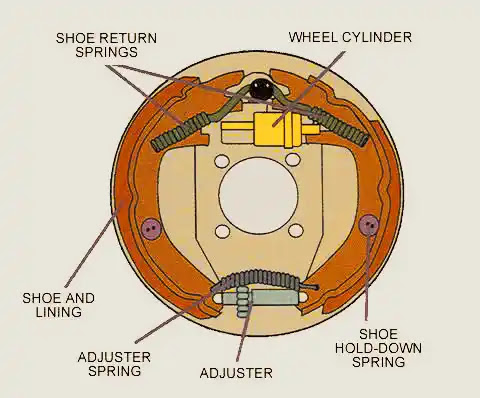
Calipers or Wheel Cylinders: Brake calipers or wheel cylinders are
responsible for applying pressure to the brake pads or shoes. In a disc
brake system, the calipers contain pistons that push the brake pads
against the rotor, while in a drum brake system, the wheel cylinders push
the brake shoes against the drum.
Brake
Pads or Shoes: Brake pads or shoes are the components that actually come
into contact with the wheels to slow down or stop the vehicle. They are
typically made of a high-friction material, such as ceramic or metallic
compounds.
Brake
Fluid: Brake fluid is a specially formulated liquid that is used to
transmit hydraulic pressure from the master cylinder to the brake calipers
or wheel cylinders. It is typically made of a glycol-ether base and is
designed to withstand high temperatures and pressure.
Anti-lock
Braking System (ABS) Components: Many modern vehicles come equipped with
an anti-lock braking system (ABS), which uses sensors and other components
to prevent the wheels from locking up during hard braking. ABS components
include sensors, control modules, and hydraulic valves.
Overall, a hydraulic braking system is a complex and
carefully designed system that requires all components to work together in
order to ensure safe and effective braking performance.
Parts of Hydraulic Braking System:
The hydraulic braking system is comprised of several key
components that work together to slow down or stop a vehicle. Here are the main
parts of a hydraulic braking system:
Brake
Pedal: The brake pedal is located inside the vehicle and is pressed by the
driver’s foot to activate the braking system.
Master
Cylinder: The master cylinder is a component located on the firewall of
the vehicle that converts the force applied to the brake pedal into hydraulic
pressure. It consists of a reservoir containing brake fluid and a piston
that moves in response to the force applied by the brake pedal.
Brake
Lines: Brake lines are metal tubes that carry hydraulic fluid from the
master cylinder to the brake calipers or wheel cylinders.
Brake
Calipers or Wheel Cylinders: Brake calipers or wheel cylinders are
responsible for applying pressure to the brake pads or shoes. In a disc
brake system, the calipers contain pistons that push the brake pads
against the rotor, while in a drum brake system, the wheel cylinders push
the brake shoes against the drum.
Brake
Pads or Shoes: Brake pads or shoes are the components that come into
contact with the wheels to slow down or stop the vehicle. They are
typically made of a high-friction material, such as ceramic or metallic
compounds.
Rotor
or Drum: The rotor or drum is the rotating component of the wheel that the
brake pads or shoes come into contact with to slow down or stop the
vehicle.
Brake
Fluid: Brake fluid is a specially formulated liquid that is used to
transmit hydraulic pressure from the master cylinder to the brake calipers
or wheel cylinders.
Brake
Booster (Vacuum Assist): In some hydraulic braking systems, a brake
booster is used to amplify the force applied to the brake pedal, making it
easier to apply the brakes. The brake booster uses vacuum pressure from
the engine to assist in braking.
Anti-lock
Braking System (ABS) Components: Many modern vehicles come equipped with
an anti-lock braking system (ABS), which uses sensors and other components
to prevent the wheels from locking up during hard braking. ABS components
include sensors, control modules, and hydraulic valves.
Overall, the hydraulic braking system is a complex system
that requires all components to work together to ensure safe and effective
braking performance.
Working of Hydraulic Braking System:
The hydraulic braking system works on the principle of
transmitting force from the brake pedal to the brake pads or shoes using
hydraulic pressure. Here is how a hydraulic braking system works:
When
the brake pedal is pressed, it pushes a rod in the master cylinder, which
creates hydraulic pressure in the brake lines.
The
hydraulic pressure is transmitted to the brake calipers or wheel
cylinders, which in turn apply force to the brake pads or shoes.
The
brake pads or shoes then press against the rotor or drum, generating
friction that slows down or stops the vehicle.
The
amount of force applied to the brakes can be controlled by the driver
through the amount of pressure applied to the brake pedal.
The
brake fluid in the system plays a critical role in transmitting the
hydraulic pressure from the master cylinder to the brake calipers or wheel
cylinders. It is important to ensure that the brake fluid is clean and
free of air bubbles to maintain proper braking performance.
In an
anti-lock braking system (ABS), sensors detect when a wheel is about to
lock up and release the brake pressure on that wheel momentarily to
prevent skidding. This helps the driver maintain control of the vehicle
during emergency braking situations.
Overall, the hydraulic braking system is a reliable and
effective way to slow down or stop a vehicle. However, it is important to
ensure that all components of the system are functioning properly and that the
brake fluid is regularly maintained to ensure safe and effective braking
performance.
Application of Hydraulic Braking System:
The hydraulic braking system is used in a wide range of
vehicles, from cars and trucks to airplanes and trains. Here are some of the
common applications of hydraulic braking systems:
Automotive
Vehicles: Hydraulic braking systems are widely used in cars, trucks, and
other automotive vehicles. They are effective at slowing down or stopping
vehicles of various sizes and weights.
Motorcycles:
Hydraulic braking systems are also used in motorcycles to provide
effective and responsive braking performance.
Aircraft:
Hydraulic braking systems are used in aircraft to slow down and stop the
plane after landing. They are also used to operate the landing gear and
control surfaces.
Trains:
Hydraulic braking systems are used in trains to slow down and stop the
locomotive and the train cars. They are particularly effective at
providing the high levels of braking force required for heavy trains.
Industrial
Equipment: Hydraulic braking systems are used in a variety of industrial
equipment, such as cranes and excavators, to provide safe and precise
braking performance.
Overall, the hydraulic braking system is a versatile
technology that can be used in a wide range of applications to provide safe and
effective braking performance.
Hydraulic Braking System Components:
The hydraulic braking system is made up of several
components that work together to slow down or stop a vehicle. Here are the main
components of a hydraulic braking system:
Brake
Pedal: The brake pedal is located inside the vehicle and is pressed by the
driver’s foot to activate the braking system.
Master
Cylinder: The master cylinder is a component located on the firewall of
the vehicle that converts the force applied to the brake pedal into
hydraulic pressure. It consists of a reservoir containing brake fluid and
a piston that moves in response to the force applied by the brake pedal.
Brake
Lines: Brake lines are metal tubes that carry hydraulic fluid from the
master cylinder to the brake calipers or wheel cylinders.
Brake
Calipers or Wheel Cylinders: Brake calipers or wheel cylinders are
responsible for applying pressure to the brake pads or shoes. In a disc
brake system, the calipers contain pistons that push the brake pads
against the rotor, while in a drum brake system, the wheel cylinders push
the brake shoes against the drum.
Brake
Pads or Shoes: Brake pads or shoes are the components that come into
contact with the wheels to slow down or stop the vehicle. They are
typically made of a high-friction material, such as ceramic or metallic
compounds.
Rotor
or Drum: The rotor or drum is the rotating component of the wheel that the
brake pads or shoes come into contact with to slow down or stop the
vehicle.
Brake
Fluid: Brake fluid is a specially formulated liquid that is used to
transmit hydraulic pressure from the master cylinder to the brake calipers
or wheel cylinders.
Brake
Booster (Vacuum Assist): In some hydraulic braking systems, a brake
booster is used to amplify the force applied to the brake pedal, making it
easier to apply the brakes. The brake booster uses vacuum pressure from
the engine to assist in braking.
Anti-lock
Braking System (ABS) Components: Many modern vehicles come equipped with
an anti-lock braking system (ABS), which uses sensors and other components
to prevent the wheels from locking up during hard braking. ABS components
include sensors, control modules, and hydraulic valves.
Overall, the hydraulic braking system is a complex system
that requires all components to work together to ensure safe and effective
braking performance.
Hydraulic Brake System in Car:
In a car, the hydraulic braking system typically consists of
the following components:
Brake
Pedal: The brake pedal is located on the driver’s side floorboard of the
car and is pressed by the driver’s foot to activate the braking system.
Master
Cylinder: The master cylinder is typically located under the hood of the
car, near the firewall. It converts the force applied to the brake pedal
into hydraulic pressure that is transmitted to the brake calipers or wheel
cylinders.
Brake
Lines: Brake lines are metal tubes that carry hydraulic fluid from the
master cylinder to the brake calipers or wheel cylinders.
Brake
Calipers or Wheel Cylinders: In a disc brake system, the brake calipers
contain pistons that push the brake pads against the rotor to slow down or
stop the vehicle. In a drum brake system, the wheel cylinders push the
brake shoes against the drum.
Brake
Pads or Shoes: Brake pads or shoes are made of high-friction materials,
such as ceramic or metallic compounds, that come into contact with the
rotors or drums to slow down or stop the vehicle.
Rotors
or Drums: The rotors or drums are the rotating components of the wheels
that the brake pads or shoes come into contact with to slow down or stop
the vehicle.
Brake
Fluid: Brake fluid is a specially formulated liquid that is used to
transmit hydraulic pressure from the master cylinder to the brake calipers
or wheel cylinders.
Brake
Booster (Vacuum Assist): In some cars, a brake booster is used to amplify
the force applied to the brake pedal, making it easier to apply the
brakes. The brake booster uses vacuum pressure from the engine to assist
in braking.
Anti-lock
Braking System (ABS) Components: Many modern cars come equipped with an
anti-lock braking system (ABS), which uses sensors and other components to
prevent the wheels from locking up during hard braking. ABS components
include sensors, control modules, and hydraulic valves.
Overall, the hydraulic braking system in a car is a critical
safety feature that helps drivers slow down or stop their vehicles quickly and
safely.
Advantages and Disadvantages of Hydraulic Braking System:
Advantages of Hydraulic Braking System:
Efficient
Braking: The hydraulic braking system provides efficient and reliable
braking performance, allowing drivers to slow down or stop their vehicles
quickly and safely.
Low
Maintenance: Hydraulic braking systems are generally low-maintenance, as
they are designed to be durable and long-lasting. Routine brake fluid
changes and occasional brake pad replacements are typically the only
maintenance required.
Durability:
The components of a hydraulic braking system are designed to withstand
high pressure and constant use, making them durable and reliable.
Versatility:
Hydraulic braking systems can be used in a wide range of vehicles, from
cars and trucks to airplanes and heavy machinery.
Disadvantages of Hydraulic Braking System:
Cost:
Hydraulic braking systems can be more expensive to manufacture and install
than other types of braking systems, such as mechanical brakes.
Complexity:
The hydraulic braking system is a complex system that requires all
components to work together to ensure safe and effective braking
performance. This can make repairs and maintenance more difficult and
time-consuming.
Failure
Risk: If the brake fluid in a hydraulic braking system becomes
contaminated or leaks out, the system can fail, making it impossible to
stop the vehicle. Regular maintenance and checks are necessary to prevent
such failures.
Heat
Build-up: The hydraulic braking system can generate a lot of heat,
particularly during prolonged or heavy use, which can cause brake fade and
reduce braking performance.
আমি Md Shamim Hossain, TonBangla-এর প্রতিষ্ঠাতা। প্রযুক্তি, কম্পিউটার, প্রোগ্রামিং, প্রকৌশল ও শিক্ষামূলক বিষয় নিয়ে সহজ, তথ্যবহুল বাংলা কনটেন্ট তৈরি করি।