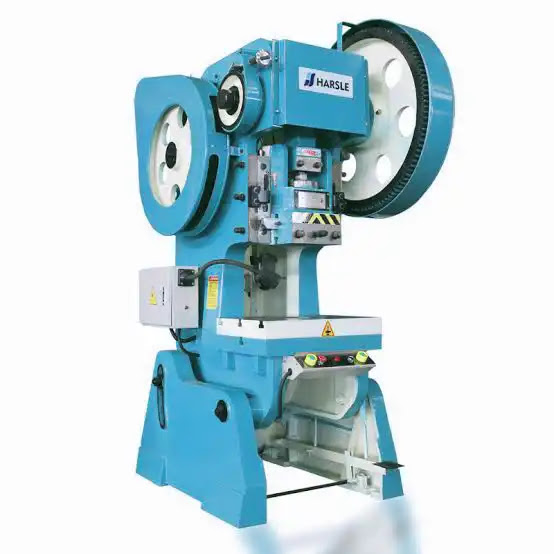
What is Turret Lathe?
A turret lathe is a type of metalworking lathe that is used
for repetitive production of identical parts. It is called a turret lathe
because it has a tool turret that holds multiple cutting tools that can be quickly
and easily changed out as needed. This allows the lathe to perform a variety of
operations without requiring the operator to manually change tools, which saves
time and increases efficiency.

In a turret lathe, the workpiece is held in a chuck and rotated
while the cutting tools in the turret move in to cut and shape the material.
The tools are arranged in a circular pattern around the workpiece, and the
turret rotates to bring the desired tool into position. The operator can select
the tool and the cutting depth, and the lathe will automatically perform the
operation.
Turret lathes are commonly used in manufacturing settings
for producing large quantities of parts with consistent quality and accuracy.
They are also used in the production of complex parts with multiple features,
as the tool turret allows for a variety of cutting operations to be performed
on the same workpiece without the need for manual tool changes.
Parts of Turret Lathe
The main components of a turret lathe are:
- Bed:
This is the foundation of the lathe and provides the base for all other
components to be mounted. - Headstock:
The headstock is located at the left end of the bed and houses the main
spindle. The spindle is driven by an electric motor and is used to rotate
the workpiece. - Tailstock:
The tailstock is located at the right end of the bed and is used to
support the other end of the workpiece. It can be moved along the bed to
adjust the length of the workpiece being machined. - Tool
turret: The tool turret is mounted on top of the lathe bed and holds
multiple cutting tools. The turret can be rotated to bring the desired
tool into position for machining. - Carriage:
The carriage is located between the headstock and the tailstock and moves
along the bed to position the cutting tools relative to the workpiece. It
also supports the cutting tools and controls the feed rate of the tool. - Cross
slide: The cross slide is mounted on the carriage and moves perpendicular
to the axis of the lathe. It is used to control the depth of the cut and
to produce flat surfaces on the workpiece. - Compound
rest: The compound rest is mounted on the cross slide and can be rotated
to produce angled cuts on the workpiece. - Apron:
The apron is located on the front of the carriage and houses the controls
for the feed rate of the cutting tool and the direction of movement of the
carriage. - Chuck:
The chuck is used to hold the workpiece securely in place and rotate it
during machining.
Overall, these components work together to enable the turret
lathe to produce complex parts with high precision and efficiency.
Working of Turret Lathe
A turret lathe is a type of lathe machine that is designed
for high-speed and precision turning of cylindrical workpieces. The machine has
a horizontal bed on which the workpiece is mounted and rotated. The cutting
tool is mounted on a turret, which can be rotated to bring the appropriate tool
into position for cutting.

The turret is mounted on a slide, which moves back and forth
along the bed of the machine. This allows the cutting tool to move along the
length of the workpiece, cutting it to the desired shape and size. The turret
can hold several cutting tools, which can be automatically indexed into
position by the machine.
The turret lathe can be operated manually or using computer
numerical control (CNC) technology. In manual operation, the operator controls
the movement of the cutting tool and the positioning of the turret by using
handwheels and levers. In CNC operation, the machine is programmed with a set
of instructions that control the movement of the cutting tool and the positioning
of the turret.
The turret lathe is commonly used in the production of small
to medium-sized precision parts, such as screws, bolts, and bushings. Its high
speed and accuracy make it a popular choice in manufacturing applications where
tight tolerances are required.
Types of Turret Lathe
There are several types of turret lathes, including:
- Single
spindle automatic turret lathe: This type of turret lathe has one spindle
and can perform multiple cutting operations without the need for manual
intervention. It is commonly used in high-volume production settings. - Multi-spindle
automatic turret lathe: This type of turret lathe has multiple spindles,
which can perform multiple operations simultaneously. It is used for
high-volume production of small parts. - Ram-type
turret lathe: This type of turret lathe has a ram that moves back and
forth along the bed of the machine, allowing the cutting tool to perform
operations on different sections of the workpiece. It is used for
large-scale production of long, slender workpieces. - Capstan
lathe: This type of turret lathe has a capstan-style turret that is
mounted on the end of the spindle. It is used for high-speed production of
small to medium-sized parts. - Vertical
turret lathe: This type of turret lathe has a vertical spindle and a
rotating table that is used to hold and rotate the workpiece. It is
commonly used for machining large, heavy workpieces.
Turret Lathe Operation
Turret lathe is a versatile machine used for turning
operations in metalworking. Here are the basic steps involved in operating a
turret lathe:
- Preparation:
Before starting the machine, make sure that it is clean and in good
working condition. Check the workpiece and tools for defects or damage,
and make sure that they are properly secured and aligned. - Setting
up the machine: Set the cutting speed, feed rate, and depth of cut based
on the material being machined and the desired finish. Install the
appropriate tool in the tool holder and set the tool height and angle. - Starting
the machine: Turn on the machine and adjust the speed and feed as needed.
Use the handwheels to move the tool into position, and engage the spindle
to start the cutting operation. - Machining
the workpiece: Use the handwheels to control the movement of the tool, and
adjust the cutting speed and feed rate as needed. Monitor the operation to
ensure that the machine is cutting the workpiece to the desired
specifications. - Finishing
the workpiece: When the machining operation is complete, disengage the
spindle and use the handwheels to move the tool away from the workpiece.
Remove the workpiece and inspect it for defects or damage. - Cleaning
up: After the operation, turn off the machine and clean the work area.
Remove any chips or debris from the machine and dispose of them properly.
Store the tools and accessories in a safe place.
Overall, operating a turret lathe requires knowledge of
machining principles, tooling, and machine operation. Proper maintenance and
cleaning are also essential for the safe and efficient operation of the
machine.
Turret Lathe Vs Capstan Lathe
Turret lathes and capstan lathes are both types of lathe
machines that are used for turning operations, but they differ in their design
and functionality. Here are some key differences between turret lathes and
capstan lathes:
- Tooling
system: Turret lathes have a rotary turret that can hold multiple cutting
tools, while capstan lathes have a fixed tooling system that can hold a
limited number of tools. - Headstock
movement: Turret lathes have a stationary headstock, while capstan lathes
have a moving headstock. In a turret lathe, the headstock remains
stationary, while the turret and cutting tools move along the length of
the workpiece. In a capstan lathe, the headstock moves back and forth
along the bed of the machine, while the turret and cutting tools remain
stationary. - Versatility:
Turret lathes are more versatile than capstan lathes. Turret lathes can
perform a wider range of operations, such as drilling, boring, threading,
and milling, while capstan lathes are mainly used for turning operations. - Production
rate: Capstan lathes are faster than turret lathes for small to
medium-sized workpieces due to their faster headstock movement and quicker
tool indexing time. - Size
of workpiece: Capstan lathes are suitable for small to medium-sized
workpieces, while turret lathes are typically used for larger workpieces.
Overall, turret lathes are better suited for complex turning
operations that require a wider range of operations, while capstan lathes are
better suited for high-speed production of small to medium-sized workpieces.
The choice between the two will depend on the specific needs of the
application.
Turret Lathe Vs Engine Lathe
Turret lathes and engine lathes are both types of lathe
machines, but they differ in their design and functionality. Here are some key
differences between turret lathes and engine lathes:
- Tooling
system: Turret lathes have a rotary turret that can hold multiple cutting
tools, while engine lathes have a fixed tool post that can hold only one
or two cutting tools. - Automation:
Turret lathes are typically more automated than engine lathes. Turret
lathes can be equipped with automatic tool changers and can perform
multiple operations simultaneously, while engine lathes require manual
tool changes and can perform only one operation at a time. - Versatility:
Turret lathes are more versatile than engine lathes. Turret lathes can
perform a wider range of operations, such as drilling, boring, and
threading, while engine lathes are mainly used for turning operations. - Size
of workpiece: Engine lathes are designed to handle larger workpieces than
turret lathes. Engine lathes can turn workpieces up to several feet long,
while turret lathes are typically used for smaller workpieces. - Cost:
Turret lathes are generally more expensive than engine lathes due to their
larger size, more complex tooling systems, and higher degree of
automation.
Overall, turret lathes are better suited for high-volume
production of small to medium-sized parts that require multiple operations,
while engine lathes are better suited for larger workpieces and turning
operations. The choice between the two will depend on the specific needs of the
application.
Benefits Of Turret Lathe
Turret lathes offer several benefits, including:

- Efficiency:
Turret lathes are highly automated machines that can perform multiple
operations simultaneously, which increases efficiency and reduces cycle
time. They can also be equipped with automatic tool changers, which
further improves efficiency. - Accuracy:
Turret lathes are highly accurate machines that can produce parts to
precise specifications. The rotary turret allows for precise tool
positioning, and the rigid construction of the machine minimizes
deflection and vibration. - Versatility:
Turret lathes are versatile machines that can perform a wide range of
operations, such as turning, drilling, boring, and threading, which makes
them suitable for a variety of applications. - Consistency:
Turret lathes are highly repeatable machines that can produce parts to
consistent quality standards. This is important for high-volume production
runs and for ensuring that parts are interchangeable. - Flexibility:
Turret lathes can be adapted to a variety of applications by changing the
tooling and programming the machine accordingly. This makes them suitable
for low-volume production runs and for prototyping. - Reduced
labor costs: The automation of turret lathes reduces the need for manual
labor, which reduces labor costs and improves safety by reducing the risk
of injury from repetitive motion.
Overall, turret lathes are highly efficient, accurate,
versatile, and consistent machines that offer significant benefits for
manufacturers who require high-volume, high-quality production runs.
Read More: Shaper Machine: Definition, Parts, Working Principle, Types, Operation, Advantages, Application
Application of Turret Lathe
Turret lathes are machines that are used for turning
operations in metalworking. They are designed for mass production and are
capable of producing high-quality parts quickly and efficiently. Here are some
common applications of turret lathes:
- Turning
operations: Turret lathes are primarily used for turning operations, such
as facing, drilling, boring, threading, and knurling. These machines can
handle a wide range of workpiece sizes and shapes, from small precision
parts to large heavy-duty components. - Mass
production: Turret lathes are ideal for mass production of identical
parts, as they are designed for high-speed and high-volume operations.
They can produce parts with consistent accuracy and repeatability, which
is essential for maintaining quality control. - Automotive
industry: Turret lathes are widely used in the automotive industry for
manufacturing engine components, such as camshafts, crankshafts, and
connecting rods. These parts require precise machining to meet tight
tolerances, and turret lathes are well-suited for the job. - Aerospace
industry: Turret lathes are also used in the aerospace industry for
manufacturing components for aircraft engines, landing gears, and other
critical systems. These parts must meet strict standards for strength,
durability, and precision, and turret lathes are capable of producing them
to the required specifications. - Medical
industry: Turret lathes are used in the medical industry for manufacturing
precision components for medical devices, such as implants, surgical
instruments, and prosthetics. These parts must meet high standards for
biocompatibility and precision, and turret lathes are well-suited for the
job.
Overall, turret lathes are versatile machines that are used
in a wide range of industries for producing high-quality parts quickly and
efficiently.
Read More: Planer Machine: Definition, Parts, Working Principle, Types, Operation, Advantages, Application