What is a Camshaft?
A camshaft is a rotating shaft within an engine that
operates the engine’s valves. It is typically located in the cylinder block or
cylinder head of the engine and is driven by the crankshaft via a timing belt
or chain. The camshaft is designed with a series of lobes, or cams, that
actuate the valves in a specific sequence and duration.
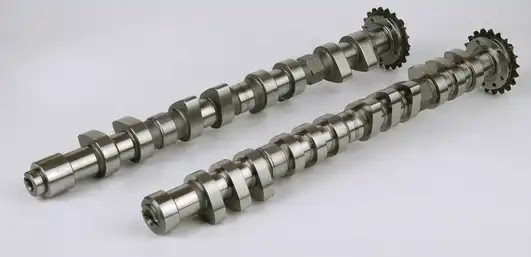
As the camshaft rotates, the lobes on the camshaft push on
the valve lifters, which in turn push on the pushrods or rocker arms. This
opens and closes the engine’s intake and exhaust valves at the appropriate time
during the engine’s combustion cycle.
The shape and size of the camshaft lobes determine the valve
timing and lift, which affects the engine’s performance characteristics, such
as horsepower, torque, and fuel efficiency. The camshaft design can be tailored
to optimize the engine’s performance for a specific application, such as high
performance, fuel efficiency, or low emissions.
Camshafts can also be designed with variable valve timing
(VVT) or variable valve lift (VVL) technology, which allows the engine to
adjust the valve timing or lift for improved performance or efficiency at
different engine speeds and loads.
Overall, the camshaft is a critical component of an internal
combustion engine and plays a crucial role in the engine’s performance,
efficiency, and emissions characteristics.
Parts of Camshaft
The main parts of a camshaft include:
- Journal:
The journal is the cylindrical section of the camshaft that rides on the
bearings in the engine block or cylinder head. The journal supports the
weight of the camshaft and allows it to rotate smoothly. - Lobes:
The lobes are the raised sections on the camshaft that push on the lifters
to open and close the engine’s valves. The shape and size of the lobes
determine the valve timing and lift. - Base
Circle: The base circle is the portion of the camshaft that does not have
a lobe. It is the lowest point on the camshaft and allows the lifters to
return to their starting position between valve opening and closing. - Camshaft
Gear: The camshaft gear is a toothed wheel that is mounted on the end of
the camshaft and is used to drive the timing chain or belt. - Thrust
Plate: The thrust plate is a flat plate that is mounted on the front of
the camshaft to prevent it from moving forward or backward. - Oil
Passages: The camshaft has oil passages that lubricate the lobes, journals,
and lifters to reduce wear and friction. - Timing
Marks: The camshaft has timing marks that are used to synchronize the
valve timing with the piston position in the engine.
Overall, the camshaft is a complex component with several
critical parts that must work together in order to properly operate the
engine’s valves.
Construction of Camshaft
The construction of a camshaft varies depending on the
specific engine and application, but typically consists of the following steps:
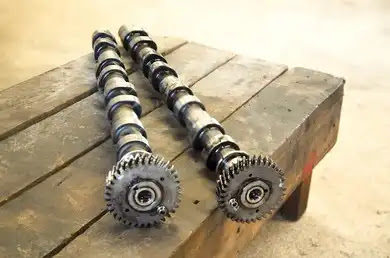
- Material
Selection: Camshafts are typically made from cast iron, steel, or alloy
steel. The material must be strong, durable, and able to withstand the
high stresses and temperatures generated by the engine. - Casting
or Forging: The material is either cast or forged into a rough shape that
closely resembles the final camshaft shape. - Machining:
The rough camshaft is then machined to the final specifications, including
the diameter and shape of the journals and lobes, as well as the location
and size of the oil passages. - Heat
Treatment: The camshaft is heat-treated to increase its strength and
durability. This involves heating the camshaft to a high temperature and
then cooling it rapidly. - Grinding:
The camshaft is then ground to a precise shape and finish to ensure that
the lobes are properly shaped and that the camshaft operates smoothly. - Surface
Treatment: The camshaft may be coated or treated with a surface finish to
improve its durability and reduce wear. - Quality
Control: The finished camshaft is inspected to ensure that it meets the
required specifications and standards.
Overall, the construction of a camshaft is a complex and
precise process that requires careful attention to detail and quality control.
Working of the Camshaft
The camshaft works in conjunction with other engine
components, such as the crankshaft, valves, and lifters, to control the
operation of the engine’s valves. The camshaft rotates at half the speed of the
crankshaft and is driven by a timing chain or belt.
As the camshaft rotates, the lobes on the camshaft push on
the lifters, which in turn push on the pushrods or directly on the rocker arms.
This motion causes the valves to open and close at the correct time in the
engine cycle. The shape and size of the camshaft lobes determine the valve
timing, lift, and duration, which directly affect the engine’s performance.
In a typical four-stroke engine cycle, the camshaft operates
the intake and exhaust valves as follows:
- Intake
Stroke: As the piston moves downward, the intake valve is opened by the
camshaft to allow air and fuel into the combustion chamber. - Compression
Stroke: As the piston moves upward, both the intake and exhaust valves are
closed to compress the air-fuel mixture. - Power
Stroke: As the compressed air-fuel mixture is ignited by the spark plug,
the piston is forced downward, and the exhaust valve is opened by the
camshaft to release the exhaust gases. - Exhaust
Stroke: As the piston moves upward again, the exhaust valve remains open
to allow the remaining exhaust gases to exit the combustion chamber.
The precise timing and duration of the valve openings and
closings are critical to the engine’s performance, and the camshaft must be
carefully designed and manufactured to ensure that it operates smoothly and
reliably.
Types of Camshaft
There are several types of camshafts used in internal
combustion engines, including:
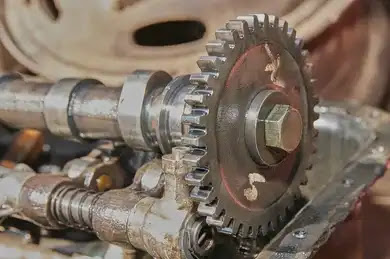
- Flat
Tappet Camshaft: This is a type of camshaft where the lobes are
symmetrical and flat. They are commonly used in older engines and
low-performance engines. - Roller
Camshaft: This type of camshaft uses roller bearings instead of flat
tappets. They are smoother and more durable than flat tappet camshafts,
and they are commonly used in high-performance engines. - Hydraulic
Camshaft: A hydraulic camshaft uses hydraulic lifters to adjust valve
clearance. They are quieter and require less maintenance than solid
camshafts. - Solid
Camshaft: A solid camshaft has no hydraulic lifters and requires more
frequent valve adjustments. They are commonly used in high-performance
engines because they provide better performance and higher RPM. - Dual
Pattern Camshaft: A dual pattern camshaft has different intake and exhaust
lobes, which can improve performance and efficiency. - Variable
Valve Timing (VVT) Camshaft: A VVT camshaft can change the timing of the
camshaft to optimize performance and fuel efficiency at different engine
speeds. - Overhead
Camshaft (OHC): An OHC is a type of camshaft that is located in the
cylinder head, rather than in the engine block. It is commonly used in
modern engines and can provide better performance and fuel efficiency than
other types of camshafts.
Advantages and Disadvantages of Camshaft
Advantages of Camshaft:
- Control
of Valve Timing: The camshaft controls the opening and closing of the
engine valves, which regulates the flow of fuel and air in and out of the
engine cylinders. This allows for precise control of the combustion
process, which can improve engine performance and fuel efficiency. - Improved
Power and Torque: The camshaft can be designed to optimize power and
torque output at different engine speeds, allowing for better acceleration
and overall performance. - Durability:
Camshafts are typically made from hardened steel or other durable
materials, which allows them to withstand the high stresses and
temperatures of the engine. - High
Precision: Modern camshaft manufacturing techniques, such as
computer-controlled grinding and lapping, can produce camshafts with high
levels of precision and consistency.
Disadvantages of Camshaft:
- Complex
Design: Camshafts are often designed with intricate shapes and profiles
that require advanced manufacturing techniques and precision machining. - Cost:
Camshafts can be expensive to manufacture, particularly for
high-performance engines that require specialized designs and materials. - Wear
and Tear: Camshafts are subjected to constant friction and stress, which
can cause them to wear out over time. This can result in reduced engine
performance or even engine failure if the camshaft is not replaced or repaired. - Maintenance:
Depending on the type of camshaft, maintenance can be a concern. Solid
camshafts require more frequent valve adjustments, and hydraulic camshafts
require regular oil changes to ensure proper operation of the lifters.
Application of Camshaft
The camshaft is a crucial component of an internal
combustion engine, and it plays a critical role in controlling the operation of
the engine’s valves. Here are some of the main applications of camshafts:
- Combustion
Control: The camshaft controls the timing and duration of the intake and
exhaust valves, which determines the flow of air and fuel into the engine
and the exhaust of combustion gases out of the engine. This timing and
duration are critical to achieving efficient combustion and maximum power
output. - Performance:
Camshafts can be designed to optimize performance at different engine
speeds, allowing for better acceleration and overall performance. - Fuel
Efficiency: By controlling the timing and duration of the engine valves,
camshafts can help improve fuel efficiency by ensuring that the engine is
running at the optimal air-fuel ratio. - Emissions
Control: The camshaft can be designed to optimize the combustion process
and reduce emissions of harmful pollutants, such as carbon monoxide,
nitrogen oxides, and particulate matter. - Durability:
Camshafts are typically made from durable materials, such as hardened
steel or cast iron, which allows them to withstand the high stresses and
temperatures of the engine.
Overall, the camshaft is a critical component of the engine,
and it plays a vital role in controlling the operation of the engine’s valves
and achieving optimal combustion, performance, and fuel efficiency.
Difference between Camshaft and Crankshaft
The camshaft and crankshaft are both important components in
an internal combustion engine, but they have different functions and designs.
Here are the main differences between the two:
- Function:
The camshaft is responsible for controlling the operation of the engine’s
valves, while the crankshaft is responsible for converting the
reciprocating motion of the pistons into rotational motion to drive the
engine’s output shaft. - Design:
The camshaft is typically a long shaft with multiple lobes, while the
crankshaft is typically a larger, more complex shaft with multiple
journals and counterweights. - Location:
The camshaft is typically located in the cylinder head, while the
crankshaft is located in the engine block. - Rotation:
The camshaft typically rotates at half the speed of the crankshaft, as it
only needs to make one revolution for every two revolutions of the
crankshaft. - Operation:
The camshaft is typically driven by a timing belt or chain, while the
crankshaft is typically driven by a pulley attached to the engine’s
crankshaft.
In summary, while both the camshaft and crankshaft play
critical roles in the operation of an internal combustion engine, they have
different functions, designs, locations, and rotational speeds.
Camshaft Function
The camshaft is a critical component of an internal
combustion engine, and its main function is to control the operation of the
engine’s valves. The camshaft achieves this by using a series of lobes or cams,
which press against the valve lifters or rocker arms to open and close the
valves at the appropriate times.
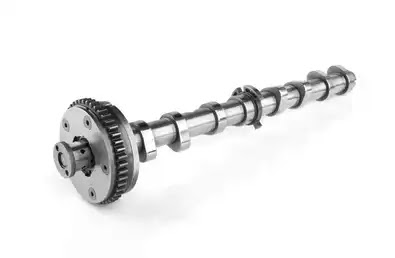
The camshaft is typically driven by a timing belt or chain,
which rotates the camshaft at half the speed of the engine’s crankshaft. As the
camshaft rotates, the lobes on the camshaft push against the valve lifters or
rocker arms, which in turn open and close the engine valves.
The camshaft’s function is critical to the efficient
operation of the engine, as it controls the timing and duration of the valve
openings, which affects the flow of air and fuel into the engine and the
exhaust of combustion gases out of the engine. By optimizing the valve timing
and duration, the camshaft can help improve the engine’s power, torque, and
fuel efficiency.
Overall, the camshaft is a critical component of the engine,
and it plays a vital role in controlling the operation of the engine’s valves
and achieving optimal combustion, performance, and fuel efficiency.
Camshaft Materials:
Camshafts are typically made from steel or cast iron,
although other materials such as aluminum, titanium, and even composite
materials have been used in some applications. Here are some of the most common
materials used in camshaft manufacturing:
- Steel:
Steel is the most common material used for camshafts, as it is strong,
durable, and able to withstand the high stresses and temperatures involved
in engine operation. Various grades of steel are used depending on the
specific application, with higher carbon steels typically being used in
high-performance engines to provide increased strength and wear
resistance. - Cast
iron: Cast iron is also commonly used for camshafts, particularly in
lower-performance engines. Cast iron camshafts are less expensive to
manufacture than steel camshafts, but they are generally not as strong or
durable and may be more prone to wear and deformation over time. - Aluminum:
Aluminum camshafts are lighter than steel or cast iron camshafts, which
can help to reduce overall engine weight and improve performance. However,
aluminum is not as strong or wear-resistant as steel, so aluminum
camshafts may not be suitable for high-performance or heavy-duty
applications. - Titanium:
Titanium camshafts are extremely strong and lightweight, but they are also
very expensive to manufacture. Titanium camshafts are typically used only
in high-end racing applications where maximum performance is required. - Composite
materials: Some manufacturers have experimented with using composite
materials, such as carbon fiber or reinforced plastics, for camshafts.
These materials are extremely lightweight and have high strength-to-weight
ratios, but they are also very expensive to produce and may not be
suitable for all applications.
Overall, the choice of camshaft material depends on a
variety of factors, including the specific application, performance
requirements, and cost considerations. Steel and cast iron are the most common
materials used, but other materials such as aluminum and titanium may be used
in certain specialized applications.
Camshaft Manufacturing Processes:
Camshafts are critical components of internal combustion
engines, and they are typically made using a combination of casting, forging,
and machining processes. Here are the main steps involved in manufacturing a
camshaft:
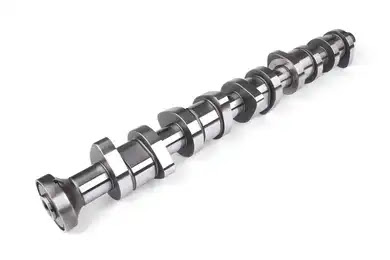
- Pattern
making: The first step in manufacturing a camshaft is creating a pattern
or model of the desired shape. This can be done using computer-aided
design (CAD) software or by hand using traditional drafting techniques. - Casting
or forging: Once the pattern is complete, the camshaft can be cast or
forged using a variety of methods. Casting involves pouring molten metal
into a mold, while forging involves shaping the metal using heat and
pressure. Both casting and forging help to create the initial shape of the
camshaft and align the grain structure of the metal for improved strength
and durability. - Rough
machining: After casting or forging, the camshaft is typically rough
machined to remove any excess material and bring it closer to its final
shape. This may involve using a lathe, milling machine, or other machining
tools to cut and shape the metal. - Heat
treating: The next step is heat treating, as described in the previous
answer. Heat treating helps to increase the strength, durability, and wear
resistance of the camshaft. - Finish
machining: After heat treating, the camshaft is typically machined again
to bring it to its final size and shape. This may involve using grinding,
drilling, and other precision machining techniques to achieve the required
tolerances. - Surface
treatment: Depending on the specific application, the camshaft may also
undergo additional surface treatments, such as nitriding or chrome
plating, to further increase its wear resistance and durability. - Quality
control: Finally, the camshaft undergoes rigorous quality control testing
to ensure that it meets the required specifications and performance
standards. This may involve using non-destructive testing methods, such as
magnetic particle inspection, to detect any cracks or defects in the metal.
Overall, the manufacturing of a camshaft is a complex and
precise process that involves multiple stages of casting, forging, machining,
heat treating, and quality control. The specific process used may vary
depending on the type of engine and performance requirements, but the end goal
is always to produce a strong, durable, and reliable component that can
withstand the rigors of engine operation.
Read More: Crankshaft: Definition, Parts, Working, Types, Material, Advantages, Application