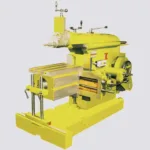
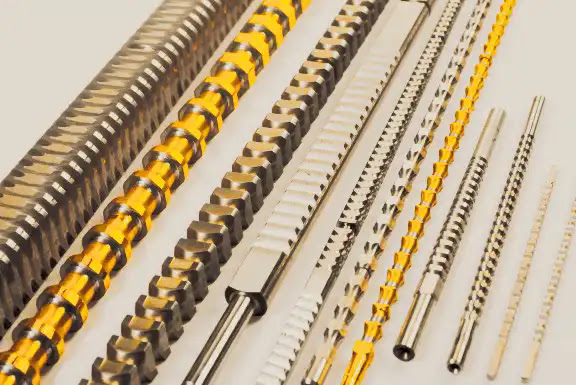
What is Slotter Machine?
A slotter machine, also known as a slotting machine or
slotting shaper, is a type of cutting tool used in metalworking and
woodworking. It is a reciprocating machine tool that uses a single-point
cutting tool to create slots, grooves, or keyways in a workpiece.
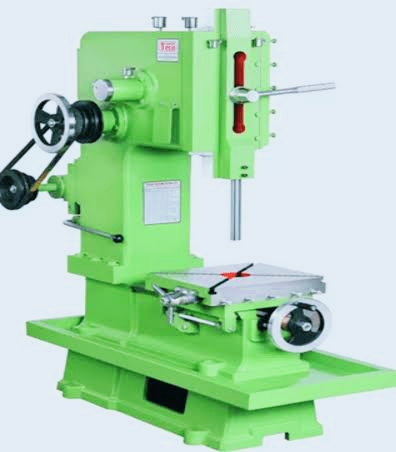
The slotter machine consists of a vertical ram and a
reciprocating tool that moves up and down to make the desired cuts in the
workpiece. The workpiece is secured on a table that can be rotated to enable
the cutting tool to create slots at various angles. The cutting tool, which is
typically made of high-speed steel, is mounted on a rotating spindle that is
driven by an electric motor.
Slotter machines are used in a variety of industrial applications,
including the production of gears, pulleys, and other precision parts. They are
particularly useful for creating internal keyways or slots in cylinders, such
as in engine blocks or hydraulic cylinders. Slotter machines come in various
sizes and capacities, depending on the specific application and the size of the
workpiece being machined.
Types of Slotter Machine:
There are mainly two types of slotter machines:
- Puncher
Slotter Machine: This type of slotter machine is used to punch and form
holes in a workpiece. It is commonly used in the fabrication industry for
punching holes in sheet metal. - Rotary
Slotter Machine: This type of slotter machine is used for cutting slots
and grooves in a workpiece. It is commonly used in the manufacturing
industry for creating internal keyways or slots in cylinders, such as in
engine blocks or hydraulic cylinders.
Additionally, slotter machines can also be classified based
on their design and construction:
- Horizontal
Slotter Machine: In this type of slotter machine, the ram moves in a
horizontal direction, and the workpiece is held on a rotary table that can
be tilted at an angle. - Vertical
Slotter Machine: In this type of slotter machine, the ram moves in a
vertical direction, and the workpiece is held on a fixed table. This type
of machine is typically used for cutting keyways or slots in larger
workpieces. - Crank
Slotter Machine: This type of slotter machine has a crank mechanism that
drives the ram up and down. It is commonly used for cutting small or
medium-sized slots in workpieces. - Hydraulic
Slotter Machine: This type of slotter machine uses a hydraulic system to
drive the ram and cutting tool. It is typically used for cutting larger
slots in heavy-duty workpieces.
Parts of Slotter Machine:
The main parts of a slotter machine include:
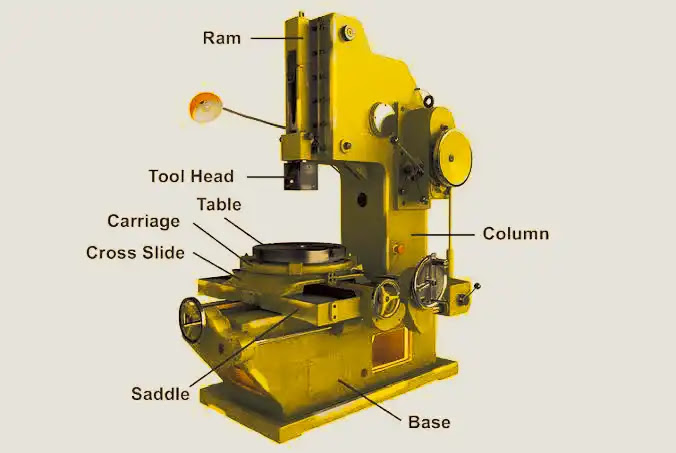
- Bed:
It is the base of the slotter machine and supports all the other parts. - Column:
It is a vertical structure that supports the ram and the tool head. - Ram:
It is a reciprocating part that moves up and down and carries the cutting
tool. - Tool
Head: It holds the cutting tool and is attached to the ram. - Table:
It supports the workpiece and can be adjusted vertically or horizontally
to align the workpiece with the cutting tool. - Cross
Slide: It supports the table and can be moved horizontally to adjust the
position of the workpiece. - Clapper
Box: It is a mechanism that allows the cutting tool to move freely in the
upward direction, avoiding damage to the tool or workpiece. - Drive
Mechanism: It provides the power to move the ram and the cutting tool. - Feed
Mechanism: It controls the rate and direction of movement of the workpiece
and the cutting tool. - Lubrication
System: It supplies oil to the moving parts of the slotter machine to
reduce friction and wear. - Electrical
Controls: It controls the operation of the slotter machine and ensures safe
and efficient operation.
These are the main parts of a slotter machine, and their
design and construction may vary depending on the specific type and application
of the machine.
Drive Mechanism of Slotting Machine:
The drive mechanism of a slotter machine is responsible for
providing the power to move the ram and the cutting tool. There are different
types of drive mechanisms used in slotter machines, including:
- Crank
and Slotted Link Mechanism: In this type of drive mechanism, a crankshaft
is used to convert rotary motion into reciprocating motion. The crankshaft
is connected to a slotted link that is attached to the ram. As the
crankshaft rotates, the slotted link moves up and down, causing the ram to
move in a reciprocating motion. - Hydraulic
Drive Mechanism: In this type of drive mechanism, a hydraulic system is
used to provide power to the ram and the cutting tool. The hydraulic
system consists of a hydraulic pump, valves, and cylinders. The pump
generates hydraulic pressure that is used to move the ram and the cutting
tool. - Worm
and Worm Wheel Mechanism: In this type of drive mechanism, a worm gear is
used to convert rotary motion into reciprocating motion. The worm gear is
connected to the ram, and a worm wheel is used to drive the worm gear. As
the worm wheel rotates, the worm gear moves up and down, causing the ram
to move in a reciprocating motion. - Geared
Drive Mechanism: In this type of drive mechanism, a set of gears is used
to transmit power from the motor to the ram and the cutting tool. The
gears are connected by a drive shaft, and as the motor rotates, the gears
rotate, causing the ram and the cutting tool to move in a reciprocating
motion.
These are the main types of drive mechanisms used in slotter
machines, and their selection depends on the specific application and the size
and capacity of the machine.
Types of Slotter Machine Operation:
The types of slotter machine operations include:
- Internal
Slotting: It involves cutting slots or keyways inside a cylindrical
workpiece, such as engine blocks, hydraulic cylinders, or pump casings.
This type of slotting operation is performed using a rotary slotting
machine. - External
Slotting: It involves cutting slots or keyways on the external surface of
a workpiece, such as gears, shafts, or pulleys. This type of slotting
operation is performed using a puncher slotter machine. - Angular
Slotting: It involves cutting slots or keyways at an angle to the axis of
rotation of the workpiece. This type of slotting operation is performed
using a horizontal or vertical slotter machine, and the table is tilted to
the desired angle. - Multiple
Slotting: It involves cutting multiple slots or keyways on a workpiece
simultaneously. This type of slotting operation is performed using a
rotary slotting machine with multiple cutting tools or a puncher slotter
machine with multiple punches. - Contour
Slotting: It involves cutting slots or keyways in a curved or irregular
shape. This type of slotting operation is performed using a horizontal or
vertical slotter machine with a specially designed cutting tool. - T-Slotting:
It involves cutting T-shaped slots on the surface of a workpiece, which
are used to hold other machine components or fixtures. This type of
slotting operation is performed using a puncher slotter machine with a
T-slot cutter.
These are the main types of Slotter machine operations, and
their selection depends on the specific application and the size and shape of
the workpiece.
Specification of Slotter Machine:
The specifications of a Slotter machine may vary depending
on the specific type and model of the machine. However, some of the common
specifications include:
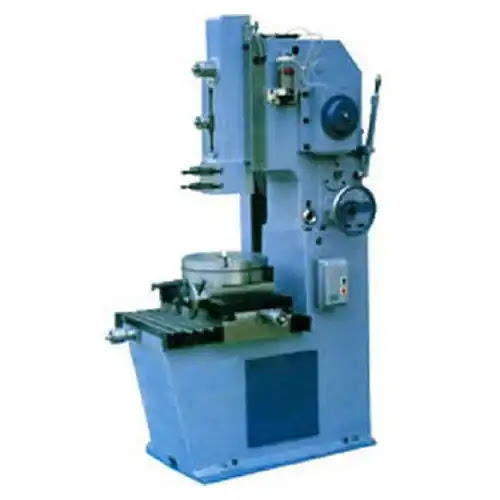
- Maximum
Stroke Length: It refers to the maximum distance that the ram can travel
during the slotting operation. The stroke length may vary from a few
millimeters to several hundred millimeters, depending on the size and
capacity of the machine. - Table
Size: It refers to the size of the worktable on which the workpiece is
mounted. The table size may vary from a few hundred millimeters to several
meters, depending on the size and shape of the workpiece. - Cutting
Tool Size: It refers to the size of the cutting tool that is used to cut
the slot or keyway. The cutting tool size may vary from a few millimeters
to several centimeters, depending on the width and depth of the slot. - Maximum
Cutting Depth: It refers to the maximum depth to which the cutting tool
can penetrate into the workpiece. The maximum cutting depth may vary from
a few millimeters to several centimeters, depending on the type and
material of the workpiece. - Motor
Power: It refers to the power of the motor that drives the ram and the
cutting tool. The motor power may vary from a few kilowatts to several
hundred kilowatts, depending on the size and capacity of the machine. - Weight:
It refers to the weight of the Slotter machine, which may vary from a few
hundred kilograms to several tons, depending on the size and construction
of the machine. - Speed
Range: It refers to the range of cutting speeds that the machine can
achieve. The speed range may vary from a few strokes per minute to several
hundred strokes per minute, depending on the type and capacity of the
machine.
These are some of the common specifications of a Slotter
machine, and their selection depends on the specific application and the size
and shape of the workpiece.
Application of Slotter Machine:
Slotter machines have a wide range of applications in
various industries. Some of the common applications of Slotter machines
include:
- Production
of internal keyways or slots in engine blocks, pump casings, hydraulic
cylinders, and other cylindrical workpieces. - Production
of external keyways or slots in gears, pulleys, shafts, and other external
workpieces. - Production
of T-slots on machine beds, tables, and other machine components. - Production
of slots or grooves in woodworking, such as cutting dovetails, mortises,
and tenons. - Production
of irregular or curved slots or shapes, such as in the manufacturing of
dies, molds, and fixtures. - Production
of precision slots or shapes for industrial and mechanical applications,
such as in the aerospace, automotive, and defense industries. - Slotting
or shaping of non-metallic materials, such as plastics, composites, and
ceramics.
Slotter machines are also used in maintenance and repair
operations, such as the repair or modification of machine components or the
restoration of vintage machinery. The versatility of Slotter machines makes
them an essential tool in many industries that require precise cutting and
shaping of workpieces.
Advantages and Disadvantages of Slotter Machine:
Advantages of Slotter Machine:
- Versatility:
Slotter machines can perform a wide range of operations, such as cutting
slots, keyways, T-slots, irregular shapes, and curves, making them a
versatile tool in many industries. - Precision:
Slotter machines can achieve high precision and accuracy in cutting and
shaping workpieces, making them suitable for industrial and mechanical
applications that require precise machining. - Efficiency:
Slotter machines can perform slotting operations at a fast rate, making
them a productive tool for high-volume production. - Flexibility:
Slotter machines can be customized to suit different applications by
changing the cutting tool, table angle, and other parameters. - Durability:
Slotter machines are robust and durable machines, designed to withstand
heavy-duty machining operations and harsh industrial environments.
Disadvantages of Slotter Machine:
- Limited
Workpiece Size: Slotter machines are designed for cutting slots and
keyways in relatively small workpieces, and larger workpieces may require
other types of machining operations. - Limited
Cutting Depth: Slotter machines have limited cutting depth, and deeper
cuts may require multiple passes or other types of machining operations. - High
Initial Cost: Slotter machines are expensive machines and may require a
significant investment in capital equipment for small businesses. - Skilled
Operator Required: Slotter machines require skilled operators who can set
up the machine, select the cutting tool, and control the cutting
parameters to achieve the desired results. - Maintenance:
Slotter machines require regular maintenance to ensure that they operate
efficiently and accurately. The maintenance can be time-consuming and
expensive.
Differences Between Slotter Machine and Shaper Machine:
Slotter and shaper machines are both used for cutting and
shaping metal workpieces. However, there are some significant differences between
the two machines:
- Operation:
The main difference between the slotter and shaper machines is their
cutting motion. Slotter machines have a vertical cutting motion, while
shaper machines have a horizontal cutting motion. - Cutting
Direction: In a slotter machine, the cutting tool moves vertically down
and cuts the workpiece in a vertical direction. In a shaper machine, the
cutting tool moves horizontally and cuts the workpiece in a horizontal
direction. - Cutting
Tools: The cutting tools used in a slotter machine are typically thicker
and sturdier, while shaper machines use thinner and more flexible cutting
tools. - Workpiece
Size: Slotter machines are generally used for smaller workpieces, while
shaper machines can handle larger workpieces. - Cutting
Capacity: Slotter machines have a higher cutting capacity and can remove
more material in a single pass than shaper machines. - Versatility:
Slotter machines are designed for cutting slots and keyways, while shaper
machines are more versatile and can perform a wide range of cutting and
shaping operations, such as cutting flat surfaces, angles, and curves. - Speed:
Shaper machines can achieve higher cutting speeds than slotter machines,
making them more suitable for high-volume production.
Overall, both slotter and shaper machines have their own
advantages and limitations, and their selection depends on the specific
application and the size and shape of the workpiece.
Read More: Planer Machine: Definition, Parts, Working Principle, Types, Operation, Advantages, Application
Difference Between Slotter, Planer, and Shaper Machine
Slotter, planer, and shaper machines are all types of
machining tools used in industrial applications. Although these machines share
some similarities, there are several differences between them:
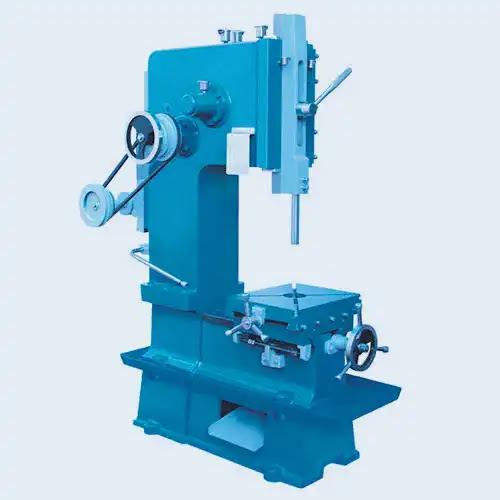
- Slotter
Machine: A slotter machine is used to cut slots and grooves in a
workpiece. It is a vertical shaper machine that is used to make internal
and external keyways, grooves, and slots in workpieces. The slotter
machine works on the principle of the crank and slotted lever mechanism.
The cutting tool is mounted on a ram, which moves up and down to make the
cuts. - Planer
Machine: A planer machine is used to produce flat and level surfaces. It
is used to remove large amounts of material from a workpiece in a single
pass. The planer machine works on the principle of reciprocating motion,
where the workpiece moves back and forth while the cutting tool remains
stationary. Planer machines are typically used to produce large flat
surfaces such as machine beds, large castings, and heavy forgings. - Shaper
Machine: A shaper machine is used to produce flat surfaces, grooves, and
slots. It is a versatile machine that can produce a variety of shapes and
contours. The shaper machine works on the principle of the quick return
motion, where the cutting tool moves forward during the cutting stroke and
returns to its original position quickly. Shaper machines are typically
used for small to medium-sized workpieces and are suitable for producing
flat surfaces, keyways, and grooves.
In summary, while all three machines are used for cutting
and shaping workpieces, the slotter machine is used specifically for cutting
slots and grooves, the planer machine is used for producing flat surfaces, and
the shaper machine is used for a variety of shaping operations.
Read More: Milling Machine: Definition, Parts, Operation, Working Principle, Application, Advantages