What is Turret Lathe? Detailed Discussion about Turret Lathe

What is Turret Lathe?

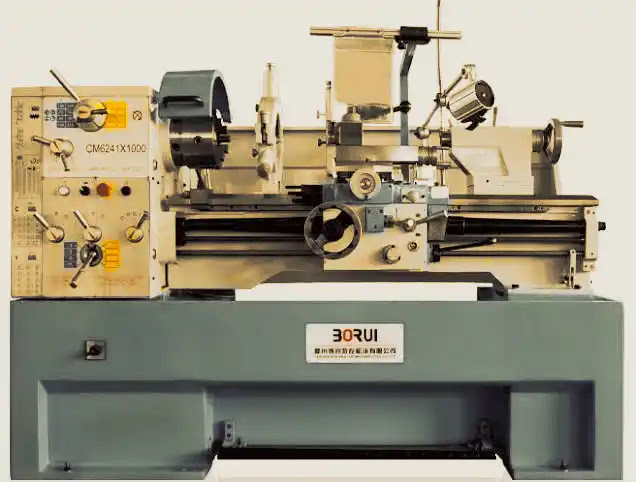
A turret lathe is a type of metalworking lathe that is used
for repetitive production of identical parts. It is called a turret lathe
because it has a tool turret that holds multiple cutting tools that can be quickly
and easily changed out as needed. This allows the lathe to perform a variety of
operations without requiring the operator to manually change tools, which saves
time and increases efficiency.

What is Turret Lathe? Detailed Discussion of Turret Lathe

In a turret lathe, the workpiece is held in a chuck and rotated
while the cutting tools in the turret move in to cut and shape the material.
The tools are arranged in a circular pattern around the workpiece, and the
turret rotates to bring the desired tool into position. The operator can select
the tool and the cutting depth, and the lathe will automatically perform the
operation.

Turret lathes are commonly used in manufacturing settings
for producing large quantities of parts with consistent quality and accuracy.
They are also used in the production of complex parts with multiple features,
as the tool turret allows for a variety of cutting operations to be performed
on the same workpiece without the need for manual tool changes.
Read More

What is Turret Lathe? Detailed Discussion about Turret Lathe

What is Turret Lathe?

A turret lathe is a type of metalworking lathe that is used
for repetitive production of identical parts. It is called a turret lathe
because it has a tool turret that holds multiple cutting tools that can be quickly
and easily changed out as needed. This allows the lathe to perform a variety of
operations without requiring the operator to manually change tools, which saves
time and increases efficiency.

What is Turret Lathe? Detailed Discussion of Turret Lathe

In a turret lathe, the workpiece is held in a chuck and rotated
while the cutting tools in the turret move in to cut and shape the material.
The tools are arranged in a circular pattern around the workpiece, and the
turret rotates to bring the desired tool into position. The operator can select
the tool and the cutting depth, and the lathe will automatically perform the
operation.

Turret lathes are commonly used in manufacturing settings
for producing large quantities of parts with consistent quality and accuracy.
They are also used in the production of complex parts with multiple features,
as the tool turret allows for a variety of cutting operations to be performed
on the same workpiece without the need for manual tool changes.
Read More

GRINDING MACHINE: PARTS, TYPES, OPERATIONS, & MORE

Grinding Machine Definition:

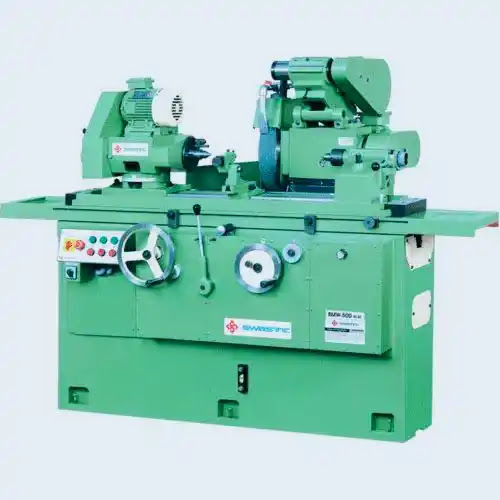
A grinding machine is a machine tool that is used to shape
and finish metal or other materials by removing small amounts of material from
the surface of the workpiece. Grinding machines use abrasive wheels or belts to
remove material from the workpiece, which is typically held in place on a
rotating chuck or table.

GRINDING MACHINE: PARTS, TYPES, OPERATIONS, & MORE

Grinding machines can be used to perform a variety of tasks,
including surface grinding, cylindrical grinding, and tool and cutter grinding.
Surface grinding machines are used to grind flat surfaces and can produce a
smooth, fine finish on the workpiece. Cylindrical grinding machines are used to
grind cylindrical surfaces and can produce a high degree of accuracy and
precision. Tool and cutter grinding machines are used to sharpen and
recondition cutting tools such as milling cutters, drill bits, and tool bits.

Grinding machines can be operated manually or with computer
numerical control (CNC) technology. CNC grinding machines use computer
programming to control the movements and speeds of the grinding wheel and
workpiece, allowing for precise and repeatable grinding operations. Grinding
machines are used in a wide range of industries, including manufacturing,
automotive, aerospace, and medical device manufacturing.

Read More

What is Reciprocating Pump? How many Types and what? Detailed Discussion

What is Reciprocating Pump?

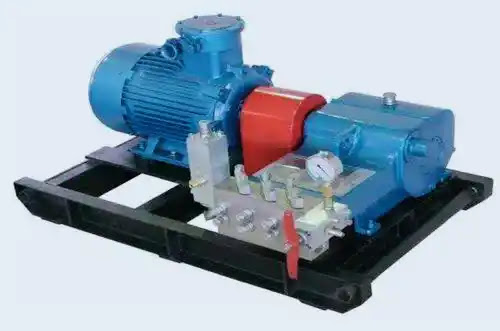
A reciprocating pump is a type of positive displacement pump
that uses a reciprocating motion to transfer fluids. It works by using a piston
or plunger to draw in and then expel fluid from a chamber through a one-way
valve system. The motion of the piston creates a pressure differential that
forces the fluid to move through the pump.

What is Reciprocating Pump? How many Types and what? Detailed Discussion

Reciprocating pumps are commonly used in a variety of
applications, including oil and gas, chemical processing, water treatment, and
food processing. They are particularly useful for pumping high-viscosity
fluids, such as oil and molasses, and for applications requiring precise flow
control.

One of the advantages of reciprocating pumps is that they
can generate high pressures with relatively low flow rates, making them ideal
for applications requiring high-pressure pumping. However, they can also be
relatively complex and require regular maintenance to ensure reliable
operation.

Read More

What is Centrifugal Pump? How many Types and what? Detailed Discussion

What is Centrifugal Pump?

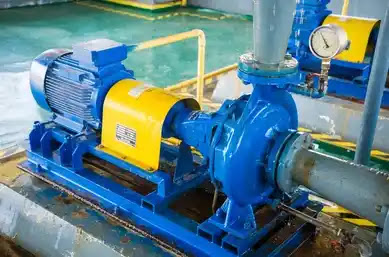
A centrifugal pump is a type of mechanical device used to
transport fluids by converting rotational kinetic energy into hydrodynamic
energy. The pump consists of an impeller, which is a rotating component that
has curved blades that push the fluid in a circular motion, creating
centrifugal force.

What is Centrifugal Pump? How many Types and what? Detailed Discussion

The fluid enters the pump through the center of the
impeller, and as the impeller rotates, the centrifugal force pushes the fluid
towards the outer edges of the impeller, where it is discharged through a
volute casing or diffuser. The pump operates by increasing the velocity and
pressure of the fluid, allowing it to be transported through a system of pipes
or other channels.

Centrifugal pumps are commonly used in a wide range of
applications, including water supply and irrigation systems, chemical
processing, petroleum refining, and HVAC systems. They are generally considered
to be simple and reliable devices, with a relatively low maintenance
requirement, making them a popular choice for many industries.

Read More