Locomotive Boiler:
A locomotive boiler is a type of boiler that is used in
steam locomotives to generate steam to power the train. It is a horizontal,
fire-tube boiler that consists of a shell, firebox, grate, combustion chamber,
smokebox, and various mountings and fittings.
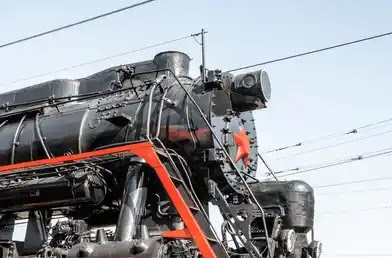
The fuel used in the locomotive boiler is typically coal,
although wood and oil were also used in some designs. The firebox is located at
one end of the boiler and is where the fuel is burned to produce hot gases.
These gases then travel through the tubes located in the boiler shell, heating
the water in the boiler and producing steam.
The steam produced by the locomotive boiler is then used to
power the locomotive’s pistons, which drive the wheels and propel the train
forward. Locomotive boilers were widely used in the 19th and early 20th
centuries but have since been largely replaced by diesel and electric
locomotives.
Working of Locomotive Boiler:
The working of a locomotive boiler involves several steps:
- Fuel
is loaded into the firebox of the locomotive boiler. The fuel used in the
locomotive boiler is typically coal, although wood and oil were also used
in some designs. - The
fuel is ignited, and the resulting hot gases flow through the fire-tubes
located inside the boiler shell. - The
hot gases transfer their heat energy to the water in the boiler, causing
the water to boil and produce steam. - The
steam produced by the boiler is collected in the steam space above the
water level in the boiler and is then fed to the locomotive’s cylinders. - The
steam drives the pistons in the cylinders, which in turn drive the
locomotive’s wheels and propel the train forward. - The
spent steam is then expelled from the cylinders and passes through the
smokebox and chimney, where it is released into the atmosphere. - The
locomotive boiler is equipped with safety valves that release excess
pressure if the pressure inside the boiler becomes too high. This is to
prevent the boiler from exploding.
Overall, the working of a locomotive boiler is based on the
principle of converting heat energy from the combustion of fuel into mechanical
energy to power the train.
Parts of Locomotive Boiler:
The main parts of a locomotive boiler include:
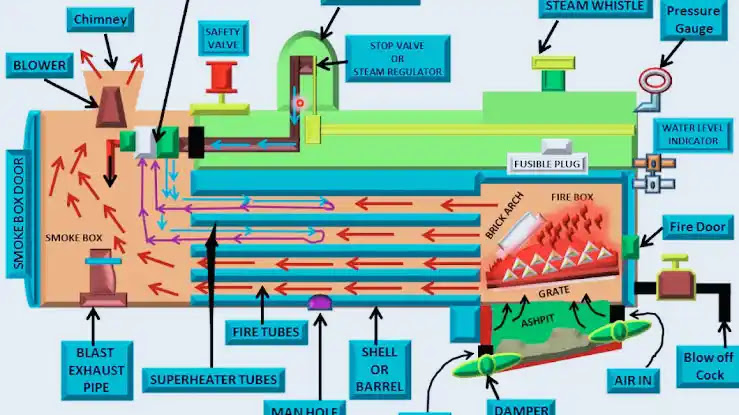
- Shell:
The shell is the main body of the boiler, typically cylindrical in shape,
where the water is heated to produce steam. - Firebox:
The firebox is located at one end of the boiler and is where the fuel
(typically coal) is burned to produce hot gases that flow through the
boiler tubes. - Boiler
tubes: The boiler tubes are located inside the boiler shell and carry the
hot gases from the firebox to the smokebox at the other end of the boiler.
The water in the boiler is heated by these tubes. - Smokebox:
The smokebox is located at the opposite end of the boiler from the firebox
and is where the spent gases from the combustion process are expelled
through the chimney. - Crown
sheet: The crown sheet is a flat plate that forms the top of the firebox
and is the primary heating surface of the boiler. - Stay
bolts: Stay bolts are threaded rods that hold the crown sheet and other
parts of the boiler together. - Safety
valves: Safety valves are used to prevent the pressure inside the boiler
from becoming too high and causing an explosion. - Regulator
valve: The regulator valve controls the amount of steam that is allowed to
pass from the boiler to the locomotive’s cylinders, controlling the speed
of the train. - Water
gauge: The water gauge is used to indicate the water level inside the
boiler, allowing the locomotive engineer to add more water when necessary. - Blowdown
valve: The blowdown valve is used to remove sediment and other impurities
from the boiler, keeping it clean and efficient.
Advantages and Disadvantages of Locomotive Boiler
Advantages of Locomotive Boiler:
- Compact
Size: Locomotive boilers are relatively small and compact in size, making
them ideal for use in locomotives where space is limited. - High
Steam Production: Locomotive boilers can generate high amounts of steam,
making them well-suited for use in steam locomotives where large amounts
of steam are required to power the train. - Easy
to Operate: Locomotive boilers are relatively easy to operate and
maintain, requiring only basic knowledge of boiler operations. - Versatile
Fuel: Locomotive boilers can be fired with a variety of fuels such as
coal, wood, and oil, allowing them to be used in different situations.
Disadvantages of Locomotive Boiler:
- Low
Efficiency: Locomotive boilers are relatively inefficient compared to
modern boilers, meaning that they require more fuel to generate the same
amount of steam. - Slow
Start-Up Time: Locomotive boilers require a significant amount of time to
heat up and generate steam, making them unsuitable for use in applications
that require quick start-up times. - High
Maintenance: Locomotive boilers require frequent maintenance and
inspection to ensure safe and efficient operation. - Environmental
Concerns: Locomotive boilers generate a significant amount of air
pollution due to the combustion of coal or other fuels, making them
environmentally unfriendly.
Applications of Locomotive Boiler:
The primary application of a locomotive boiler is to
generate steam to power steam locomotives. However, locomotive boilers have
also been used in other applications, such as:
- Steam-powered
boats: Locomotive boilers have been used in steam-powered boats and ships,
particularly in the early 19th century when steam power was first
developed. - Industrial
boilers: Locomotive boilers have also been used in industrial
applications, particularly in factories and mills where steam power was
used for various purposes. - Power
generation: Locomotive boilers have been used in power generation,
particularly in the early days of electricity production when steam
engines were used to generate electricity. - Historical
preservation: Some locomotive boilers are preserved and displayed in
museums or as part of historical exhibits to showcase the history and
development of steam power.
Overall, locomotive boilers have a limited range of
applications due to their low efficiency and high environmental impact. Modern
boilers are generally more efficient and environmentally friendly, making them
better suited for most applications.
Locomotive Boiler Pressure
The pressure inside a locomotive boiler typically ranges
from 100 to 200 pounds per square inch (psi), although some designs may operate
at higher pressures. The pressure inside the boiler is controlled by a safety
valve that releases excess pressure to prevent the boiler from exploding.
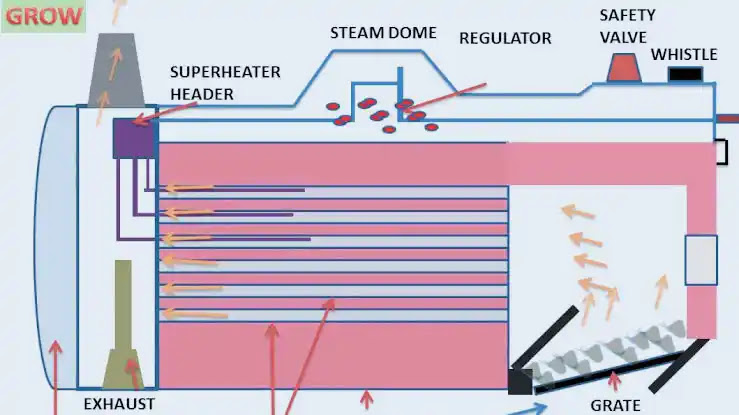
The
pressure of the steam generated by the boiler is used to power the locomotive’s
pistons and drive the train forward. The pressure required to operate a
locomotive boiler depends on various factors such as the size and design of the
boiler, the fuel being used, and the power requirements of the locomotive.
Locomotive Boiler Function
The function of a locomotive boiler is to produce steam that
is used to power a steam locomotive. The boiler heats water to produce steam,
which is then directed into the locomotive’s cylinders to move the pistons and
turn the locomotive’s wheels. The basic function of the locomotive boiler can
be broken down into several steps:
- Fuel
is burned in the firebox, producing hot gases that flow through the boiler
tubes. - The
heat from the hot gases is transferred to the water surrounding the tubes,
causing it to boil and produce steam. - The
steam generated in the boiler is directed into the locomotive’s cylinders,
where it pushes the pistons back and forth. - The
movement of the pistons turns the locomotive’s wheels, propelling the
train forward. - Excess
steam is released from the boiler through the chimney, where it is
expelled into the atmosphere.
The locomotive boiler must be carefully designed and
maintained to ensure safe and efficient operation. Regular inspection and
maintenance of the boiler’s components, such as the firebox, boiler tubes, and
safety valves, is essential to prevent accidents and maintain reliable
performance.
Read More: Benson Boiler: Definition, Parts, Working, Advantages, Disadvantages & Applications