What is Cold Working?
Cold working is a metalworking process in which metal is
shaped and formed at room temperature or below its recrystallization
temperature. Unlike hot working processes, which involve heating the metal to
high temperatures to make it more ductile and malleable, cold working relies on
mechanical deformation to change the shape and properties of the metal.
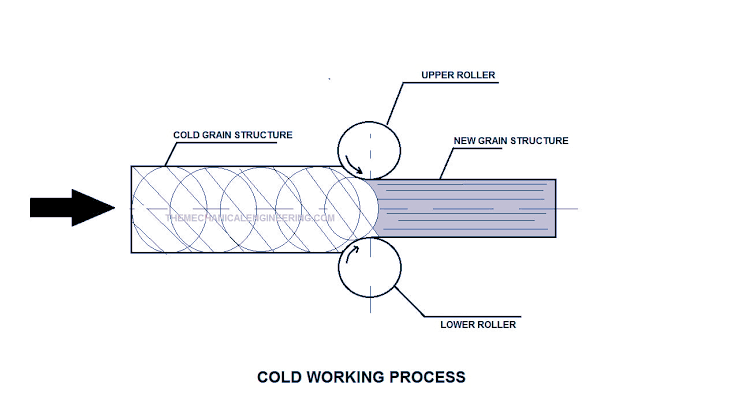
Cold working techniques include rolling, drawing, forging,
extrusion, and bending. In these processes, the metal is subjected to
compressive or tensile forces that cause it to deform and change shape. For
example, rolling involves passing the metal between rollers to reduce its
thickness or change its shape, while drawing involves pulling the metal through
a die to reduce its cross-sectional area and increase its length.
One of the main advantages of cold working is that it can be
used to produce parts with tight tolerances and precise dimensions. Cold worked
parts also tend to have improved strength, hardness, and surface finish
compared to hot worked parts. However, cold working can cause the metal to
become brittle and prone to cracking, and it may also lead to work hardening,
which can make the metal more difficult to shape in subsequent processing
steps.
Methods of Cold Working Process:
There are several methods of cold working, each of which is
used to shape metal at room temperature or below its recrystallization
temperature. Here are some common methods of cold working:
- Rolling:
This process involves passing metal through a series of rollers to reduce
its thickness or change its shape. Cold rolling is typically done at room
temperature and can be used to produce sheets, strips, and other flat or
curved shapes. - Drawing:
This process involves pulling metal through a die to reduce its cross-sectional
area and increase its length. Cold drawing is typically used to produce
wires, rods, and tubes. - Forging:
This process involves shaping metal by compressive forces, typically using
a hammer or press. Cold forging can be used to produce complex shapes with
tight tolerances. - Bending:
This process involves bending metal into a desired shape using a press
brake or similar tool. Cold bending is typically used to produce sheet
metal parts with curved or angled features. - Extrusion:
This process involves forcing metal through a die to produce a desired
shape. Cold extrusion is typically used to produce tubes and other
cylindrical parts.
Each of these methods has its own advantages and
disadvantages, and the choice of method will depend on the type of metal being
worked on, the desired shape and properties of the finished product, and other
factors such as cost and production volume.
Cold Working Process:
Cold working is a metalworking process in which metals are
shaped, formed, or joined at temperatures below their recrystallization point.
Unlike hot working, which involves heating the metal to high temperatures, cold
working relies on mechanical deformation to change the shape, size, or
properties of the metal. Cold working processes are commonly used for the
production of a wide range of products in various industries, including
automotive, aerospace, construction, and electronics.
Some common cold working processes include:
- Rolling:
This process involves passing the metal through a set of rollers to reduce
its thickness or change its shape. Cold rolling is typically used to
produce sheet metal, strips, and plates. - Drawing:
This process involves pulling the metal through a die to reduce its
diameter and increase its length. Cold drawing is commonly used to produce
wires, rods, and tubes. - Extrusion:
This process involves forcing the metal through a die to create a desired
shape or profile. Cold extrusion is often used to produce pipes, tubes,
and other cylindrical objects. - Bending:
This process involves bending the metal to a desired shape using a press
brake or similar tool. Cold bending is typically used to create sheet
metal parts with curved or angled features. - Shearing:
This process involves cutting the metal using a shearing tool. Cold
shearing is typically used to produce flat pieces of sheet metal.
Cold working processes offer several advantages over hot
working, including increased dimensional accuracy, improved surface finish, and
better control over material properties. However, cold working can also result
in work hardening, which makes the metal more difficult to shape and can lead
to cracking or other defects. Therefore, careful consideration of the metal’s
properties and the cold working process is required to ensure that the final
product meets the desired specifications.
Advantages and Disadvantages of Cold Working Process
Advantages of Cold Working Process:
- Improved
Strength and Hardness: Cold working can increase the strength and hardness
of a metal by introducing dislocations into the crystal structure of the
material. - Better
Surface Finish: Cold working can produce a better surface finish than hot
working because there is no oxidation or scale formation. - Precise
Tolerances: Cold working can produce parts with precise tolerances and
dimensions, making it suitable for applications where accuracy is
critical. - Reduced
Waste: Cold working processes can produce less waste compared to hot
working processes because there is no need for scaling or decarburization. - No
Heating Required: Cold working does not require heating the metal, which
can result in energy savings and reduce the risk of thermal distortion.
Disadvantages of Cold Working Process:
- Work
Hardening: Cold working can cause work hardening, which can make the metal
brittle and difficult to form or shape. - Limited
Formability: Certain metals are difficult to cold work, and the process
may be limited to certain shapes or forms. - Increased
Manufacturing Costs: Cold working processes can be more expensive than hot
working processes due to the need for more precise equipment and tooling. - Reduced
Ductility: Cold working can reduce the ductility of some metals, which can
lead to cracking or other defects during forming or shaping. - Limited
Temperature Range: Cold working can only be done at temperatures below the
recrystallization temperature of the metal, which can limit the types of
shapes or forms that can be produced.
Application Of Cold Working Process
Cold working is widely used in various industries, including
automotive, aerospace, construction, and electronics. Some common applications
of cold working include:
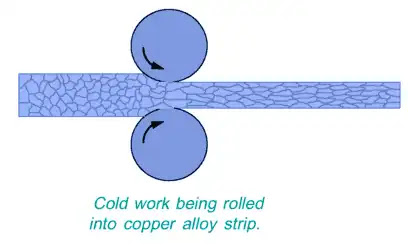
- Sheet
metal fabrication: Cold working processes such as rolling, bending, and
shearing are commonly used to produce sheet metal parts for a variety of
applications, including roofing, HVAC systems, and automotive body panels. - Wire
and cable manufacturing: Cold drawing is used to produce wires and cables
with precise diameters and smooth surface finishes. - Fastener
production: Cold heading is a common cold working process used to produce
fasteners such as bolts, screws, and rivets. - Tube
and pipe production: Cold working processes such as drawing and extrusion
are commonly used to produce tubes and pipes for a variety of
applications, including plumbing, heating, and automotive exhaust systems. - Jewelry
making: Cold working is used in jewelry making to shape and form precious
metals into desired designs. - Precision
machining: Cold working can be used in precision machining applications to
produce parts with tight tolerances and fine surface finishes. - Electronic
components: Cold working is used in the production of various electronic
components, including connectors, contacts, and leads.
Overall, cold working processes offer many advantages over
hot working processes, including increased dimensional accuracy, improved
surface finish, and better control over material properties, making them
well-suited for a wide range of applications in various industries.
Difference Between Cold Working and Hot Working Process
The primary difference between cold working and hot working
processes is the temperature at which they are performed. In cold working, the
metal is worked at room temperature or below, while in hot working, the metal
is heated to a high temperature before it is worked.
Some other differences between cold working and hot working
include:
- Material
Properties: Cold working can increase the strength and hardness of the
material, while hot working can improve the ductility and formability of
the material. - Process
Control: Cold working allows for greater control over the dimensions and
surface finish of the final product, while hot working can result in
greater variations due to the effects of temperature. - Equipment
and Tooling: Cold working typically requires more precise equipment and
tooling than hot working because the metal is less malleable at lower
temperatures. - Cost:
Cold working processes can be more expensive than hot working processes
due to the need for more precise equipment and tooling. - Types
of Shapes and Forms: Cold working can produce parts with precise
tolerances and dimensions, while hot working can produce more complex
shapes and forms.
In summary, the choice between cold working and hot working
will depend on the desired material properties and the requirements of the
specific application. Cold working is best for applications that require high
strength and dimensional accuracy, while hot working is best for applications
that require complex shapes and forms and improved ductility.
Cold Working Process Examples
Here are some common examples of cold working processes:
- Rolling:
Cold rolling is a process in which a metal sheet or strip is passed
through a series of rollers to reduce its thickness and improve its
surface finish. - Bending:
Cold bending is a process in which a metal sheet or strip is bent to a
desired shape using press brakes or other bending equipment. - Drawing:
Cold drawing is a process in which a metal wire or tube is pulled through
a die to reduce its diameter and improve its surface finish. - Cold
forging: In cold forging, a metal blank is shaped into a desired form
using a press or other forging equipment, without the use of heat. - Cold
heading: Cold heading is a process in which a metal wire or rod is formed
into a desired shape using a cold heading machine. - Shearing:
Cold shearing is a process in which a metal sheet or strip is cut to a
desired size and shape using a shearing machine. - Coining:
Cold coining is a process in which a metal blank is compressed between two
dies to produce a desired shape or pattern.
Cold working processes are commonly used in various
industries, including automotive, aerospace, construction, and electronics, to
produce a wide range of parts and components with precise tolerances and
dimensions.
Cold Working Example
Cold working refers to the process of deforming a metal at
temperatures below its recrystallization temperature. This process can have
several effects on the metal being worked on, such as increased strength,
hardness, and improved dimensional accuracy.
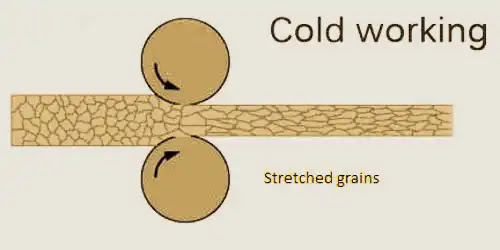
One example of cold working is the process of cold rolling,
which is commonly used in the production of sheet metal. In cold rolling, a
metal sheet is passed through a set of rollers at room temperature to reduce
its thickness and increase its strength. The rollers compress and deform the
metal, causing its grains to elongate and align in the direction of the
rolling.
Another example of cold working is cold forging, which is
the process of shaping metal by applying pressure at room temperature. Cold
forging can be used to produce complex shapes and precision parts, and is
commonly used in the production of fasteners, such as screws and bolts.
Cold working can also be used to improve the strength and
durability of metal parts. For example, cold working can be used to create
springs, which rely on the elasticity of the metal to function properly. The
process of cold working can also improve the fatigue resistance of metal
components, making them more resistant to failure over time.
Overall, cold working is a versatile and important process
in the manufacturing of metal components and products. Its effects on the
properties of the metal can make it stronger, harder, and more durable, making
it a popular choice in industries such as aerospace, automotive, and
construction.
Read More: Hot Working: Definition, Methods, Working Process, Advantages, Disadvantages, Application