What is Hot-working Process?
Hot working is a metal forming process in which a metal is
shaped at elevated temperatures above its recrystallization temperature. This
process is used to shape and deform metals that are difficult or impossible to
form at room temperature.
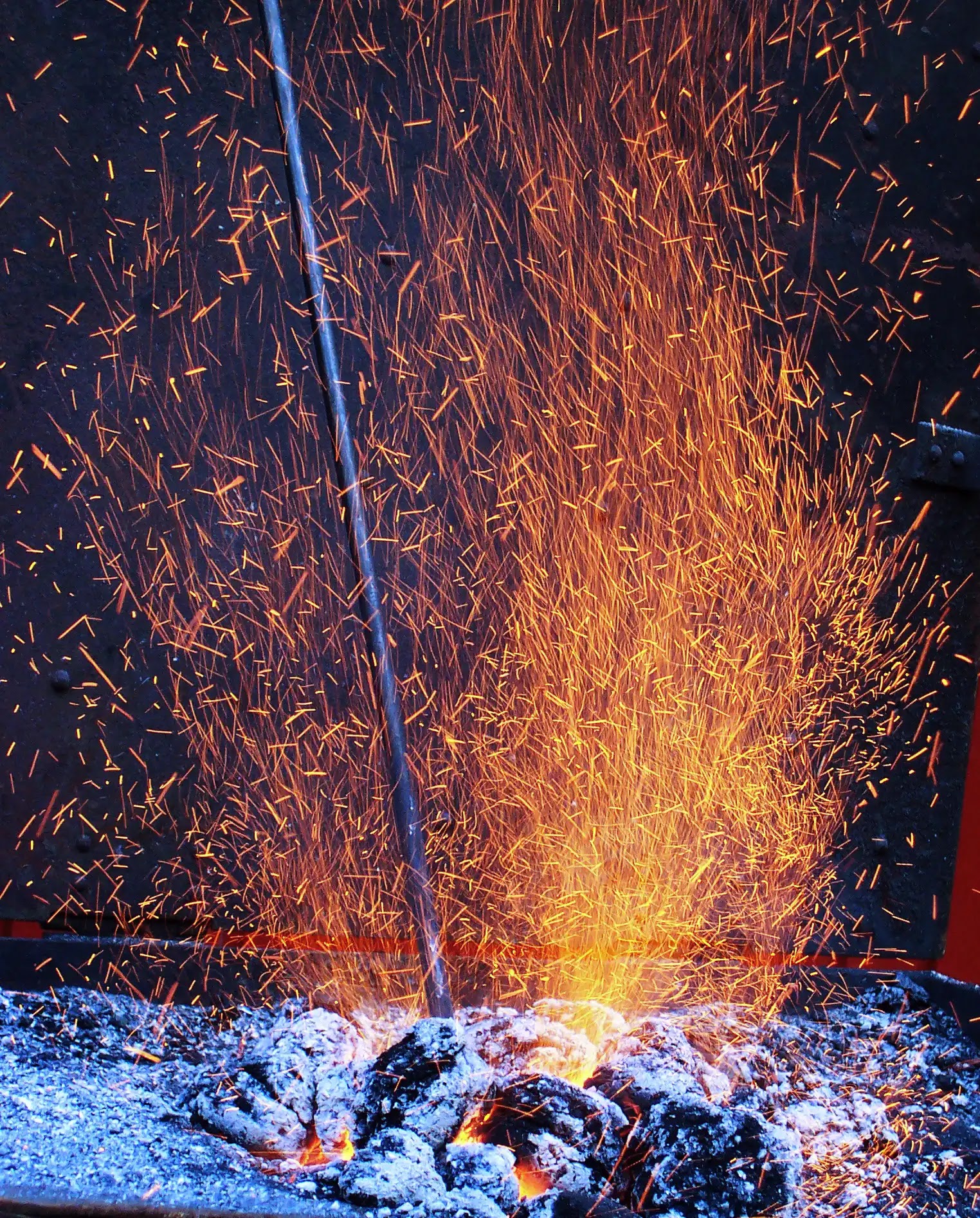
In hot working, the metal is heated to a temperature above
its recrystallization temperature, which is the temperature at which new grains
can form in the metal. At this temperature, the metal becomes soft and ductile,
and it can be easily shaped and formed into a desired shape using a variety of
techniques, such as forging, rolling, extrusion, and drawing.
Hot working is used to produce a wide range of products,
including parts for the automotive, aerospace, and construction industries, as
well as products such as pipes, tubes, and wires. The advantages of hot working
include the ability to produce complex shapes, improved mechanical properties,
reduced residual stress, and improved surface finish.
However, there are also some disadvantages to hot working,
including the need for specialized equipment, longer production times, and the
risk of surface oxidation and decarburization.
Method of Hot Working Process:
There are several methods of hot working processes,
including:
- Forging:
This method involves applying compressive force to the metal while it is
heated to a temperature above its recrystallization temperature. Forging
can be performed using a range of equipment, including hammers, presses,
and hydraulic machines. - Rolling:
In this method, the metal is passed through a series of rollers that apply
compressive force to shape the metal into the desired form. Rolling can be
performed using hot rolling mills, which are large machines that can
process large quantities of metal in a continuous process. - Extrusion:
This method involves forcing the metal through a die to create a specific
shape. The metal is heated to a temperature above its recrystallization
temperature and then pushed through the die using a ram or hydraulic
press. - Drawing:
In this method, a metal rod or wire is pulled through a die to reduce its
diameter and shape it into a desired form. The metal is heated to a
temperature above its recrystallization temperature to make it more
ductile and easier to draw. - Swaging:
Swaging is a cold-working process that can also be performed at elevated
temperatures. It involves reducing the diameter of a metal tube or rod by
applying radial compressive force.
The method of hot working used depends on the type of metal
being worked, the desired shape and properties of the final product, and the
equipment available for the process.
Hot Working Process In Detail:
Hot working is a metal forming process that involves shaping
a metal material at temperatures above its recrystallization temperature. This
process is commonly used to produce various industrial components, such as
aircraft parts, automobile parts, and structural components for construction.
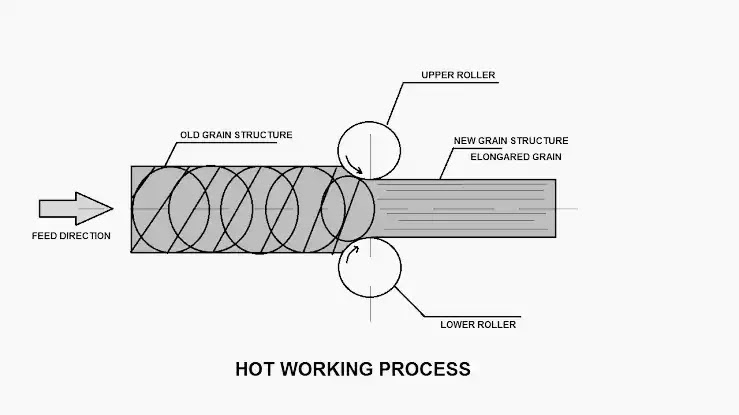
The hot working process involves several steps:
- Heating:
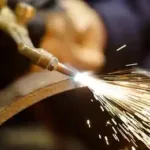
The first step in hot working is to heat the metal to a temperature above
its recrystallization temperature. This temperature varies depending on
the type of metal being used. The metal is heated in a furnace or with a
torch until it reaches the desired temperature. - Deformation:
Once the metal is at the proper temperature, it is ready for deformation.
There are several methods of deformation used in hot working, including
forging, rolling, extrusion, drawing, and swaging. Each of these methods
uses a different process to shape the metal into the desired form. - Finishing:
After the metal has been shaped, it may undergo additional finishing
processes to improve its surface finish and mechanical properties. These
processes may include heat treatment, machining, and surface treatment.
The hot working process offers several advantages over cold
working, including the ability to form complex shapes, improved mechanical
properties, and better surface finish. However, there are also some
disadvantages to hot working, including the need for specialized equipment and
longer production times.
Hot working is typically used for materials that are
difficult to shape using cold working processes, such as high-strength alloys,
stainless steel, and titanium. The selection of the appropriate hot working
method depends on the specific requirements of the application, the type of
metal being used, and the equipment available for the process.
Types of Hot working process
There are several types of hot working processes, each of
which is suited to a different type of metal and application. Here are some
common types of hot working processes:
- Forging:
This process involves shaping metal by compressive forces, typically using
a hammer or press. Forging can be done at different temperatures,
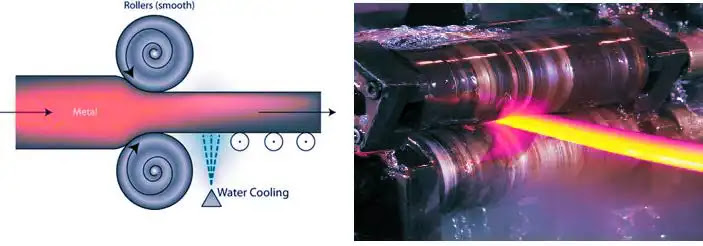
including cold, warm, and hot forging. - Rolling:
This process involves passing metal through a series of rollers to reduce
its thickness or change its shape. Hot rolling is done at high temperatures,
while cold rolling is done at room temperature. - Extrusion:
This process involves forcing metal through a die to produce a desired
shape. Hot extrusion is done at high temperatures, while cold extrusion is
done at room temperature. - Drawing:
This process involves pulling metal through a die to reduce its
cross-sectional area and increase its length. Hot drawing is done at high
temperatures, while cold drawing is done at room temperature. - Casting:
This process involves pouring molten metal into a mold and allowing it to
solidify. Different types of casting processes include sand casting,
investment casting, and die casting. Hot casting is done at high
temperatures, while cold casting is done at room temperature. - Hot
spinning: This process involves shaping a metal sheet or disc into a
desired shape using a spinning lathe. Hot spinning is done at high
temperatures to increase the ductility of the metal.
Each of these processes has its own advantages and
disadvantages, and the choice of process will depend on the type of metal being
worked on, the desired shape and properties of the finished product, and other
factors such as cost and production volume.
Advantages and Disadvantages of Hot Working Process
Advantages of Hot Working:
- Improved
formability: One of the primary advantages of hot working is that it
improves the formability of metals by making them softer and more ductile.
This allows for the creation of complex shapes and reduces the risk of
cracking or other defects. - Improved
mechanical properties: Hot working also improves the mechanical properties
of the metal, such as its strength, ductility, and toughness. This is
because the process promotes grain growth, which results in a more uniform
microstructure. - Better
surface finish: Hot working can produce a better surface finish than cold
working processes because the metal is more malleable and easier to shape. - Reduced
residual stress: Hot working can also reduce residual stress in the metal,
which can improve its resistance to cracking and other forms of damage.
Disadvantages of Hot Working:
- Specialized
equipment: Hot working requires specialized equipment, such as furnaces
and hydraulic presses, which can be expensive to purchase and maintain. - Longer
production times: The time required for heating the metal, performing the
deformation process, and cooling the metal after hot working can result in
longer production times compared to cold working processes. - Risk
of oxidation and decarburization: Heating the metal to high temperatures
during hot working can lead to oxidation and decarburization, which can
reduce the quality of the final product. - Limited
to specific types of metals: Hot working is typically limited to specific
types of metals that are suitable for the process, such as steel,
aluminum, and copper alloys. Some metals, such as zinc and lead, are not
suitable for hot working due to their low melting points.
Hot Working Application:
Hot working is used in a wide range of applications across
various industries. Here are some common examples:
- Aerospace:
Hot working is used to produce components for aircraft and spacecraft,
such as turbine blades, engine components, and structural components. - Automotive:
Hot working is used to produce a variety of automotive components,
including engine parts, suspension components, and steering components. - Construction:
Hot working is used to produce structural components for buildings, such
as steel beams, columns, and trusses. - Manufacturing:
Hot working is used in the manufacturing of a variety of consumer goods,
such as kitchen appliances, tools, and sporting equipment. - Oil
and gas: Hot working is used to produce components for the oil and gas
industry, such as pipelines, valves, and drilling equipment. - Power
generation: Hot working is used to produce components for power generation
equipment, such as steam turbines and generators.
In general, hot working is used in applications where the
material needs to be shaped into complex forms or requires improved mechanical
properties. The specific application of hot working depends on the requirements
of the component being produced and the type of metal being used.
Difference Between Hot Working and Cold Working Process
Hot working and cold working are two different metalworking
processes used to shape metals, but they differ in their temperature range and
the physical properties of the material being worked on. Here are the main
differences between hot working and cold working:
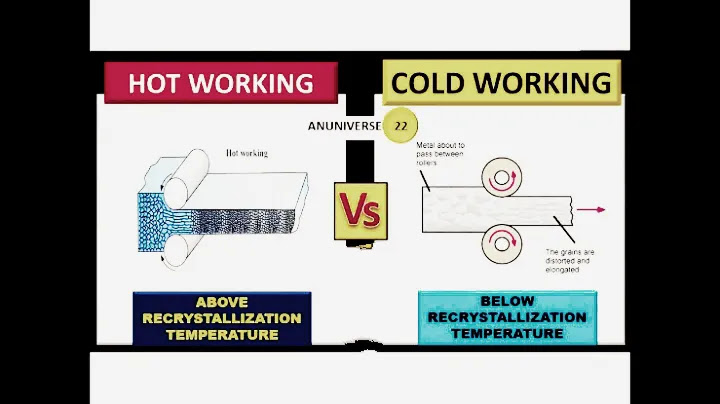
- Temperature:
Hot working is performed at high temperatures, typically above the
recrystallization temperature of the material, while cold working is
performed at room temperature or slightly above. - Deformation
behavior: During hot working, the material is more ductile and easier to
shape due to the higher temperature. In contrast, during cold working, the
material is more brittle and difficult to shape due to its low
temperature. - Formability:
Hot working can produce more complex shapes and reduce the risk of
cracking or other defects due to the increased ductility of the material.
Cold working, on the other hand, can produce limited shapes due to the
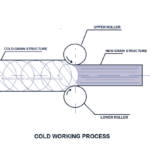
brittleness of the material. - Grain
structure: Hot working promotes grain growth, resulting in a more uniform
microstructure, while cold working results in a more refined grain
structure due to the deformation process. - Mechanical
properties: Hot working can improve the mechanical properties of the
material, such as strength and toughness, due to the uniform
microstructure. Cold working can also improve the mechanical properties,
but to a lesser extent than hot working. - Equipment
requirements: Hot working requires specialized equipment, such as furnaces
and hydraulic presses, while cold working can be performed using simple
tools such as hammers, dies, and rollers.
In summary, hot working is performed at high temperatures,
produces more complex shapes, and improves the mechanical properties of the
material. Cold working is performed at lower temperatures, produces limited
shapes, and can also improve the mechanical properties, but to a lesser extent
than hot working.
Hot Working Examples
Here are some examples of hot working processes:
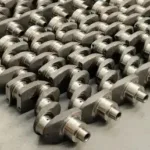
- Forging:
Forging is commonly used to produce high-strength parts for applications
such as automotive, aerospace, and construction. Examples include
crankshafts, connecting rods, gears, and structural components. - Rolling:
Hot rolling is used to produce large sheets or plates of metals for
applications such as shipbuilding, construction, and manufacturing.
Examples include steel plates, aluminum sheets, and copper strips. - Extrusion:
Hot extrusion is used to produce complex shapes such as tubes, rods, and
profiles for applications such as aerospace, automotive, and construction.
Examples include aluminum tubing, brass rods, and steel profiles. - Drawing:
Hot drawing is used to produce wire, cable, and other thin metal products.
Examples include steel wire, copper cable, and aluminum foil. - Casting:
Hot casting is used to produce complex shapes for applications such as
aerospace, automotive, and manufacturing. Examples include turbine blades,
engine blocks, and transmission housings. - Hot
spinning: Hot spinning is used to produce complex shapes such as
hemispheres, cones, and cylinders for applications such as aerospace,
automotive, and lighting. Examples include reflectors, satellite dishes,
and tank heads.
In all of these examples, the metal is heated to a high
temperature to increase its ductility and allow it to be shaped into the
desired form. Hot working processes are used when the metal cannot be easily
shaped using cold working techniques or when improved mechanical properties are
required.
Effect of Hot Working
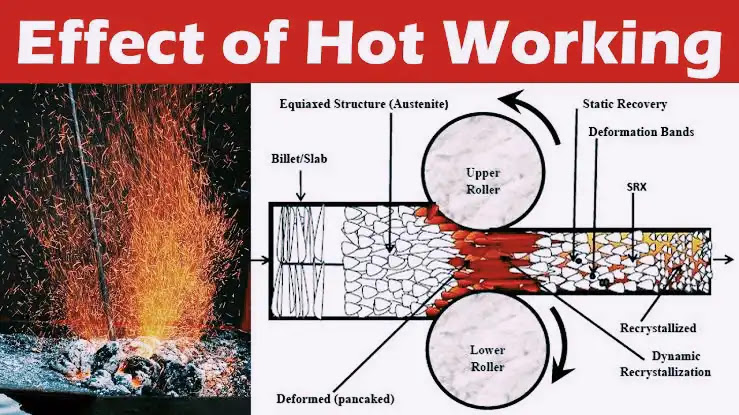
Hot working refers to the process of deforming a metal at
high temperatures, typically above its recrystallization temperature. Hot
working can have several effects on the metal being worked on:
- Improved
ductility: Hot working can improve the ductility of a metal, making it
easier to deform and shape. This is because at high temperatures, the
metal becomes more malleable and its resistance to deformation decreases. - Reduced
hardness: Hot working can also reduce the hardness of a metal. This is
because at high temperatures, the crystal structure of the metal becomes
more disordered, making it easier for the metal to deform and reducing its
resistance to deformation. - Grain
refinement: Hot working can cause grain refinement, which is the process
of breaking up the larger grains in a metal into smaller ones. This can
result in a more uniform grain structure, which can improve the metal’s
mechanical properties such as strength, toughness, and fatigue resistance. - Improved
homogeneity: Hot working can also improve the homogeneity of a metal. By
subjecting the metal to high temperatures and deformation, any internal
defects or inclusions can be dispersed and redistributed, resulting in a
more homogeneous material.
Overall, hot working can have a significant impact on the
properties of a metal, making it more ductile, reducing its hardness, refining
its grain structure, and improving its homogeneity. These effects can be
beneficial for a variety of applications, including manufacturing processes
such as forging, rolling, and extrusion.
Hot Working Example
Hot working is the process of deforming a metal at
temperatures above its recrystallization temperature. This process can have
several effects on the metal being worked on, such as improved ductility,
reduced hardness, and grain refinement.
One example of hot working is forging, which is the process
of shaping metal by applying pressure at high temperatures. In forging, a metal
workpiece is heated to a high temperature and then placed on a die, where it is
shaped using a hammer or press. Forging can be used to produce a variety of
shapes, including rods, bars, and gears.
Another example of hot working is rolling, which is the
process of reducing the thickness of a metal sheet or strip by passing it
through a series of rollers at high temperatures. Rolling can be used to
produce a wide range of products, including sheet metal, rails, and structural
shapes.
Hot working can also be used to produce extrusions, which
are long, continuous shapes that are formed by forcing metal through a die at
high temperatures. Extrusions are commonly used in the production of automotive
parts, window frames, and structural components.
Overall, hot working is a versatile and important process in
the manufacturing of metal components and products. Its effects on the
properties of the metal can make it more malleable, easier to deform, and can
refine the grain structure, making it a popular choice in industries such as
aerospace, automotive, and construction.
Read More: Cold Working: Definition, Methods, Working Process, Advantages, Disadvantages, Application