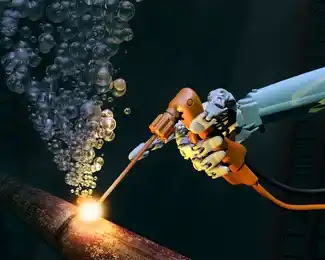
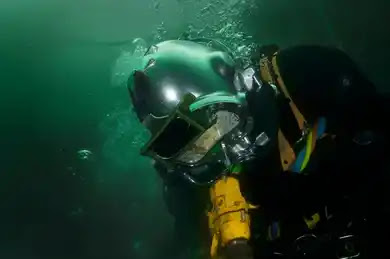
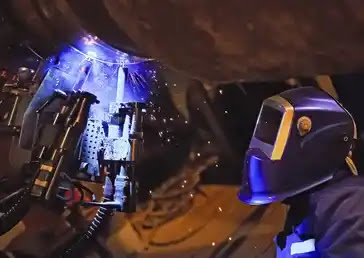
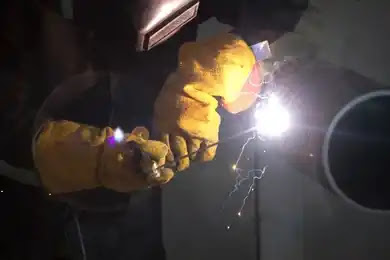
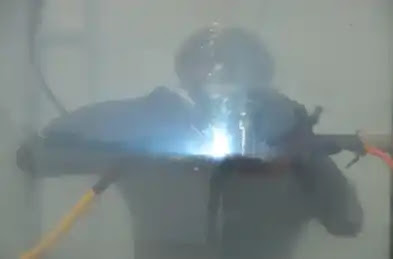
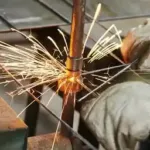
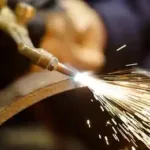
Underwater welding is a type of welding that is performed
underwater, typically in offshore oil and gas production, ship repair, salvage
operations, and in the construction and maintenance of bridges, pipelines, and
other submerged structures. It involves welding metal components and structures
while they are submerged in water, using special equipment and techniques to
ensure the safety of the welder and the quality of the weld.
There are two main types of underwater welding: wet welding
and dry welding. Wet welding is performed using a welding electrode that is
coated with a special waterproof material that allows it to be ignited
underwater. The welder typically wears a diving suit and uses a welding torch
to perform the weld. Dry welding, on the other hand, is performed in a
specially designed chamber that is filled with a dry gas such as helium or
argon, which allows the welder to work in a dry environment while the metal is
submerged in water.
Underwater welding requires specialized equipment and
training, and the process can be hazardous due to the risk of electric shock,
explosion, and decompression sickness. Welders must also contend with poor visibility,
water currents, and other environmental factors that can make the process more
challenging. Despite these challenges, underwater welding is a critical
technique for maintaining and repairing submerged infrastructure, and it plays
a vital role in many industries.
Underwater Welding Equipment
Underwater welding equipment includes specialized tools and
gear to enable welders to perform their tasks safely and efficiently in the
underwater environment. The equipment used for underwater welding depends on
the type of welding being performed and the depth of the water.
Here are some examples of underwater welding equipment:
Diving
suit: A specialized diving suit is worn to protect the welder from cold
water, underwater pressure, and potential hazards such as marine life or
sharp objects.
Welding
torch: The welding torch used for underwater welding is specially designed
to work underwater and is connected to the welding equipment on the
surface.
Electrodes:
Underwater welding electrodes are coated with a special waterproof
material that allows them to be ignited underwater.
Welding
cables: Welding cables are used to connect the welding equipment on the
surface to the welding torch and electrodes underwater.
Video
camera and lights: In murky waters or low-light conditions, a video camera
and lights can be used to provide a clear view of the welding area.
Welding
chamber: For dry welding, a specialized welding chamber is used to create
a dry environment around the welding area.
Gas
supply system: For dry welding, a gas supply system is used to fill the
welding chamber with a dry gas, such as helium or argon.
Underwater
cutting tools: In addition to welding, underwater cutting tools, such as
underwater plasma cutters, can be used to cut through metal in the
underwater environment.
Underwater welding equipment is designed to withstand the
harsh underwater environment and enable welders to perform their tasks safely
and effectively.
Underwater Welding Process
The underwater welding process involves several steps to
ensure that the weld is of high quality and that the welder is safe while
working in the underwater environment. The process can vary depending on the
type of welding being performed, whether it is wet welding or dry welding.
Here are the general steps involved in underwater welding:
Preparation:
The first step is to prepare the area to be welded. This involves cleaning
the metal surfaces to be welded, removing any rust or other contaminants,
and ensuring that the welding area is free from debris and obstructions.
Positioning:
The welder positions themselves and the welding equipment in the
appropriate location, ensuring that they have access to the welding area
and are in a safe position.
Electrode
selection: For wet welding, the welder selects an electrode that is coated
with a waterproof material to allow it to be ignited underwater. For dry
welding, the welder selects an electrode that is appropriate for the type
of metal being welded and the welding environment.
Welding:
The welder uses the welding torch to heat the metal to be welded and melts
the welding electrode, creating a molten pool of metal that fuses the two
pieces of metal together.
Inspection:
Once the weld is complete, it is inspected to ensure that it meets the
required standards for quality and safety.
Post-welding
cleanup: After the welding is complete, any excess material or debris is
removed from the area, and the welding equipment is cleaned and prepared for
the next use.
Underwater welding requires specialized equipment and
training, and the process can be hazardous due to the risk of electric shock,
explosion, and decompression sickness. Proper safety measures must be taken to
ensure the safety of the welder and the quality of the weld.
Applications of Underwater Welding
Underwater welding is a specialized welding technique used
in various applications where welding is required in submerged or underwater
environments. Some of the applications of underwater welding include:
Ship
Repair and Maintenance: Underwater welding is commonly used in the repair
and maintenance of ships and other vessels. It allows for quick and
efficient repairs of hulls, propellers, and other submerged parts of the
ship.
Offshore
Oil and Gas Industry: Underwater welding is used in the construction and
repair of offshore oil rigs and pipelines. It is also used in the
installation and repair of subsea equipment.
Bridges
and Dams: Underwater welding is used to repair and maintain the submerged
parts of bridges and dams, such as piers and abutments.
Power
Plants: Underwater welding is used to repair and maintain the submerged
parts of power plants, such as hydroelectric dams and nuclear reactors.
Water
Treatment Facilities: Underwater welding is used to repair and maintain
the submerged parts of water treatment facilities, such as water intake
and outfall structures.
Underwater
Construction: Underwater welding is used in the construction of underwater
structures, such as tunnels, pipelines, and underwater habitats.
Salvage
Operations: Underwater welding is used in salvage operations to cut and
remove submerged objects, such as shipwrecks or sunken equipment.
Overall, underwater welding is an essential technique for
various industries that require welding in submerged or underwater
environments. It offers significant advantages, such as reduced downtime, lower
costs, and efficient repairs, making it a valuable asset in many applications.
Advantages and Disadvantages of Underwater Welding
Underwater welding offers several advantages and
disadvantages compared to traditional welding on land. Here are some of the
main advantages and disadvantages of underwater welding:
Advantages:
Flexibility:
Underwater welding allows for repairs and maintenance to be performed on
underwater structures, such as ships, pipelines, and offshore drilling
rigs, without the need to bring the structure to the surface.
Time
and cost-effective: Underwater welding can be more time and cost-effective
compared to traditional welding on land, as it eliminates the need for
dismantling or raising the structure.
High-quality
welds: Underwater welding can produce high-quality welds, as the welds are
protected from the surrounding environment, which can reduce the risk of
defects and corrosion.
Reduced
environmental impact: Underwater welding can have less of an impact on the
surrounding environment, as it can be performed without disturbing the
natural habitat or marine life.
Disadvantages:
Safety
risks: Underwater welding is a hazardous job and requires specialized
training and equipment to ensure the safety of the welder. Risks include
electric shock, explosion, and decompression sickness.
Limited
visibility: Visibility can be poor in underwater environments, which can
make it difficult to see the welding area and potential hazards.
Limited
access: Underwater welding can be limited by the depth of the water and
the size and shape of the structure to be welded.
Corrosion:
Corrosion can be a major issue in underwater environments, which can
affect the quality and lifespan of the weld.
Overall, underwater welding can be a useful and efficient
method for performing repairs and maintenance in the underwater environment.
However, proper safety measures must be taken to ensure the safety of the
welder and the quality of the weld.
Underwater welding machines are specialized equipment
designed to perform welding in the underwater environment. The machine operates
by converting electrical energy into welding energy that is used to melt the
metal and create a bond between two pieces of metal.
Here are some of the components of an underwater welding
machine:
Power
source: The power source for an underwater welding machine can be either
AC or DC, and it provides the electrical energy needed to create the
welding arc.
Welding
cables: Welding cables connect the power source to the welding torch,
which delivers the electrical current to the electrode.
Welding
torch: The welding torch is specially designed for underwater welding and
delivers the welding current to the electrode.
Electrode
holder: The electrode holder holds the welding electrode in place and
allows for adjustments in the welding arc length.
Cooling
system: Underwater welding generates a lot of heat, so a cooling system is
required to prevent overheating of the equipment.
Insulation:
The welding machine is insulated to prevent electric shock and to protect
the welder from electrical current.
Underwater welding machines can vary in size and complexity,
depending on the type of welding being performed, the depth of the water, and
the size of the structure to be welded. They must be specially designed to
operate in the underwater environment and be able to withstand the harsh
conditions found there.
Underwater welding is a challenging and hazardous task that
requires specialized training, equipment, and safety procedures to ensure the
safety of the welder and the underwater environment. Here are some important
safety precautions and measures to take when performing underwater welding:
Proper
Training: Underwater welding requires specialized training and
certification. Ensure that you are properly trained and certified before
performing any underwater welding task.
Equipment:
Use the correct welding equipment designed specifically for underwater
welding. Inspect your equipment regularly to ensure that it is in good
working condition.
Diving
Gear: Use appropriate diving gear such as a diving helmet, gloves, boots,
and a wetsuit. The gear must be inspected and maintained regularly.
Communication:
Establish a communication system with the surface team. This is essential
to ensure that any issues can be resolved quickly and efficiently.
Oxygen
Supply: Ensure that there is a reliable oxygen supply when working
underwater. It’s important to monitor the oxygen levels regularly.
Welding
Site: Choose a safe and secure location for the welding site. Clear any
obstacles or debris that may pose a threat to the welder or equipment.
Weather
Conditions: Check the weather forecast before commencing underwater
welding. Stormy or rough weather conditions can create hazardous
conditions for the welder.
Electrical
Safety: Ensure that all electrical equipment is properly grounded and
insulated to prevent electrical shock.
Fire
Prevention: Take appropriate measures to prevent fires, such as using
flame-resistant materials and ensuring that all flammable materials are
kept at a safe distance from the welding site.
Emergency
Response: Have a clear emergency response plan in place in case of any
accidents or injuries. Ensure that all members of the team are aware of
the plan and how to execute it.
By following these safety precautions and measures, you can
minimize the risk of accidents and injuries when performing underwater welding.
Always prioritize safety when working underwater, and never compromise on
safety measures.
Underwater welding is a hazardous activity that carries
several risks and dangers. Some of the dangers associated with underwater
welding include:
Electric
Shock: Welders are exposed to electric shock due to the high voltage used
during welding. This can be fatal if the welder is not properly trained
and equipped with safety gear.
Drowning:
Working underwater carries the risk of drowning. The welder must be able
to operate their equipment effectively while remaining aware of their
surroundings.
Explosions:
Explosions can occur due to the release of gases or the ignition of
flammable materials, causing serious injuries or death to the welder.
Decompression
Sickness: Welders working at great depths may experience decompression
sickness, also known as “the bends,” which can cause severe pain
and even paralysis.
Thermal
Burns: Welders may experience thermal burns from the high temperatures
used in welding. These burns can be severe and lead to infection or other
complications.
Hypothermia:
Cold water can lead to hypothermia, which can impair a welder’s judgment,
coordination, and motor skills.
Visibility:
Limited visibility underwater can lead to collisions with objects,
disorientation, and other hazards.
Underwater
Hazards: Welders are at risk of encountering underwater hazards, such as
sharp objects, entanglement hazards, or marine life.
It is essential to take appropriate safety measures and
precautions to minimize the risks associated with underwater welding. Proper
training, equipment, communication, and emergency response planning can
significantly reduce the risks associated with this dangerous activity.
আমি Md Shamim Hossain, TonBangla-এর প্রতিষ্ঠাতা। প্রযুক্তি, কম্পিউটার, প্রোগ্রামিং, প্রকৌশল ও শিক্ষামূলক বিষয় নিয়ে সহজ, তথ্যবহুল বাংলা কনটেন্ট তৈরি করি।