What is Bolt?
Bolt is a type of mechanical fastener that is used to join
two or more objects together. Bolts are typically made of metal and feature a
threaded shaft that is inserted into a pre-drilled hole. Once inserted, a nut
is threaded onto the end of the bolt, which allows it to be tightened and
securely fastened in place. Bolts are commonly used in construction,
manufacturing, and mechanical engineering applications, as well as in a wide
range of household and DIY projects.
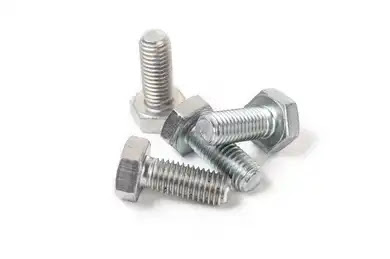
They come in a variety of sizes and types,
each suited to specific applications depending on factors such as load-bearing
capacity, resistance to corrosion, and other performance requirements.
Parts of a Bolt:
The following are the basic parts of a bolt:
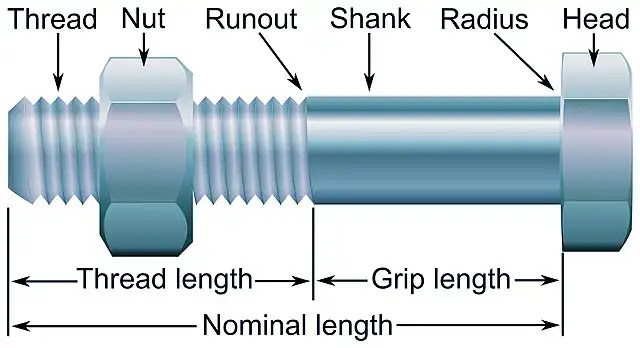
- Head:
This is the top part of the bolt that is usually flat and allows a tool
such as a wrench or socket to grip it for tightening or loosening. - Shank:
This is the smooth, cylindrical portion of the bolt that extends from the
head to the tip. - Threaded
portion: This is the part of the bolt that has ridges, or threads, that
are used to screw the bolt into a threaded hole. - Thread
pitch: This refers to the distance between two adjacent threads on the
bolt, and it determines how tightly the bolt fits into a threaded hole. - Thread
length: This refers to the length of the bolt’s threaded portion. - Tip:
This is the pointed end of the bolt that is inserted into a pre-drilled
hole. - Nut:
This is a separate component that is threaded onto the end of the bolt to
hold it in place. - Washer:
This is a flat, circular component that is often used with a bolt to
distribute the load and protect the surface being fastened.
Types of Bolts:
There are several types of bolts available for various
applications. Some common types of bolts include:
- Hex
bolts: These bolts have a hexagonal head and are used in a wide range of
applications, including construction and automotive. - Carriage
bolts: These bolts have a rounded head and are commonly used in
wood-to-wood connections. - Lag
bolts: These bolts have a coarse, threaded shaft and are used for
heavy-duty applications such as securing large timbers or machinery. - Machine
bolts: These bolts have a straight, cylindrical shank and are used in
machinery and manufacturing applications. - Shoulder
bolts: These bolts have a smooth, cylindrical shank with a larger diameter
head, and are used for precise alignment and rotational applications. - Eye
bolts: These bolts have a looped head and are used for attaching cables,
chains, and other components to an object. - U-bolts:
These bolts have a U-shaped head and are used to secure pipes, tubes, and
other cylindrical objects. - Stud
bolts: These bolts have threads on both ends and are used to connect two
objects by passing through a hole and securing with nuts on each end.
These are just a few of the many types of bolts available,
and selecting the right type of bolt depends on the specific application and
load-bearing requirements.
What are Bolts used for?
Bolts are commonly used in a wide range of applications
where a secure and permanent joint is required. Some common uses of bolts
include:
- Construction:
Bolts are used in construction to connect structural steel members, anchor
equipment and machinery, and secure building components such as beams,
columns, and trusses. - Automotive:
Bolts are used extensively in the automotive industry to secure various
components such as engines, transmissions, and suspension systems. - Machinery
and equipment: Bolts are used in machinery and equipment to secure parts,
connect components, and provide a secure and rigid connection between
moving parts. - Electrical
and electronic: Bolts are used in the electrical and electronic industries
to secure circuit boards, connect electrical components, and provide
grounding. - Aerospace:
Bolts are used extensively in the aerospace industry to connect structural
components and secure equipment and systems. - Marine:
Bolts are used in the marine industry to secure components and structures
in marine environments where corrosion and vibration resistance are
important. - Furniture:
Bolts are used in the furniture industry to connect different components
and provide a stable and secure structure.
Overall, bolts are used in a wide range of applications
where a strong and permanent joint is required, and they are available in a
variety of sizes, materials, and configurations to meet the specific
requirements of each application.
Advantages
and Disadvantages of Bolt
Advantages of bolts:
- High
strength: Bolts are designed to provide a high-strength joint and can be
manufactured to meet specific strength requirements. - Durable:
Bolts are made from materials that are resistant to wear, corrosion, and
other forms of damage, which makes them a durable option for long-term
use. - Permanent
joint: Bolts provide a permanent joint, which is ideal for applications
where disassembly is not required. - Versatile:
Bolts are available in a wide range of sizes, materials, and
configurations, making them a versatile fastening option that can be used
in a wide range of applications. - Reliable:
Bolts are designed to provide a reliable and consistent joint that can
withstand various loads, stresses, and environmental conditions.
Disadvantages of bolts:
- Difficult
to install: Bolts require specialized tools and equipment for
installation, which can make the installation process difficult and
time-consuming. - Permanent
joint: Bolts provide a permanent joint, which can be a disadvantage if
disassembly is required. - Corrosion:
Bolts can be susceptible to corrosion if not made from corrosion-resistant
materials or if exposed to harsh environmental conditions. - Cost:
Bolts can be expensive compared to other fastening options, especially if
custom sizes or materials are required. - Stress
concentration: Bolts can create stress concentrations in the material
being fastened, which can lead to fatigue failure over time if not
properly designed and installed.
Specification of a Bolt
The specification of a bolt typically includes several
important parameters, such as:
- Size:
The size of a bolt is typically specified by its diameter and length. For
example, a bolt with a diameter of 8mm and a length of 50mm would be
specified as an “M8x50” bolt. - Thread
type: The thread type of a bolt is typically specified as either coarse or
fine. Coarse threads are used for most general-purpose applications, while
fine threads are used for applications where higher strength or better
resistance to vibration is required. - Material:
The material of a bolt is specified based on the requirements of the
application. The most common materials used for bolts are steel, stainless
steel, titanium, brass, aluminum, and copper. - Strength:
The strength of a bolt is typically specified using a grade or class
designation. For example, a bolt with a grade 8.8 designation is designed
to have a minimum tensile strength of 800 MPa. - Coating:
The coating of a bolt is specified to provide corrosion resistance and/or
to improve appearance. Some common coatings for bolts include zinc
plating, black oxide, and hot-dip galvanizing. - Head
type: The head type of a bolt is specified based on the requirements of
the application. Some common head types include hex head, socket head, and
carriage bolt head. - Thread
length: The thread length of a bolt is specified to ensure that the bolt
can be threaded into a nut or threaded hole to the correct depth.
These specifications are critical to ensure that the bolt
meets the specific requirements of the application and performs as expected.
Materials of Bolt
Bolts can be made from a variety of materials depending on
the specific application and requirements. Some common materials used to make
bolts include:
- Steel:
The most commonly used material for bolts is steel. It comes in a variety
of grades and can be heat-treated to increase its strength. - Stainless
steel: Bolts made from stainless steel are resistant to corrosion and are
often used in applications where exposure to moisture or chemicals is a
concern. - Titanium:
Bolts made from titanium are lightweight and strong, making them ideal for
use in aerospace and other high-performance applications. - Brass:
Bolts made from brass are corrosion-resistant and have good electrical
conductivity, making them useful in electrical applications. - Aluminum:
Bolts made from aluminum are lightweight and have good corrosion
resistance, making them ideal for use in applications where weight is a
concern. - Copper:
Bolts made from copper are excellent conductors of electricity and heat,
making them useful in electrical and thermal applications. - Nylon:
Bolts made from nylon are lightweight, non-corrosive, and have good
chemical resistance, making them useful in applications where these
properties are important.
The choice of material for a bolt will depend on factors
such as the application, load requirements, and environmental conditions.
Difference between Bolt and Nuts:
Bolts and nuts are both types of fasteners used to create a
secure joint between two or more objects. However, there are some key
differences between bolts and nuts:
- Shape:
Bolts are typically long and have a cylindrical shape with threads running
along their entire length. Nuts, on the other hand, are typically smaller
and have a hexagonal shape with threads on the inside. - Function:
Bolts are used to create a joint by passing through a hole in one object
and screwing into a threaded hole in another object. Nuts are used to
secure the bolt in place by screwing onto the threads at the opposite end
of the bolt. - Types:
There are many types of bolts, including hex bolts, carriage bolts, and
flange bolts. Similarly, there are many types of nuts, including hex nuts,
lock nuts, and wing nuts. - Length:
Bolts are typically longer than nuts to allow for the threading of the nut
onto the opposite end of the bolt. - Materials:
Bolts and nuts can be made from a wide variety of materials, including
steel, stainless steel, brass, and titanium, among others.
In summary, bolts are long cylindrical fasteners with
threads running along their entire length, while nuts are smaller hexagonal
fasteners with threads on the inside. Bolts are used to create a joint by
passing through a hole in one object and screwing into a threaded hole in
another object, while nuts are used to secure the bolt in place by screwing
onto the threads at the opposite end of the bolt.
Types of Nuts:
There are several types of nuts available for use with bolts
or other threaded fasteners. Some common types of nuts include:
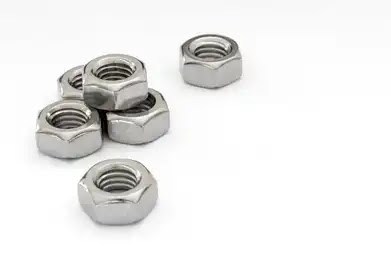
- Hex
nuts: These nuts have six sides and are the most common type of nut. They
are used with hex bolts and are suitable for a wide range of applications. - Nylon
insert lock nuts: These nuts have a nylon ring inserted into the threads,
which provides resistance against loosening due to vibration or torque.
They are commonly used in automotive and machinery applications. - Wing
nuts: These nuts have two wings on opposite sides of the nut, which allow
them to be easily tightened or loosened by hand. They are commonly used in
applications that require frequent adjustments or where tools are not
readily available. - Flange
nuts: These nuts have a wide, flat base that distributes the load over a
larger area, which makes them suitable for use in applications where the
surface being fastened may be soft or fragile. - Cap
nuts: These nuts have a domed cap that covers the end of the bolt or
screw. They are used for decorative purposes or to prevent snagging or
injury from exposed bolt threads. - Square
nuts: These nuts have four sides and are commonly used in woodworking
applications, where they can be embedded into the wood for a secure fit. - T-nuts:
These nuts have a T-shaped base that is inserted into a pre-drilled hole,
which allows them to be easily secured in place in wood or other
materials.
These are just a few of the many types of nuts available,
and selecting the right type of nut depends on the specific application and
load-bearing requirements.
Types of Washers:
There are several types of washers available for use with
bolts or other threaded fasteners. Some common types of washers include:
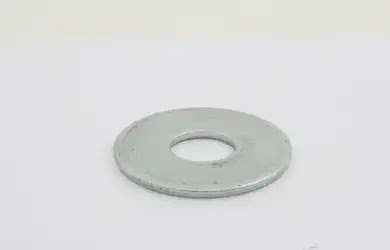
- Flat
washers: These are the most common type of washer, and they have a flat
surface and a hole in the center that is the same diameter as the bolt or
screw. They are used to distribute the load and prevent damage to the
surface being fastened. - Lock
washers: These washers are designed to prevent nuts and bolts from
loosening due to vibration or other factors. There are several types of
lock washers, including split lock washers, toothed lock washers, and
serrated lock washers. - Spring
washers: These washers have a spring-like shape, which allows them to
provide a constant tension between the bolt and the surface being
fastened. They are commonly used in applications where there may be slight
movement or vibration. - Wave
washers: These washers have a wave-like shape and are used to provide a
cushioning effect between the bolt and the surface being fastened. They
can also be used to compensate for thermal expansion and contraction. - Belleville
washers: These washers have a conical shape and are used to provide a high
spring rate in a compact space. They are commonly used in applications
that require a high degree of tension or where there may be thermal
expansion and contraction. - Countersunk
washers: These washers have a flat surface with a countersunk hole that is
designed to sit flush with the surface being fastened. They are commonly
used in applications where the appearance of the fastener is important.
These are just a few of the many types of washers available,
and selecting the right type of washer depends on the specific application and
load-bearing requirements.