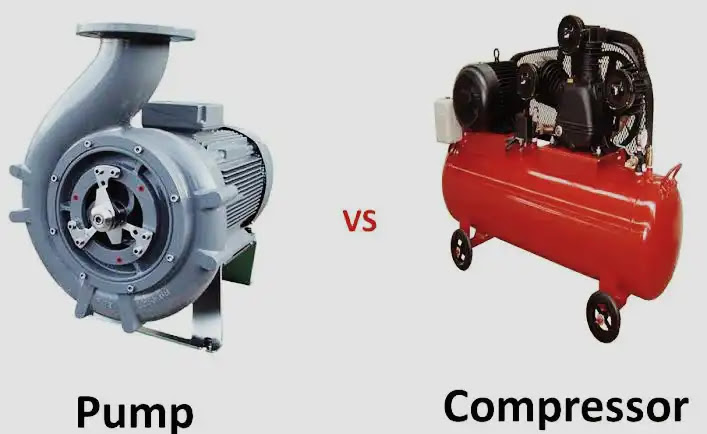
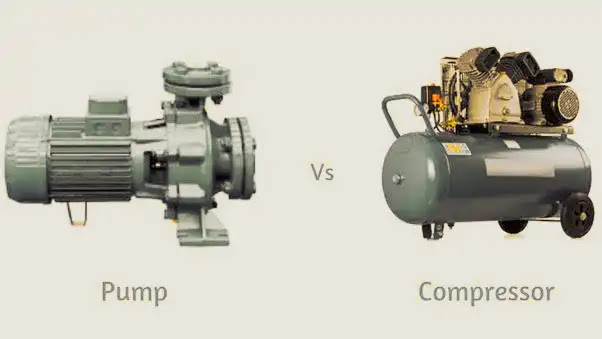
A pump is a mechanical device that is used to move fluids
(liquids or gases) from one place to another. Pumps are used in a wide variety
of applications, from household water pumps that supply water to a home, to
large industrial pumps used in the oil and gas industry or chemical processing
plants.
There are many different types of pumps, each designed for
specific applications. Some common types of pumps include:
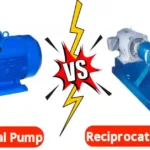
Centrifugal
pumps: These pumps use a spinning impeller to create a flow of fluid. They
are the most commonly used type of pump and are used in a wide range of
applications.
Positive
displacement pumps: These pumps use a mechanism such as gears, screws, or
diaphragms to move a fixed amount of fluid with each cycle.
Submersible
pumps: These pumps are designed to be completely submerged in the fluid
they are pumping, and are commonly used in water supply systems and sewage
treatment plants.
Vacuum
pumps: These pumps are used to create a vacuum in a closed system by
removing gas molecules from the system.
Jet
pumps: These pumps use a jet of fluid to create a flow of fluid.
Pumps can be powered by a variety of energy sources,
including electricity, gasoline or diesel fuel, steam, or even solar power. The
design and operation of a pump depend on the specific application it is being
used for, sas well as factors such as flow rate, pressure, and fluid viscosity.
What is Compressor?
A compressor is a mechanical device that is used to
increase the pressure of a gas (such as air, nitrogen, or natural gas) by
reducing its volume. Compressors are used in a wide variety of applications,
including air conditioning and refrigeration, industrial processes, natural gas
transport, and power generation.
Compressors work by taking in gas at a low pressure, and
then using a mechanical process to decrease its volume and increase its
pressure. There are several different types of compressors, including:
Positive
displacement compressors: These compressors work by trapping gas in a
confined space and then reducing the volume of that space to increase
pressure. Examples include reciprocating compressors, rotary screw
compressors, and scroll compressors.
Dynamic
compressors: These compressors use rotating impellers or blades to
increase the velocity of gas, which in turn increases its pressure.
Examples include centrifugal compressors and axial compressors.
Hybrid
compressors: These compressors combine elements of both positive
displacement and dynamic compression to achieve higher efficiencies and
greater pressure ratios.
In addition to their classification by compression
mechanism, compressors can also be categorized by their application, size,
power source, and other factors. Some common types of compressors used in
various applications include:
Refrigeration
compressors: These compressors are used in refrigeration and air
conditioning systems to compress refrigerants and circulate them through
the system.
Industrial
air compressors: These compressors are used in manufacturing,
construction, and other industries to power pneumatic tools and machinery.
Gas
compressors: These compressors are used in natural gas pipelines, oil and
gas production, and other applications to compress natural gas for
transport or processing.
Power
generation compressors: These compressors are used in gas turbine power
plants to compress air for combustion and to increase the efficiency of
the power generation process.
Overall, compressors play a critical role in many different
industries and applications, and their design and operation can vary widely
depending on the specific use case.
Difference between Pump and Compressor
Here is a table highlighting the main differences between a
pump and a compressor:
Parameter
Pump
Compressor
Function
Transfers fluids from one place to another
Increases the pressure of gases
Operating fluid
Liquid
Gas
Inlet pressure
Can operate with suction pressure
Requires positive inlet pressure
Outlet pressure
Relatively low
Can achieve high pressures
Flow rate
Higher flow rate
Lower flow rate
Types
Centrifugal, positive displacement, etc.
Centrifugal, axial, reciprocating, etc.
Applications
Water supply, heating and cooling systems, chemical
processing, etc.
Pneumatic tools, HVAC systems, gas pipelines, etc.
In summary, pumps and compressors have different functions,
operating fluids, inlet and outlet pressures, flow rates, and types. Pumps are
used to transfer fluids, typically liquids, from one place to another, while
compressors are used to increase the pressure of gases. Pumps can operate with
suction pressure, while compressors require positive inlet pressure. Pumps
typically have higher flow rates, while compressors can achieve higher
pressures. Both pumps and compressors come in different types, each suited for
different applications.
Difference
between Pump and Compressor Table
Pumps and compressors are both mechanical devices used to
move fluids or gases, but they have some important differences:
Function:
Pumps are used to move fluids (liquids or gases) from one place to another
by increasing the pressure of the fluid. Compressors, on the other hand,
are used to compress gases (usually air) by reducing their volume and
increasing their pressure.
Construction:
Pumps are typically designed with an impeller or rotor that rotates inside
a housing, creating a vacuum that draws in fluid and then pushes it out
through a discharge port. Compressors, on the other hand, typically use a
piston, screw, or vane to compress gas and then discharge it through an
outlet.
Fluid/Gas
Type: Pumps can be used to move both liquids and gases, while compressors
are typically used to compress gases only.
Pressure
Ratio: Compressors are designed to handle much higher pressure ratios than
pumps. A pressure ratio is the difference between the inlet pressure and
the outlet pressure of the device.
Application:
Pumps are commonly used in applications such as water supply, irrigation,
oil and gas pipelines, and chemical processing, while compressors are
commonly used in applications such as refrigeration, air conditioning, and
pneumatic tools.
In summary, while both pumps and compressors are used to
move fluids or gases, they differ in their function, construction, fluid/gas
type, pressure ratio, and application. The choice between the two devices will
depend on the specific needs of the application and the properties required for
the final result.
Pump
Compressor
Converts
mechanical energy into hydraulic energy.
Converts
mechanical energy into kinetic energy.
Used to move
liquids or fluids.
Used to compress
gases.
Works at lower
pressure.
Works at higher
pressure.
The fluid output
is continuous.
The gas output is
pulsating.
The working fluid
is incompressible.
The working fluid
is compressible.
It generally has a
lower efficiency.
It generally has a
higher efficiency.
The flow rate is
measured in liters per minute or gallons per minute.
The flow rate is
measured in cubic feet per minute or cubic meters per minute.
The pressure head
is measured
in feet or meters.
The pressure head
is measured in pounds per square inch (PSI) or Bar.
They are
classified as positive displacement pumps.
They are classified as dynamic compressors.
They have a low
discharge pressure.
They have a high
discharge pressure.
Primarily used for
water supply, irrigation, and drainage systems.
Primarily used for
air conditioning, refrigeration, and industrial processes.
The input power is
relatively lower.
The input power is
relatively higher.
The maximum head
they can produce is limited by atmospheric pressure.
The maximum
pressure they can produce is limited by the mechanical strength of the
compressor.
They can handle a
wide range of fluids, including corrosive and viscous liquids.
They are limited
to handling only gases and cannot handle corrosive or viscous materials.
They require a
lower level of maintenance.
They require a
higher level of maintenance.
They are usually
quieter than compressors.
They tend to be
noisier than pumps.
They are often
used in household appliances, such as washing machines and dishwashers.
They are often
used in industrial and manufacturing applications.
They are also used
in automotive, marine, and aerospace applications.
They are also used
in automotive, marine, and aerospace applications.
আমি Md Shamim Hossain, TonBangla-এর প্রতিষ্ঠাতা। প্রযুক্তি, কম্পিউটার, প্রোগ্রামিং, প্রকৌশল ও শিক্ষামূলক বিষয় নিয়ে সহজ, তথ্যবহুল বাংলা কনটেন্ট তৈরি করি।