What is Punch Press Machine?
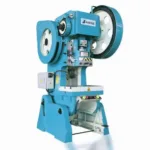
A punch press machine is a type of mechanical press used to
punch holes, shapes, and patterns in metal sheets, plates, and other materials.
It operates by using a punch and die set, where the punch is forced through the
material to create the desired hole or shape. The punch press machine can be
operated manually, pneumatically, or hydraulically, depending on the size and
complexity of the machine.
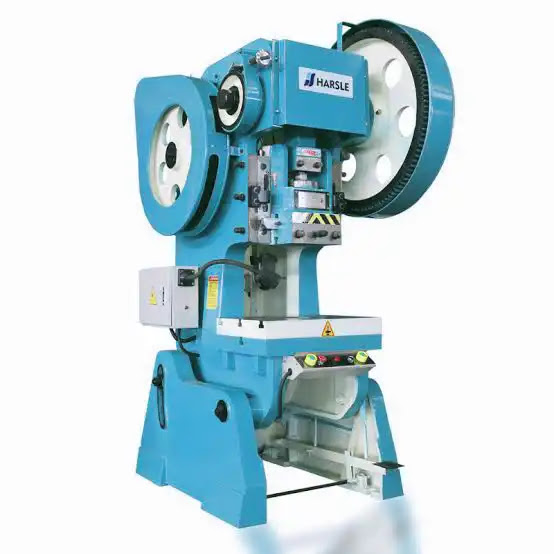
The punch press machine is commonly used in metalworking,
automotive, and construction industries, among others, for various applications
such as punching holes for bolts and fasteners, creating patterns and designs,
forming shapes and contours, and cutting sheets and plates to size. Punch press
machines come in various sizes and configurations, from small benchtop models
to large industrial machines that can produce high volumes of parts at high
speeds.
In addition to its versatility and precision, the punch
press machine is also valued for its speed and efficiency, making it an
essential tool for many manufacturing and fabrication processes.
Parts of Punch Press Machine:
The punch press machine is a complex piece of equipment made
up of various parts that work together to perform the punching operation. Here
are the main parts of a typical punch press machine:
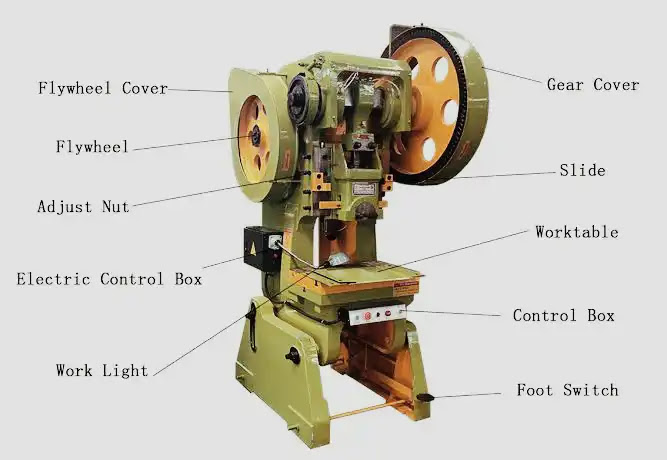
- Bed:
This is the base of the machine that provides a stable platform for the
other components. - Ram:
The ram is the upper part of the machine that moves up and down to apply
the punching force. - Punch:
The punch is the tool that is used to punch a hole or shape into the
workpiece. It is mounted on the ram. - Die:
The die is a stationary tool that supports the workpiece and provides a
precise shape for the punch to follow. - Clutch:
The clutch engages and disengages the motor from the flywheel, allowing
the machine to stop and start quickly. - Flywheel:
The flywheel is a heavy wheel that stores energy from the motor and
releases it to drive the ram. - Motor:
The motor provides the power to drive the flywheel and the punch press
machine. - Lubrication
system: The lubrication system keeps the machine well-oiled to prevent
friction and wear on the moving parts. - Control
panel: The control panel allows the operator to adjust the speed, stroke
length, and other parameters of the punching operation.
Overall, each part of the punch press machine plays a
crucial role in the efficient operation of the machine, ensuring accurate and
consistent results for the user.
Types of Punch Press Machine:
There are several types of punch press machines available,
each designed to meet specific needs and requirements of different
applications. Here are the most common types of punch press machines:
- Mechanical
Punch Press Machine: This type of punch press machine uses a mechanical
flywheel to store energy that is released to power the punching operation.
It is a versatile and reliable machine that is suitable for a wide range
of materials and thicknesses. - Hydraulic
Punch Press Machine: This type of punch press machine uses hydraulic pressure
to apply force to the punch. It is a high-powered machine that is suitable
for punching thick materials and for high-volume production. - Pneumatic
Punch Press Machine: This type of punch press machine uses compressed air
to power the punching operation. It is a fast and efficient machine that
is suitable for light to medium-duty applications. - CNC
Punch Press Machine: This type of punch press machine is controlled by a
computer program and is capable of precise and complex punching
operations. It is a versatile machine that is suitable for high-volume
production and can be used with a variety of materials and thicknesses. - Manual
Punch Press Machine: This type of punch press machine is operated by hand
and is suitable for small-scale production and DIY applications. It is a
simple and affordable machine that is easy to use and maintain.
Overall, the choice of punch press machine will depend on
the specific needs and requirements of the application, including the material
type and thickness, production volume, and desired level of automation.
Read More: Planer Machine: Definition, Parts, Working Principle, Types, Operation, Advantages, Application
Working Principle of Punching Press Machine:
The working principle of a punch press machine involves
using a punch and die set to punch holes, shapes, or patterns in a workpiece.
Here are the basic steps involved in the punching process:
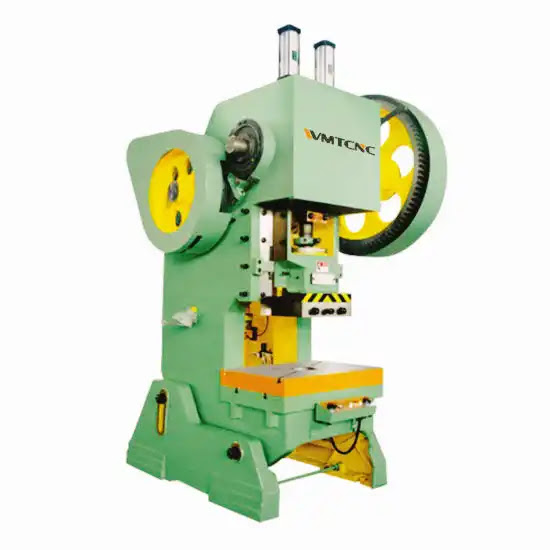
- Workpiece
setup: The workpiece is securely placed on the bed of the punch press
machine, and the punch and die set is aligned to the desired punching
location. - Ram
movement: The ram of the punch press machine moves downward towards the
workpiece, applying force to the punch and driving it through the
material. - Punch
and die interaction: The punch enters the workpiece and comes into contact
with the die, which supports the workpiece and provides a precise shape
for the punch to follow. - Punch
withdrawal: Once the punching operation is complete, the ram moves upward,
retracting the punch from the workpiece.
The punch press machine may operate using a mechanical,
hydraulic, or pneumatic system to apply force to the punch, depending on the
type of machine. CNC punch press machines use a computer program to control the
punching operation, allowing for precise and complex punching patterns.
The punching operation can be repeated multiple times to
produce a large number of identical workpieces. Punch press machines can be
used for a variety of materials, including metal sheets, plates, plastics, and
even leather or fabric.
Read More: Shaper Machine: Definition, Parts, Working Principle, Types, Operation, Advantages, Application
Advantages and Disadvantages of Punch Press Machine:
Advantages of Punch Press Machine:
- High
Precision: Punch press machines are capable of producing high-precision
parts with consistent quality, making them ideal for applications that
require accuracy and repeatability. - Versatility:
Punch press machines can be used with a wide range of materials, including
metal sheets, plates, plastics, and fabrics, making them a versatile tool
in various industries. - Productivity:
Punch press machines are designed for high-volume production, allowing for
the rapid and efficient production of large quantities of parts. - Cost-effective:
Punch press machines can be a cost-effective option for businesses as they
can produce parts quickly and with minimal labor costs. - Automation:
Many modern punch press machines are equipped with automation features
that can streamline the production process and reduce the need for manual
labor.
Disadvantages of Punch Press Machine:
- Initial
Cost: Punch press machines can be expensive to purchase and set up,
particularly for larger, more sophisticated models. - Limited
Flexibility: Punch press machines are limited to producing parts with the
specific shape and size of the punch and die set, making them less
flexible than other manufacturing processes. - Maintenance:
Punch press machines require regular maintenance to ensure that they
operate safely and efficiently. This can include cleaning, lubricating,
and inspecting various components. - Noise
and Vibration: Punch press machines can generate significant noise and
vibration during operation, which can be a concern for workers and nearby
residents. - Safety
Risks: Punch press machines can be hazardous to operators and other
workers if proper safety precautions are not followed. This can include
risks of entanglement, pinch points, and flying debris.
Application of Punch Press Machine:
Punch press machines have a wide range of applications in
various industries, including:
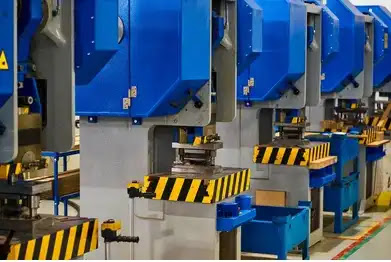
- Metalworking:
Punch press machines are commonly used in the metalworking industry to
punch holes, cut shapes, and form parts from metal sheets and plates. - Automotive:
Punch press machines are used in the automotive industry to produce parts
such as brackets, panels, and reinforcements. - Electronics:
Punch press machines are used in the electronics industry to produce parts
such as brackets, covers, and connectors. - Packaging:
Punch press machines are used in the packaging industry to create custom
designs and shapes in packaging materials such as cardboard, paperboard,
and plastics. - Clothing
and Textiles: Punch press machines are used in the clothing and textiles
industry to create patterns, cut fabrics, and form shapes for clothing,
bags, and accessories. - Construction:
Punch press machines are used in the construction industry to produce
parts such as brackets, reinforcements, and supports for buildings and
structures. - Furniture:
Punch press machines are used in the furniture industry to produce parts
such as brackets, hinges, and frames.
Overall, punch press machines are a versatile and essential
tool in modern manufacturing processes, capable of producing high-precision
parts quickly and efficiently.
Read More: What is Turret Lathe? Detailed Discussion of Turret Lathe